
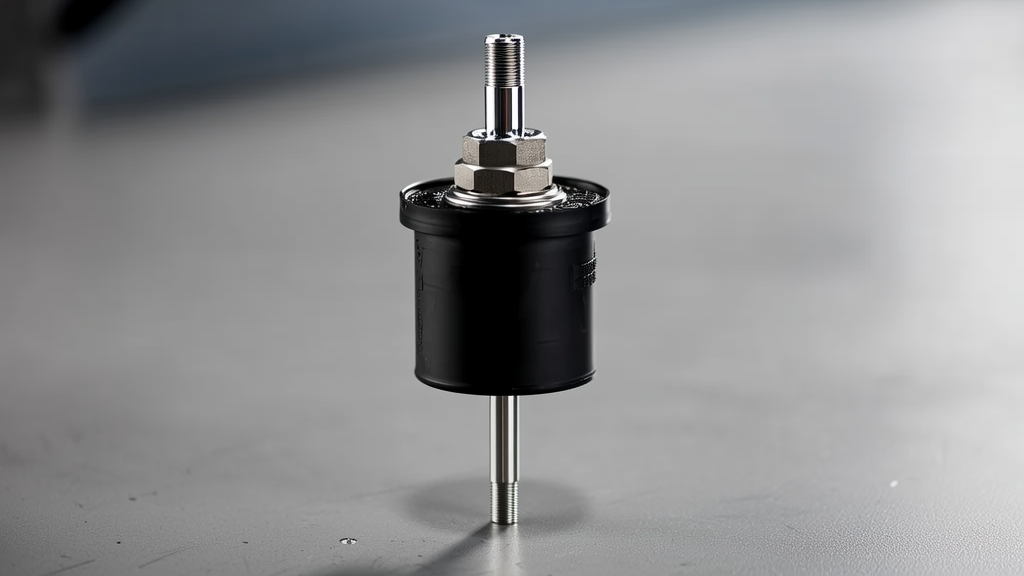
TPMS relearn and TPMS programming are not the same job. Programming writes the correct protocol and sensor ID into a blank or replacement sensor; relearn teaches the vehicle which sensor ID is fitted at each wheel. On an A-Class, a pre-programmed sensor often only needs a relearn, while a blank sensor must be programmed first.
Relearn vs. Programming on A-Class
A-Class TPMS systems use wheel-mounted sensors that broadcast pressure and temperature. After a sensor replacement, tire rotation, or ECU service, the vehicle may lose the wheel positions. The fix is a relearn. If the sensor is new and blank, it must be programmed to the correct 433MHz protocol and vehicle profile before the relearn can succeed.
Do not assume every 433MHz sensor will work. Match the OE cross-reference, valve type, and vehicle application. A clamp-in sensor also needs the correct valve nut and seal, and the torque should come from the vehicle manual or sensor manufacturer’s instructions—not guesswork.
Tools You Need
| Tool | What it does | Notes |
|---|---|---|
| TPMS activation tool | Wakes sensors, reads IDs, pressure, and battery status | Must support 433MHz and the A-Class protocol |
| TPMS-capable scan tool | Starts OBD relearn and writes sensor IDs | A basic engine-code reader usually cannot do this |
| Sensor programmer | Programs blank sensors or clones IDs | Needed only if the sensor is not pre-programmed |
| Accurate tire inflator/gauge | Sets cold pressures before relearn | Use the door placard, not the tire sidewall |
| Vehicle manual or scan-tool instructions | Confirms the correct drive cycle and menu path | Procedures vary by model year and market |
Before You Start
Park the vehicle, set the parking brake, and check all four tire pressures cold. Inflate to the placard specification. Turn the ignition on but do not start the engine unless the scan tool tells you to. Read TPMS codes first, then clear only after the repair is complete. If you fitted a new sensor, confirm its ID is readable before attempting a relearn.
Method 1: Auto Relearn Drive Cycle
Many A-Class models can learn sensor positions automatically after a drive cycle.
- Set all tire pressures correctly.
- Turn the ignition on and check whether the cluster offers a TPMS reset through the steering-wheel menus.
- If available, start the reset and confirm.
- Drive the vehicle at a mix of city and highway speeds for the period specified in the manual or scan tool.
- Stop safely and check whether pressures appear on the cluster and the warning light clears.
If the light returns or pressures stay blank, move to an OBD or stationary relearn. Auto relearn is convenient, but it is not the most reliable method after a new sensor install.
Method 2: OBD Relearn
OBD relearn is the best choice when the vehicle will not learn by driving or when you have replaced a sensor.
- Connect a TPMS-capable scan tool to the OBD port.
- Select the A-Class model and TPMS function.
- Read and record all stored sensor IDs.
- Activate each sensor with the TPMS tool if the scan tool asks for IDs.
- Start the OBD relearn and follow the prompts.
- Cycle the ignition if instructed.
- Drive the vehicle as directed, then recheck pressures and codes.
Some A-Class models require the scan tool to remain connected during the process. Follow the tool’s screen sequence closely; skipping a step can leave the ECU waiting for a sensor ID.
Method 3: Stationary Relearn
A stationary relearn keeps the vehicle still and uses a TPMS tool to wake each sensor in sequence.
- Turn the ignition on with the engine off.
- Connect the TPMS tool and select the correct A-Class procedure.
- Start the relearn and activate sensors in the order shown—usually front-left, front-right, rear-right, rear-left, but confirm on the tool.
- Wait for the vehicle to confirm each sensor.
- Turn the ignition off, then restart and check the cluster.
- Drive a short distance and verify all four pressures update.
If one wheel will not activate, recheck sensor fitment, battery condition, and whether the sensor was programmed to the correct vehicle profile.
Sensor Fitment Note
For A-Class and related applications using a 433MHz clamp-in sensor, the BL-ST-081 from BH-Sens is a service replacement option: BL-ST-081 | BH-Sens 433MHz TPMS Tire Pressure Sensor | Fits Aston Martin, BMW, Maybach, Mercedes-Benz, Mini & 2 More | OE# 36106872774, 42607WAA02, 5A3DC0401. It is listed with OE cross-references including 36106872774, 42607WAA02, 5A3DC0401, and A0009052102. Confirm your OE number, valve type, and frequency before ordering.
After Relearn: Verification
Scan all modules for TPMS codes, confirm the cluster shows four pressures, and complete a short road test. If the light stays on, do not keep repeating the same procedure. Check that the sensor is the correct