
Start With the Basics Before You Blame the Sensor
Owners jump straight to “the sensor is dead” far too often. Do this first:
- Check all four tires with a hand gauge — cold, not after a highway run.
- Inflate to the placard pressure on the driver’s door jamb (not the tire sidewall).
- Drive 10–20 minutes above roughly 25 km/h so the sensors wake up and transmit.
If the light clears, you had a pressure issue. If it returns or stays lit, move to diagnosis.
Common Causes of a TPMS Warning Light
| Symptom | Most Likely Cause | What To Do |
|---|---|---|
| Light on after cold night, clears when driving | Normal pressure drop from temperature | Top up to placard pressure |
| Light flashes ~60–90 seconds then stays solid | Sensor not transmitting / not registered | Scan each wheel for signal |
| One wheel always reads low or blank | Failed sensor or damaged valve stem | Replace sensor |
| Light returns within days of reset | Slow puncture or corroded clamp-in stem | Soap-test the bead and valve |
| Light after wheel swap or new rims | Sensors not re-learned or wrong frequency | Re-register with scan tool |
Dead Sensor Battery Symptoms
TPMS sensors are sealed units with non-replaceable batteries, typically good for 7–10 years of real service. Watch for these signs before failure:
- Slow, lazy updates. Pressure readings sit stale for long periods or update only after extended driving.
- Intermittent dropouts. A wheel disappears from the scan tool display, then reappears.
- Erratic readings. Values jump or read a few PSI off from a known-good gauge.
- Flashing light followed by a solid light. Classic “sensor not responding” behavior.
- Cold-weather failure first. A weak battery often dies in the first cold snap — the sensor still works in summer.
Once a sensor is at this stage, replacement is the only fix. Re-learning won’t revive a dead battery.
Diagnosing Signal Interference
If scan-tool signal strength is weak or inconsistent across multiple wheels, suspect interference rather than four dead sensors at once. Common culprits on the TIGGO E and similar platforms:
- Aftermarket electronics — dash cams, phone chargers, and LED kits with poor shielding, especially those wired near the receiver.
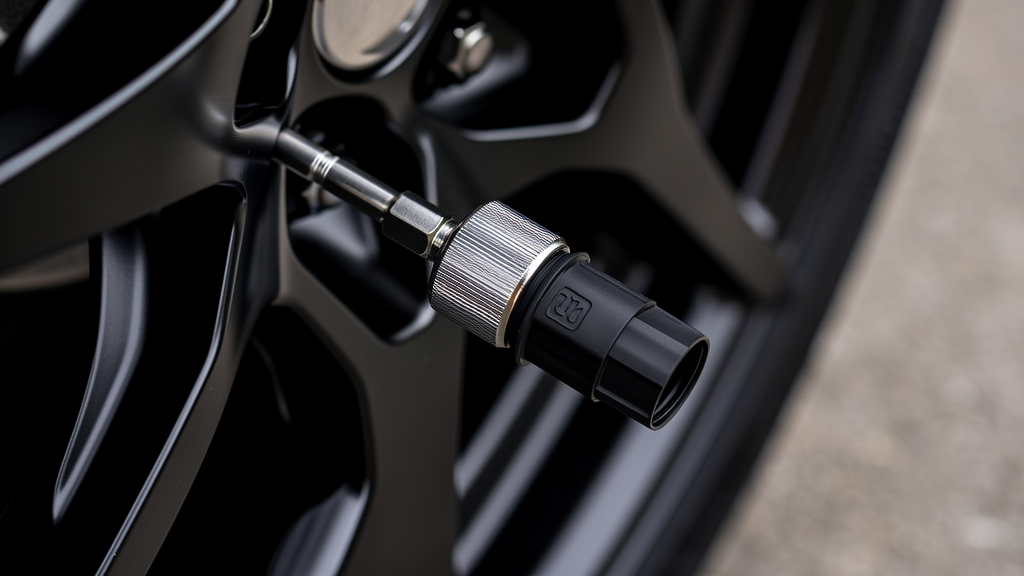
- Metal valve caps or wheel covers that block 433MHz transmission.
- Wheel-mounted accessories — balancing beads, inner tubes, or thick bead-lock hardware.
- A missing or damaged antenna/receiver connection in the body harness.
Test by unplugging accessories one at a time and re-scanning. If signal strength recovers, you’ve found the source.
Getting the Right Replacement
{Chery} vehicles use 433MHz clamp-in sensors, and mixing frequencies or universal “learnable” sensors with the wrong protocol causes endless re-learn headaches. A pre-programmed, OE-matched unit saves diagnostic time and avoids programming errors. For a direct-fit option, use BL-ST-074 | BH-Sens 433MHz TPMS Tire Pressure Sensor | Fits Chery, Chery Ev, Cowin | OE# 11652AWARDKS, 802000012AA.
Recommended Part
BL-ST-074 — BH-Sens (Baolong Technology) 433MHz TPMS Tire Pressure Sensor, clamp-in, pre-programmed, 433MHz. OE references: 11652AWARDKS, 802000012AA. Fits Chery, Chery EV and Cowin applications across 9 dedicated OE fitments. Order here: BL-ST-074 | BH-Sens 433MHz TPMS Tire Pressure Sensor | Fits Chery, Chery Ev, Cowin | OE# 11652AWARDKS, 802000012AA.
FAQ
How long do TPMS sensor batteries last?
Most sealed TPMS sensors last 7–10 years in normal use. Harsh climates, high mileage and frequent temperature swings shorten that. If your vehicle is over seven years old and a wheel stops reporting, the battery is the prime suspect.
Can I just reset the TPMS light without fixing anything?
You can clear a stored code, but the light will return if the underlying fault remains — low pressure, a dead sensor or a signal problem. A reset is a diagnostic step, not a repair.
Do I need to reprogram a pre-programmed sensor?
Pre-programmed sensors like the BL-ST-074 usually only need a re-learn/re-registration procedure with a TPMS tool so the vehicle recognizes the sensor ID. Check your vehicle’s service procedure or manual for the exact relearn sequence.
Why does my TPMS light come on only in cold weather?
Pressure drops roughly 1 PSI per 10°F of temperature drop, which is enough to trip the threshold. A weak sensor battery also tends to fail first in cold. Inflate to placard pressure and re-check; if the light persists, scan the sensors.