
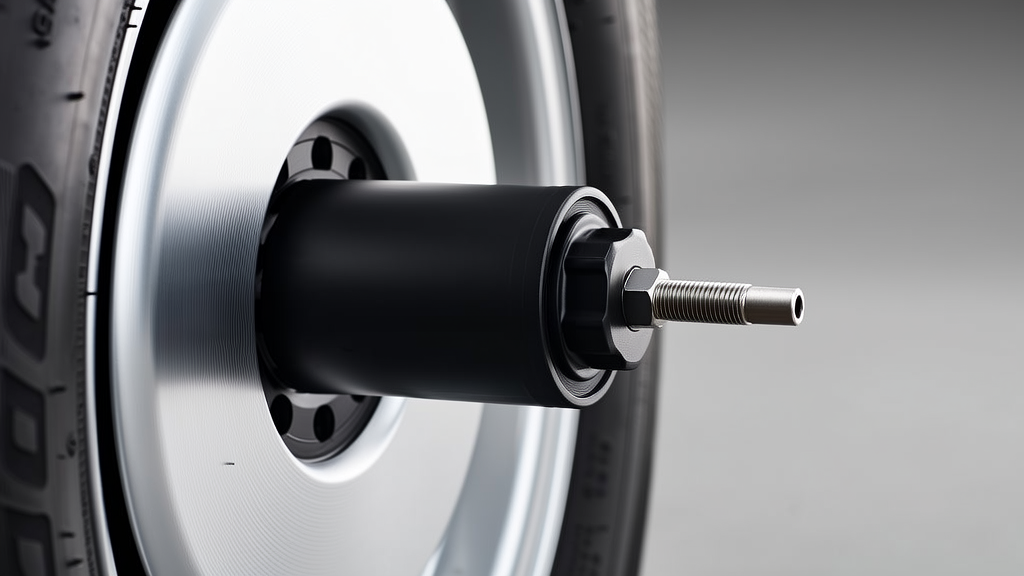
The TPMS Light Is a Symptom, Not a Diagnosis
Before you order a sensor, find out which one is actually dead. A flashing TPMS light followed by a solid light after roughly a minute usually means the system lost communication with one or more sensors — not that all of them failed.
Pull the codes with a TPMS-capable scan tool. You want to see which wheel position stopped reporting, whether the pressure readings are erratic, and whether the vehicle is complaining about low battery voltage inside a sensor. A sensor that reads 0 psi consistently is usually dead; one that reads 12 psi one minute and 34 the next is usually on its way out.
The common culprits, in order of frequency:
- Battery end-of-life. Sealed lithium cells inside TPMS sensors typically last 7–10 years depending on drive cycles and climate. When one goes, the other three are usually not far behind.
- Physical damage. A snapped valve stem, a sensor crushed during a tire change, or a corroded clamp-in nut.
- Water intrusion. Road salt and pressure-washer spray get past a dried-out valve seal.
If your vehicle is past the eight-year mark and one sensor has dropped out, price all four. Replacing one now and three more over the next twelve months costs more in labor than doing the set once.
The Three Numbers That Decide Fitment
1. Frequency
314.9 MHz and 315 MHz sit in the same band and are functionally interchangeable for GM-family vehicles — that is why a good sensor is listed as “314.9/315MHz” rather than one or the other. What is not interchangeable is 433 MHz, the band used on many European and Asian-market vehicles.
Put a 433 MHz sensor on a 315 MHz vehicle and the BCM will never hear it. The light stays on, the scan tool shows “no signal,” and the installer blames the part. Always confirm the band before anything else.
2. OE Number
The OE number is the only reliable cross-reference. Vehicle listings on marketplace sites are often wrong; part numbers stamped on the original sensor are not. GM reuses sensor part numbers across many platforms and model years, which is good news for buyers — one SKU can legitimately cover a long list of vehicles — but only if the cross-reference actually includes your number.
3. Relearn Protocol
A sensor that is electrically correct can still be a hassle if it will not accept the relearn your vehicle requires. GM vehicles generally use a dedicated relearn tool triggered through the OBD port or a specific ignition/brake sequence, and some also auto-learn after a drive cycle. Confirm that the replacement sensor is built to the same protocol as the original, not just the same frequency.
Product Snapshot: BL-ST-072
| Field | Detail |
|---|---|
| SKU | BL-ST-072 |
| Brand | BH-Sens (Baolong Technology) |
| Frequency | 314.9 / 315 MHz |
| OE numbers covered | 12768826, 13516164, 13540604, 13544443, 13581558, 13586335, 13589597, 13598771, 13598772, 15254101, 15268606, 15921013, 20922900 |
| Vehicle families listed | Brilliance, Buick, Cadillac, Chevrolet, GMC + 3 more |
| Valve type | Verify against your original sensor before ordering |
That OE list is the part that matters most. Copy your number off the old sensor — or pull it from a VIN-based parts lookup — and check it against that list character by character. One transposed digit is a returned part and a wasted afternoon.
OEM vs. OE-Equivalent vs. Universal
| Option | What you get | Best for | Watch out for |
|---|---|---|---|
| Dealer OEM sensor | Identical to factory part | Warranty vehicles, one-off repairs | Highest unit cost; availability varies |
| OE-equivalent (e.g., BH-Sens) | Same frequency, protocol and OE cross-reference, built to OE spec | Shops and resellers buying volume | Confirm the cross-reference covers your VIN |
| Universal / programmable | One SKU covers many vehicles, cloned with a tool | Mixed-fleet shops | Needs a programming tool and per-unit labor time |
For a single Envision repair, the OE-equivalent route is usually the sweet spot: correct protocol, correct frequency, a fraction of dealer pricing, and no programming tool required beyond a standard relearn.
What to Check Before You Click Order
Run this checklist every time, even on a part you have bought before:
- Read the old sensor. Photograph the stamp on the sensor body and the number on the valve. Compare, don’t assume.
- Confirm frequency. 314.9/315 MHz for GM-family applications; 433 MHz if your vehicle is a European or Asian import.
- Check valve stem style. Snap-in rubber versus clamp-in metal — they are not interchangeable, and the wrong one will not seal.
- Confirm the relearn method your vehicle needs and whether your tool supports it.
- Check the production date if it is printed on the label. Sensors have shelf life; old stock has a shorter service window.
- Buy the set if the vehicle is over eight years old. Four sensors, one labor charge.
- Ask about the warranty and DOA policy before you commit to bulk quantities.
B2B Bulk Buying Notes
If you are stocking these for a shop, a reseller, or a fleet, a few extra steps protect your margin:
Request the OE cross-reference sheet in writing. A supplier who can produce a clean cross-reference list — every number, every covered platform — is a supplier who knows the product. Vague “fits many models” claims are a red flag.
Sample before you scale. Order five to ten units, install two or three on real customer vehicles, and confirm the relearn works first time. Sensor electronics fail in ways that a bench test will not catch.
**Check labeling and