
Read the Light Before You Touch Anything
Two behaviors, two different problems.
Solid light on start-up, stays on. The system is receiving sensor data and something is out of range — usually pressure below the threshold on one or more tires. Check pressures cold with a gauge you trust, not the dash display. A slow leak from a corroded clamp-in valve stem is a common culprit on older wheels, and it looks exactly like a failing sensor.
Light flashes for 60–90 seconds, then stays solid. That is a communication fault. The ECU is missing a sensor ID entirely, or the signal is too weak to decode. This is the pattern you see after a tire rotation where nobody re-learned the positions, after a new set of wheels went on, or when a sensor battery has finally given out.
Light comes and goes while driving. Intermittent. Note the speed, the location, and what’s running in the car. This pattern almost always has an external cause.
The Real Causes, Ranked by Frequency
- Pressure genuinely low — temperature drop of 10°C can knock roughly 1 psi off a tire. Seasonal.
- Sensor battery at end of life — coin cells inside TPMS sensors typically last 7–10 years, less in cold climates.
- Positions never re-learned — the ECU knows four IDs but not which corner they’re on.
- Valve stem leak or corrosion — especially on clamp-in styles where the nut and rubber grommet see road salt.
- RF interference — cheap 12V USB chargers, dash cams, GPS trackers, LED retrofit bulbs, and wireless phone mirrors are the usual suspects.
- Wrong sensor installed — a 315MHz part on a 433MHz system will never pair, no matter how many times you trigger it.
- Dead sensor from a second wheel set — winter wheels sitting in the garage still transmit occasionally and can confuse a system that wasn’t told about them.
Dead Sensor Battery Symptoms — What It Actually Looks Like
A dying TPMS battery does not fail cleanly. It fades.
- Cold-morning dropouts. The light appears on the first cold start, then clears after 10–15 minutes of driving. Cold reduces coin-cell voltage; the sensor wakes up once the wheel warms.
- Pressure reads “—” or blank for one corner on the dash while the other three are live.
- The sensor ID disappears from the scan tool’s live list but reappears when you hold the tool right against the tire.
- Inconsistent wake-ups. A good sensor responds to a 125kHz trigger immediately. A weak one needs two or three attempts, or only responds when the vehicle is moving.
- Gradual shift in reported pressure. A sensor whose voltage is sagging often reports values a few psi off from a hand gauge.
If a sensor is more than eight years old and shows any two of these, replace it. Chasing a relearn on a dying battery wastes an afternoon.
Diagnosing Signal Interference Properly
Interference at 433MHz is real and it is almost always local. Work through it in this order:
- Unplug everything. Remove phone chargers, dash cams, radar detectors, and any aftermarket 12V accessory. Drive 10 minutes. If the light stays off, plug accessories back in one at a time.
- Check the wheel hardware. Metal valve caps, steel wheel liners, tire sealant residue, and thick bead-balancing compounds all attenuate the signal.
- Test one wheel at a time with a handheld TPMS tool held at the valve stem, then at the fender. A sensor that triggers at the stem but not at the fender has a weak transmitter or a shielding problem.
- Watch for location-based dropouts. If the light triggers at the same intersection or the same stretch of road every day, you’re driving through a strong external RF source. Nothing to fix — the system recovers on its own.
- Confirm frequency. On Hongqi models, the system runs 433MHz. Verify with the tool before condemning a sensor. A mismatched 315MHz unit will read fine on the bench and never pair in the car.
Diagnostic Cheat Sheet
| Symptom | Most likely cause | First test |
|---|---|---|
| Solid light, all four pressures normal on dash | Sensor reporting wrong value / gauge mismatch | Verify with a hand gauge, cold |
| Flashing ~60s at every start | Missing sensor ID or dead sensor | Scan for stored codes, count responding sensors |
| One corner blank on the display | Dead battery or failed sensor | Trigger that wheel with a TPMS tool |
| Light only on cold mornings | Weak sensor battery | Recheck after 15 minutes of driving |
| Light appears at the same spot daily | External RF interference | Log the location, unplug accessories |
| Light after tire rotation or wheel swap | Positions not re-learned | Perform a relearn procedure per the manual |
| Light after new sensors fitted | Wrong frequency or not pre-programmed | Confirm 433MHz and correct OE cross-reference |
Fitting the Right Sensor
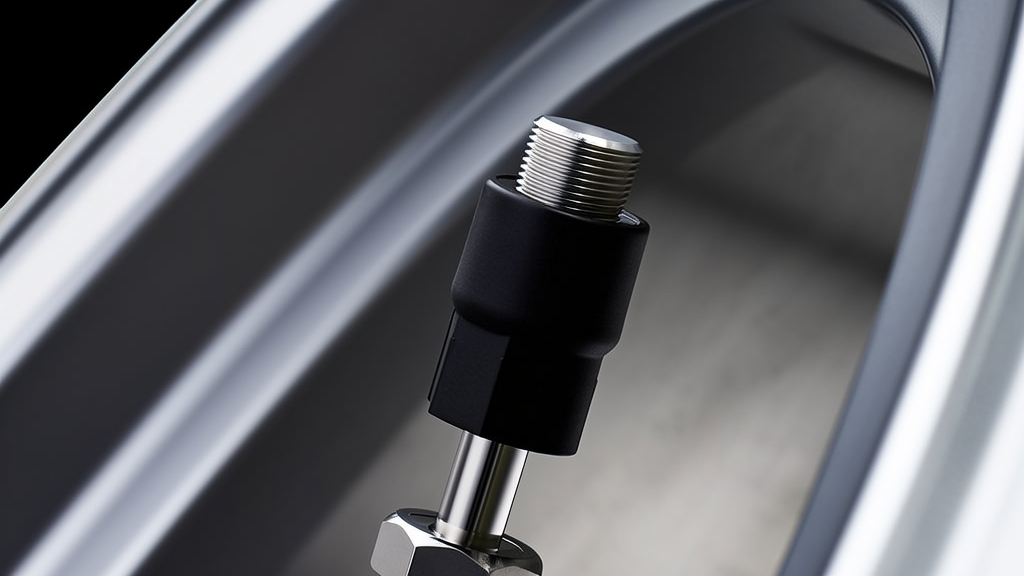
For Hongqi applications using OE number 3778080HA01, the BH-Sens 433MHz clamp-in sensor is pre-programmed and ready for a relearn out of the box — no bench programming needed. It’s the direct fit for two dedicated Hongqi applications, weighs around an ounce, and is built by Baolong Technology, a Tier-1 supplier. You can check current stock and application details here: BL-ST-046 | BH-Sens 433MHz TPMS Tire Pressure Sensor | Fits Hongqi | OE# 3778080HA01.
Do not substitute a 315MHz universal sensor. It will not communicate with a 433MHz Hongqi receiver, and the resulting “sensor failure” diagnosis is a wasted parts swap.
Recommended Part
BL-ST-046 — BH-Sens 433MHz TPMS Tire Pressure Sensor, fits Hongqi, OE# 3778080HA01. Clamp-in, pre-programmed, single-piece replacement for a dead or intermittent wheel sensor: BL-ST-046 | BH-Sens 433MHz TPMS Tire Pressure Sensor | Fits Hongqi | OE# 3778080HA01. Confirm the build year and wheel option against your vehicle’s TPMS spec before ordering, and always re-learn positions after fitting.
FAQ
How long do Hongqi TPMS sensor batteries last?
Most wheel sensors run 7–10 years depending on climate, mileage, and how often the vehicle sits. Hot climates and frequent short trips shorten life. Once a sensor starts dropping out on cold mornings, plan replacement rather than waiting for a full failure.
Can I just ignore the TPMS light?
No. A solid light means you may be driving on an underinflated tire, which affects braking distance, fuel economy, and sidewall heat. A flashing light means at least one wheel is unmonitored. Neither condition fixes itself, and the system won’t warn you about a real puncture if it can’t hear the sensor.
Why did my TPMS light come on right after new tires were installed?
Two reasons: the wheel positions weren’t re-learned after the swap, or a sensor was damaged during mounting — clamp-in sensors are vulnerable if the technician doesn’t unbolt the nut before demounting. Check that all four sensors respond to a trigger tool before assuming a part has failed.
Do I need to reprogram a new sensor?
The BL-ST-046 is pre-programmed with the correct protocol, so it only needs a position relearn — the procedure that tells the ECU which corner each ID belongs to. Follow the relearn sequence in your vehicle’s manual or use a TPMS tool with Hongqi coverage; the exact trigger method varies by model year.