
Common Causes of TPMS Warning Light on the 奔奔E-STAR
The 奔奔E-STAR is a popular Chinese compact EV that uses a direct TPMS system. Each wheel has a sensor mounted inside the tire that transmits pressure and temperature data to the car’s receiver module. When the warning illuminates, it’s not always a flat tire. Here are the three most likely culprits:
1. Low Tire Pressure (The Obvious One)
The TPMS light will come on solid when one or more tires drops below the programmed threshold — typically 25% below the recommended cold inflation pressure. On the 奔奔E-STAR, that’s usually around 32 PSI front and 35 PSI rear (check your driver’s door sticker). If the light is flashing on startup and then stays solid, this is almost certainly the cause.
2. Dead Sensor Battery (The Silent Killer)
Each TPMS sensor contains a non-replaceable lithium battery designed to last 5-7 years. The 奔奔E-STAR launched in 2020, so early models are now reaching end-of-life for their original sensors. The battery drains faster in cold climates and with frequent short trips (because the sensor doesn’t get enough wheel rotation to “wake up” and transmit efficiently).
Dead sensor battery symptoms:
- The TPMS light flashes for 60-90 seconds after startup, then stays solid.
- One or more tire pressure readings show “—” or a blank dash on the instrument cluster.
- The warning comes and goes intermittently, especially in cold weather.
- A TPMS scan tool cannot communicate with the sensor at all (no response).
3. Signal Interference (Less Common but Real)
RF interference is becoming more common as owners add aftermarket electronics. The 奔奔E-STAR’s TPMS operates on 433MHz. Devices that can block or distort that signal include:
- Dashcam power supplies running along the A-pillar near the TPMS receiver antenna (often mounted in the center console or near the rearview mirror).
- Aftermarket LED interior lights or headlight ballasts with poor RF shielding.
- USB chargers plugged into the 12V port that emit broadband noise.
- Metalized window tint on the windshield (can attenuate the signal to the receiver).
Diagnostic Steps (No Fancy Tools Required)
Step 1: Check Tire Pressures Manually
Use a good digital gauge. Inflate all four tires to the recommended pressure. Drive for 5-10 minutes — if the light goes out, it was just low pressure. If it remains, move to Step 2.
Step 2: Look for the Flashing Pattern
Start the car and watch the TPMS light:
- Solid on startup → pressure issue or sensor fault.
- Flashing for 60-90 seconds, then solid → sensor battery likely dead, or sensor missing (e.g., after tire rotation without relearn).
- No light at all → receiver module fault (rare) or blown TPMS fuse.
Step 3: Use a TPMS Scan Tool (or Visit a Shop)
A dedicated TPMS tool (like an Autel TS601 or similar) can wake up each sensor and read its battery voltage, pressure, and temperature. On the 奔奔E-STAR, sensors need to be triggered by a low-frequency (LF) tool placed against the tire sidewall near the valve stem.
What the scan tells you:
| Scan Result | Likely Diagnosis |
|---|---|
| Sensor responds, battery > 2.6V | Sensor is fine. Check for interference or receiver issue. |
| Sensor responds, battery < 2.4V | Replace sensor soon (battery is critically low). |
| No response from one sensor | Dead battery or damaged sensor. |
| No response from multiple sensors | Possible receiver module failure or interference. |
Step 4: Rule Out Interference
If all sensors respond but the light is intermittent, try this:
- Unplug any aftermarket dashcam, USB charger, or LED lights.
- Drive for 10 minutes. If the light stays off, reinstall devices one at a time to find the offender.
- If the light stays on even with all accessories unplugged, the receiver module may have a fault — this requires dealer-level diagnosis.
The Fix: Replacing a Dead 奔奔E-STAR TPMS Sensor
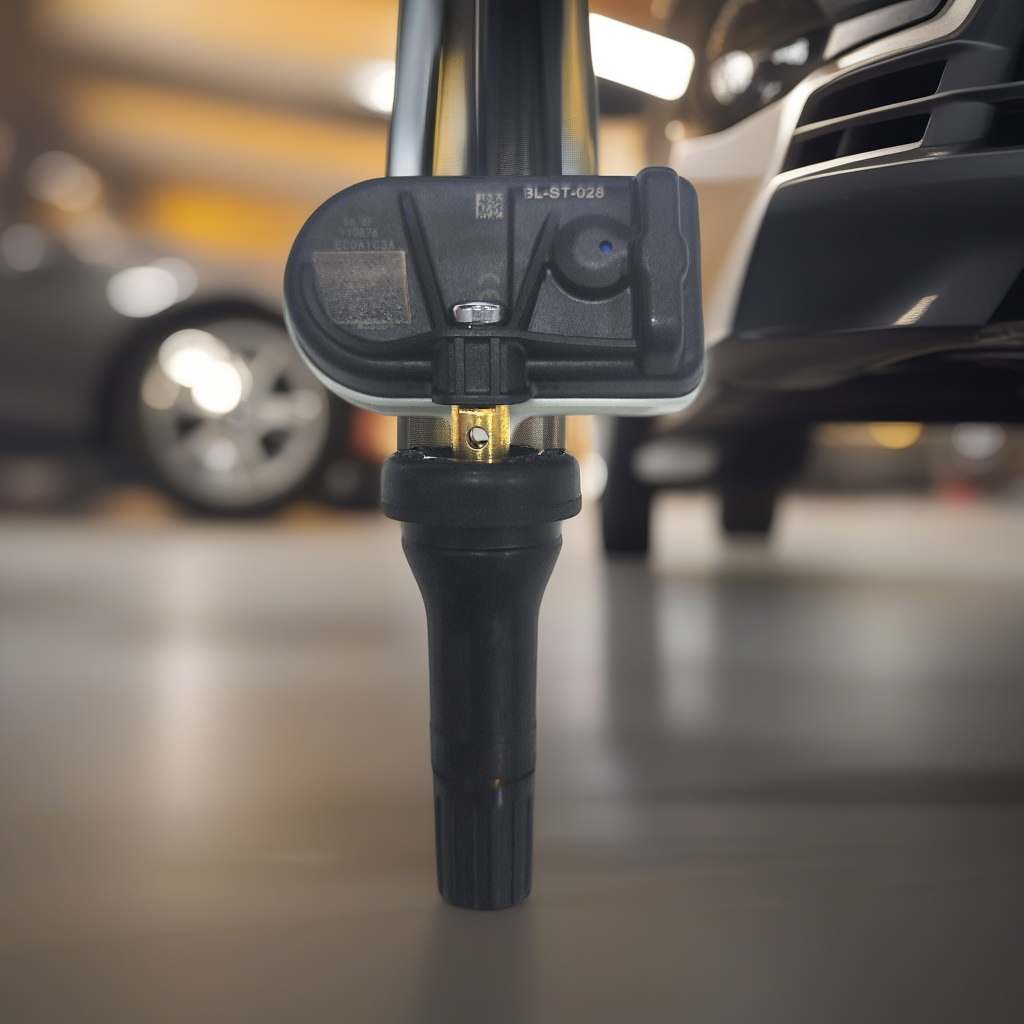
When a sensor battery is dead (no response from scan tool), the only fix is replacement. The 奔奔E-STAR uses a standard 433MHz clamp-in sensor with OE fitment. A direct-fit, pre-programmed option like the BL-ST-028 | BH-Sens 433MHz TPMS Tire Pressure Sensor | Fits Avatr, Changan, Deepal, Mazda, Nevo & 1 More | OE# 3601010CD01, 3601010DG01, 3601010MK02 eliminates the need for cloning or relearn in most cases — just install and drive. It covers Changan (the parent brand of 奔奔), Avatr, Deepal, and Mazda models that share the same TPMS platform with OE numbers 3601010CD01, 3601010DG01, and 3601010MK02.
Installation notes:
- Torque the sensor nut to 35 in-lbs (4 Nm) — do not overtighten.
- Always replace the rubber grommet and metal valve stem core when swapping sensors.
- After installation, drive above 15 mph (25 km/h) for 2-3 minutes for the car to relearn the sensor ID.
Recommended Part
For a direct, hassle-free replacement, use the BL-ST-028 | BH-Sens 433MHz TPMS Tire Pressure Sensor | Fits Avatr, Changan, Deepal, Mazda, Nevo & 1 More | OE# 3601010CD01, 3601010DG01, 3601010MK02. It is pre-programmed with the correct 433MHz frequency and fits the 奔奔E-STAR without additional programming tools. Always verify your vehicle’s exact OE part number from the old sensor before ordering.
FAQ
Why does my 奔奔E-STAR TPMS light flash on cold mornings?
Cold air contracts, lowering tire pressure by 1-2 PSI per 10°F drop. If your tires are already near the threshold, a cold morning can trigger the sensor. Also, cold temperatures reduce battery voltage in older sensors, causing them to fail to transmit reliably until they warm up.
Can I replace just one TPMS sensor on the 奔奔E-STAR?
Yes. The system is per-wheel independent. However, if three or four sensors are over 6 years old, it’s cost-effective to replace all at once — otherwise you’ll be back in the shop next winter when the next battery dies.
Will a 433MHz sensor from a Changan or Deepal work on my 奔奔E-STAR?
Yes — the 奔奔E-STAR shares the same TPMS platform with Changan and Deepal models. The BL-ST-028 | BH-Sens 433MHz TPMS Tire Pressure Sensor | Fits Avatr, Changan, Deepal, Mazda, Nevo & 1 More | OE# 3601010CD01, 3601010DG01, 3601010MK02 is explicitly compatible with all three brands. Always match the OE number (3601010CD01 or 3601010MK02) for guaranteed fitment.
How do I know if the problem is interference vs. a dead sensor?
Use a TPMS scan tool. If the tool can communicate with all four sensors and read live pressure/temperature, but the dashboard still shows no signal or a warning, interference is likely. If one sensor simply has no response, that sensor’s battery is dead.