
Understanding the Chery Ev TPMS System
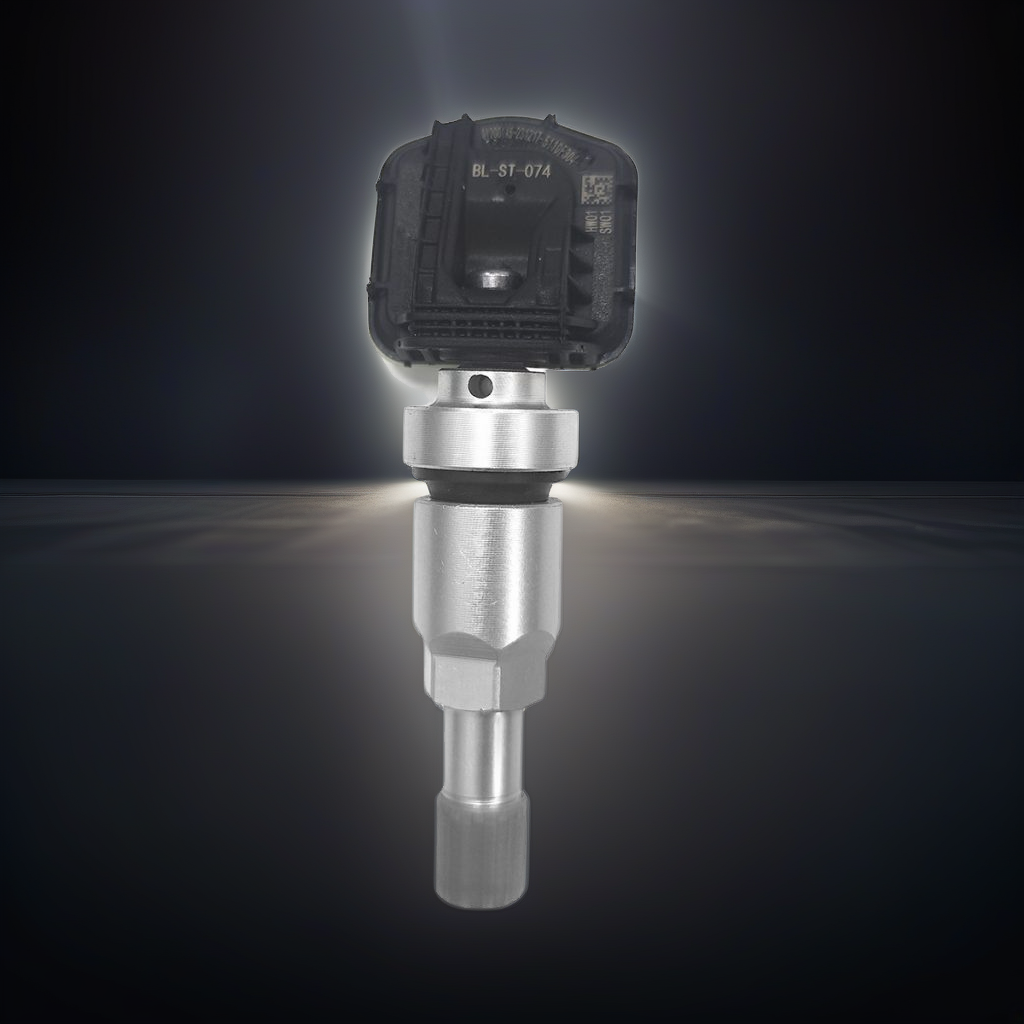
The Chery Ev uses a direct TPMS system that measures actual tire pressure and temperature at each wheel. The system relies on clamp-in sensors mounted to the valve stem, which communicate wirelessly to the vehicle’s ECU. The correct sensor for most Chery Ev models is the BH-Sens 433MHz TPMS Tire Pressure Sensor (BL-ST-074), a pre-programmed unit that covers nine vehicle applications including the Chery eQ1, Tiggo 3xe, and Cowin models.
These sensors are OE replacements for part numbers 11652AWARDKS and 802000012AA. Because they are pre-programmed, no additional cloning or programming tool is required for installation—the sensor ID is already set to match the vehicle’s receiver.
Critical Installation Torque Specifications
Getting the torque right is the single most important step in TPMS sensor installation. Over- or under-torquing leads to air leaks, sensor damage, or complete sensor failure.
| Component | Recommended Torque | Notes |
|---|---|---|
| Sensor-to-valve stem nut | 4-5 Nm (35-44 in-lbs) | Use a beam-style torque wrench; do not guess |
| Valve stem core | 0.5-0.6 Nm (4.4-5.3 in-lbs) | Hand-tighten then 1/4 turn; do not overtighten |
| Wheel lug nuts (sensor reinstall) | 100-120 Nm (74-88 ft-lbs) | Or follow your vehicle manual; cross-pattern |
Why torque matters: The BL-ST-074 sensor has a plastic housing around the metal valve stem. If you exceed 5 Nm on the nut, the housing can crack under the clamping force. If you go too low, the seal won’t compress properly and you will get a slow leak. I have seen more than a few Chery Ev owners bring in a sensor that failed within a week simply because someone used an impact gun on that tiny nut.
Valve Stem Service: What to Replace and When
When you remove a tire for sensor replacement or tire rotation, you must replace the following components on the valve stem assembly:
- Rubber grommet – This seals the sensor to the wheel hole. After one use, it compresses and will not reseal properly.
- Valve core – The tiny pin valve inside the stem. Replace it every time you open the system. A failed core is the #1 cause of intermittent TPMS warnings after service.
- Cap – Use only OEM-style metal valve caps from the sensor kit. Aftermarket plastic caps can cause galvanic corrosion on the brass stem.
For the BL-ST-074 sensor, the installation kit includes a new grommet, washer, nut, and valve core. Do not reuse old hardware from a previous sensor—the sealing surfaces wear.
Step-by-step valve stem service for Chery Ev:
- Remove the old sensor assembly from the wheel.
- Clean the wheel hole with a brass brush—no steel tools that could scratch the aluminum rim.
- Apply a thin layer of rubber lubricant (not tire soap) to the new grommet.
- Insert the sensor through the wheel hole, thread the nut by hand, then torque to 4-5 Nm.
- Install the new valve core and torque to 0.5-0.6 Nm.
- Pressurize the tire to 2.5 bar (36 psi) for most Chery Ev models, then check for leaks with soapy water.
Three Common Installation Mistakes (and How to Avoid Them)
Mistake #1: Using a Clamp-in Sensor in a Snap-in Wheel Hole
Some Chery Ev models (particularly earlier eQ1 variants) came with snap-in rubber valve stems from the factory. The BL-ST-074 is a clamp-in sensor. If you try to force a clamp-in sensor into a snap-in hole, the grommet will not seat properly and you will get a leak. Check your wheel type before ordering. If your Chery Ev has a snap-in stem, you need a different sensor model.
Mistake #2: Forgetting to Reset the Learning Procedure
Even though the BL-ST-074 is pre-programmed, the vehicle’s ECU still needs to recognize the new sensor ID. After installation, you must perform a TPMS learn/relearn procedure. For most Chery Ev models, this involves:
- Turn the ignition to ON (engine off).
- Press the TPMS reset button (located under the steering column or in the glovebox) until the TPMS light blinks.
- Start with the left front tire: increase or decrease pressure by 10 psi for 5 seconds until the horn sounds.
- Repeat for right front, right rear, left rear.
- Turn ignition OFF, then back ON. The TPMS light should turn off.
If you skip this step, the new sensor will not transmit, and you will get a constant warning light.
Mistake #3: Overtightening the Wheel Lug Nuts
This is not directly related to the sensor, but it is a common chain of failure. Chery Ev wheels are often aluminum alloy. If you torque lugs to 140 Nm (which is common for some SUVs), you risk warping the brake rotor or cracking the wheel. Warped rotors can cause vibration that knocks the sensor off frequency. Always use a torque wrench for lugs and stay within the 100-120 Nm range.
Recommended Part for Chery Ev TPMS Replacement
For a direct fit, pre-programmed sensor that works without cloning:
This part covers nine Chery and Chery Ev applications, uses the correct 433MHz frequency, and includes all necessary sealing hardware.
FAQ
Can I install the BL-ST-074 sensor on a 2021 Chery eQ1?
Yes, the BL-ST-074 is compatible with the 2021 Chery eQ1. However, confirm your wheel type first. If your eQ1 came with snap-in rubber valve stems, you cannot use this clamp-in sensor. Check the valve stem hole diameter—if it is roughly 11.5 mm, it is a clamp-in compatible wheel. If the hole is smaller (about 8 mm), you need a snap-in sensor.
What happens if I overtighten the sensor nut?
Overtightening the sensor nut beyond 5 Nm can crack the plastic housing that holds the electronics. Once the housing cracks, moisture enters the sensor and destroys the circuit board within weeks. You will get a TPMS fault light, and the sensor must be replaced entirely. Always use a torque wrench with a 5 Nm setting.
Do I need a special tool to program the BL-ST-074?
No. The BL-ST-074 is pre-programmed from the factory—it comes with the correct ID already set. You do not need a TPMS programming tool, cloning tool, or dealer-level scanner. The sensor is plug-and-play once installed and the vehicle’s learning procedure is completed.
How often should I replace TPMS sensors on a Chery Ev?
TPMS sensor batteries typically last 5-7 years. If your Chery Ev is from 2018 or earlier, the original sensors are likely approaching end of life. Replace all four sensors at the same time to avoid repeated service visits. The BL-ST-074 is a good replacement for 2018-2023 models.