
Why Audi TPMS Installations Are Different
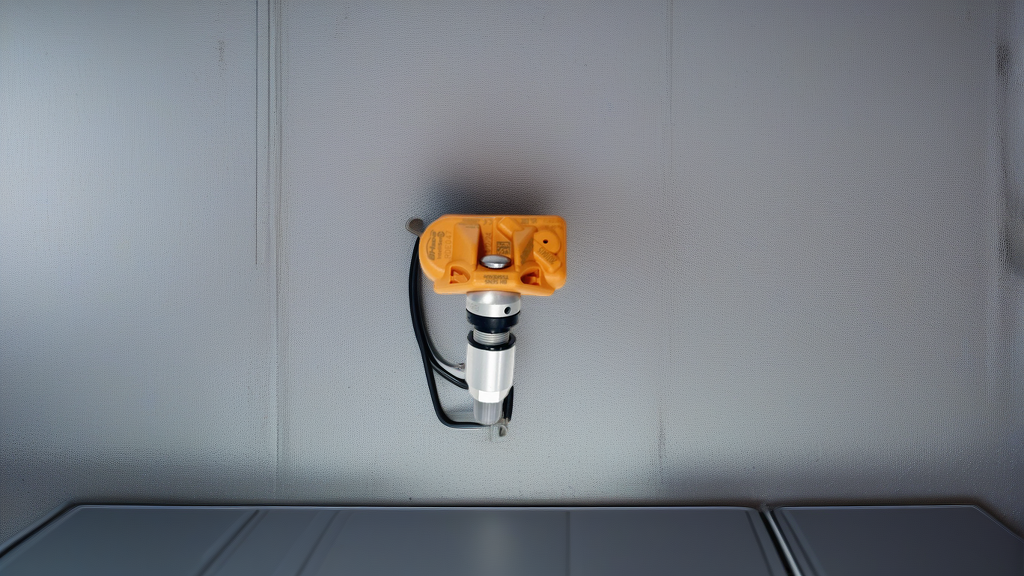
Audi vehicles use direct TPMS sensors that measure actual tire pressure and temperature inside the wheel. Unlike some brands that rely on ABS-based indirect systems, every Audi model from roughly 2008 onward uses a sensor mounted inside the wheel with a metal valve stem protruding through the rim. The sensor body is held in place by a single bolt (or occasionally two bolts) torqued to a precise spec.
The most common sensor used across Audi’s A3, A4, A5, Q5, Q7, and TT families is the 433MHz frequency unit, matching the BH-Sens RDE047V21. This sensor cross-references to OE numbers 2N0907275A, 5Q0907275B, and many others. But frequency compatibility is useless if the installation damages the sensor or causes a slow leak.
Critical Torque Specifications
Before you pick up a wrench, understand these three torque points. Every one of them matters.
Sensor-to-Wheel Torque
Audi TPMS sensors use a single M5 or M6 bolt (depending on the generation) to secure the sensor housing to a designated pocket inside the wheel barrel. The factory spec is almost always 35–45 Nm (26–33 ft-lbs). Do not guess. Use a torque wrench.
- Under-torquing (below 30 Nm): The sensor vibrates loose over time. This can damage the valve stem or let the sensor rattle around inside the tire, causing imbalance and eventual failure.
- Over-torquing (above 50 Nm): You risk cracking the plastic sensor housing or stripping the threads in the wheel. A cracked housing leaks air and the sensor becomes scrap.
If you are installing a used wheel or an aftermarket rim without a dedicated sensor pocket, verify the mounting surface is flat and clean. Some aftermarket wheels require a special adapter kit.
Valve Core Torque
The valve core (the tiny brass pin inside the valve stem) should be tightened to 3–5 Nm (2–3.7 ft-lbs). This is often forgotten. Hand-tightening a valve core is not enough—it can vibrate loose and cause a slow leak. Over-tightening can deform the rubber seal or strip the threads inside the valve stem.
Use a dedicated valve core tool with a torque-limiting handle, or a conventional tool with a very light hand. If you don’t have a torque tool for valve cores, snug it by hand and add a quarter turn with a wrench. That’s close enough.
Valve Stem Nut Torque
The hex nut that holds the valve stem against the wheel rim should be torqued to 3–6 Nm. This nut simply clamps the rubber grommet against the rim hole. Too tight and you compress the grommet too much, causing it to split and leak. Too loose and the valve stem rotates, potentially tearing the grommet or pulling on the sensor wire (on some older designs).
Valve Stem Service: The Grommet Is Not Optional
Here is where most DIY installations go wrong. The valve stem passes through a hole in the wheel rim. To seal that hole, there is a rubber grommet (or an O-ring on some designs) that gets compressed when you tighten the hex nut.
Never reuse an old grommet. Even if it looks fine, rubber hardens and develops a permanent compression set after a few years. A reused grommet will leak within months, sometimes immediately.
When you install the BH-Sens RDE047V21 sensor (which comes with a new valve stem assembly), you get a fresh grommet. Use it. Do not try to retrofit the sensor onto an old valve stem from a previous sensor.
Step-by-Step Valve Stem Installation
- Lubricate the grommet lightly with soapy water or rubber-safe lubricant. Do not use oil or silicone spray—these can degrade the rubber over time.
- Insert the valve stem through the wheel hole from the inside of the rim. The sensor body should be on the inside, with the valve stem sticking out through the hole.
- Place the hex nut over the valve stem from the outside. Hand-tighten it until the grommet contacts the rim surface.
- Torque the hex nut to 3–6 Nm. The grommet will bulge slightly around the rim hole—that is normal and correct.
- Install the valve core and torque to 3–5 Nm.
- Install the valve cap (plastic, not metal—metal caps can seize onto the brass stem).
Common Installation Mistakes (And How to Avoid Them)
1. Cross-Threading the Sensor Bolt
The sensor bolt threads into aluminum or steel wheel pockets. Aluminum wheels are soft. If you start the bolt at an angle, you will strip the threads instantly. Always start the bolt by hand for the first three full turns. If you feel resistance, back it out and realign.
2. Over-Tightening the Sensor Bolt on Plastic Housings
The BH-Sens RDE047V21 sensor has a plastic housing with a metal insert. The metal insert is strong, but the plastic surrounding it can crack if you apply excessive torque. Use a torque wrench set to 35–45 Nm. If you don’t have a torque wrench, tighten until the sensor feels snug, then stop. This is a rare case where “tight enough” is better than “really tight.”
3. Forgetting to Program or Relearn the Sensor
The RDE047V21 is a direct OE replacement. It comes pre-programmed with a unique ID. However, after installation, you must perform a TPMS relearn procedure on the Audi. This varies by model year:
- 2010–2016 Audi models: Usually requires a TPMS tool to trigger the sensor and the car learns it automatically while driving.
- 2017+ Audi models: Often requires a diagnostic tool (like VCDS or Autel) to manually enter the sensor ID into the ECU.
If you skip the relearn, the TPMS warning light stays on, and the system will not display pressures. This is not a sensor defect—it’s a missing step.
4. Using the Wrong Valve Stem for Aftermarket Wheels
Some aftermarket wheels have a thicker rim flange or a different hole diameter. A standard valve stem may be too short, causing the grommet to not seat properly. In such cases, use a universal TPMS valve stem extension kit. Never force a short stem into a thick rim—it will leak.
5. Mixing Frequencies
Audi uses both 315MHz and 433MHz sensors depending on the region and model year. The RDE047V21 is 433MHz. If your Audi originally came with a 315MHz system (common in North American models before 2014), a 433MHz sensor will not communicate with the car. Always verify the original sensor frequency before purchasing.
Fitment Reference for BH-Sens RDE047V21
| Vehicle Make | Model Years | Notes |
|---|---|---|
| Audi | 2010–2020 (A3, A4, A5, Q5, Q7, TT) | 433MHz, uses 5Q0907275B or 2N0907275A |
| BMW | 2014–2021 | 433MHz, OE# 36106866920 |
| Bentley | 2014–2020 | 433MHz, OE# 2N0907275A |
| Ferrari | 2015–2020 | 433MHz |
| Lamborghini | 2015–2020 | 433MHz |
| Porsche | 2013–2020 | 433MHz (Cayenne, Panamera) |
| Volkswagen | 2015–2020 | 433MHz (Golf, Passat, Tiguan) |
Always confirm the original OE number on your existing sensor before purchasing.
Recommended Part
For Audi owners needing a direct-fit 433MHz TPMS sensor, the RDE047V21 | BH-Sens 433MHz TPMS Tire Pressure Sensor | Fits Audi, BMW, Bentley, Ferrari, Lamborghini & 8 More | OE# 2N0907275A, 314818, 36106798872 is a reliable choice. It covers multiple OE cross-references including 2N0907275A, 5Q0907275B, and 5Q0907275F. The sensor is programmed and ready to pair after a standard relearn procedure.
FAQ
What torque should I use for the Audi TPMS sensor bolt?
Use 35–45 Nm (26–33 ft-lbs) for the single bolt that secures the sensor to the wheel. Always use a torque wrench. If you don’t have one, tighten the bolt firmly by hand but avoid over-torquing, as the plastic sensor housing can crack.
Can I reuse the old valve stem grommet when installing a new TPMS sensor?
No. Reusing an old grommet is the most common cause of slow tire leaks after a TPMS replacement. The rubber hardens over time and will not seal properly a second time. Always install the new grommet that comes with the sensor.
Why won’t my Audi recognize the new TPMS sensor after installation?
The sensor must be learned by the vehicle. On most Audi models, you either need to drive the car for 5–10 minutes (on 2010–2016 models) or use a diagnostic tool to enter the sensor ID (on 2017+ models). If the TPMS light remains on, perform a relearn procedure first before assuming the sensor is defective.
Does the BH-Sens RDE047V21 work on all Audi models?
It fits Audi models from 2010–2020 that use a 433MHz TPMS system, primarily the A3, A4, A5, Q5, Q7, and TT. It does not fit older models (pre-2008) or North American models that use 315MHz sensors. Check the OE number on your original sensor for compatibility.