
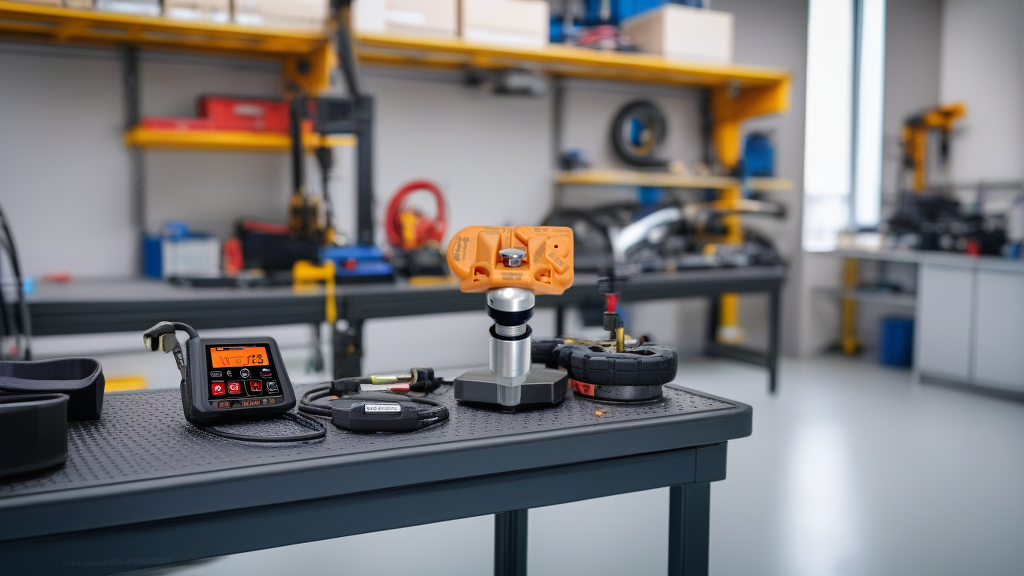
Understanding the SWM TPMS System
SWM (originally a joint venture between China’s Brilliance Auto and BMW) uses direct TPMS sensors mounted inside each wheel. These sensors measure actual tire pressure and temperature, transmitting data via a 433MHz radio frequency to the vehicle’s receiver module. Unlike indirect systems that rely on ABS wheel speed sensors, direct TPMS gives you real pressure values—but the batteries inside the sensors eventually die.
Most SWM models produced after 2015 use 433MHz sensors. The system is designed to alert you with a solid or flashing TPMS warning light when pressure drops 25% below the recommended level, or when a sensor stops transmitting entirely.
Three Common Causes of the TPMS Light on SWM Vehicles
1. Dead Sensor Battery (The Most Likely Culprit)
TPMS sensor batteries are non-replaceable. They typically last 5–8 years depending on driving conditions and temperature extremes. If your SWM is from 2017 or earlier, you’re in the window where batteries start failing.
Symptoms of a dead sensor battery:
- TPMS light stays on solid after a cold start
- One specific tire shows “—” or “0” pressure on the dashboard display
- The light flashes for 60–90 seconds after starting, then stays solid (this indicates a sensor failure, not low pressure)
- The affected wheel’s sensor does not respond to a TPMS scan tool
If you only have one sensor dropping out, it’s almost certainly a dead battery. Replacing all four sensors at once is recommended because the others will fail within months.
2. Physical Sensor Damage or Valve Stem Failure
SWM vehicles often drive on rough roads. A damaged sensor can result from:
- A hard curb impact that cracks the sensor housing
- Corrosion from road salt seeping into the valve stem
- Improper tire mounting that crushes the sensor
How to check: Remove the wheel and inspect the sensor body for cracks or visible damage. Look for corrosion around the valve stem nut. If the sensor looks intact but still fails to transmit, a scan tool will confirm if it’s sending data.
3. Signal Interference (Less Common, but Frustrating)
433MHz TPMS sensors operate on a shared frequency band. Interference can come from:
- Metalized window tint (especially ceramic or carbon tints with metallic content)
- LED light bars installed near the front bumper or under the vehicle
- Aftermarket dashcams with poor RF shielding
- USB chargers plugged into the 12V port that emit RF noise
Symptoms of interference:
- TPMS light comes on intermittently, especially when you activate certain accessories (e.g., turning on the LED light bar)
- Multiple sensors drop out at the same time, then come back
- The light resets itself after driving for 10–15 minutes
- Scan tool shows “signal weak” or “no response” from sensors that were working moments earlier
To diagnose, temporarily disable any aftermarket electronics. If the TPMS light behaves normally, you’ve found the interference source.
Diagnostic Steps for SWM Owners
| Step | Action | What to Look For |
|---|---|---|
| 1 | Check tire pressures with a manual gauge | One tire 25%+ below spec = low pressure, not sensor failure |
| 2 | Drive for 10 minutes | Light resets? Pressure was low and has warmed up |
| 3 | Use a TPMS scan tool (any universal 433MHz tool) | Reads battery voltage: <2.3V = dead; no response = dead or damaged |
| 4 | Inspect each sensor visually | Cracks, corrosion, loose valve stem nut |
| 5 | Disable aftermarket accessories one by one | Light goes off after removing LED bar? You found the interference |
If you don’t have a scan tool, most tire shops will do a TPMS check for free or a small fee. The tool will tell you sensor ID, pressure, temperature, and battery voltage in seconds.
Replacing Failed Sensors on Your SWM
When a sensor battery dies, there’s no repair—only replacement. You’ll need a 433MHz sensor that is compatible with SWM’s TPMS protocol. The RDE036V21 | BH-Sens 433MHz TPMS Tire Pressure Sensor | Fits Alfa Romeo, Aston Martin, BAIC, Chrysler, Dodge & 8 More | OE# 0045400217, 05154876AA, 407005DA0C (BH-Sens RDE036V21) is a direct-fit OE replacement. It operates at 433MHz and covers OE numbers like 0045400217, 05154876AA, and 407005DA0C—all common across SWM models that share platforms with Alfa Romeo, Chrysler, and other Stellantis family vehicles.
This sensor uses the same snap-in design as the original, so installation is straightforward: mount it with a new valve stem and torque the nut to the spec in your SWM owner’s manual (typically 4–6 Nm for most aftermarket sensors). After installation, a TPMS relearn is required. SWM models use either the “automatic relearn” (drive above 25 mph for 10 minutes) or a “manual relearn” with a TPMS tool. Check your year’s procedure.
Recommended Part
For a reliable, direct-fit 433MHz replacement on your SWM, the RDE036V21 | BH-Sens 433MHz TPMS Tire Pressure Sensor | Fits Alfa Romeo, Aston Martin, BAIC, Chrysler, Dodge & 8 More | OE# 0045400217, 05154876AA, 407005DA0C is a solid choice. It’s manufactured by BH-Sens (Baolong Technology), a Tier 1 supplier that ships millions of sensors to OE assembly lines. The aluminum housing resists corrosion, and the battery is rated for 6–8 years of typical use. Always replace all four sensors at once to avoid staggered failures.
FAQ
Can I replace just one TPMS sensor on my SWM?
Technically yes, but it’s not recommended. The other three sensors have similar battery age and will likely fail within months. You’ll pay for a second mounting and balancing visit anyway. Replacing all four at once saves labor costs and gives you peace of mind.
How do I reset the TPMS light on my SWM after replacing sensors?
Most SWM models use an automatic relearn: drive above 25 mph (40 km/h) for 10–15 minutes. If the light doesn’t reset, you may need a TPMS scan tool to trigger a manual relearn. Some years require a specific sequence (turn ignition on, press the TPMS reset button under the dash, then drive). Check your owner’s manual for the exact procedure.
Will aftermarket LED light bars cause TPMS interference on my SWM?
Yes, especially poorly shielded light bars installed near the front bumper or grille. The RF noise from the driver can overpower the 433MHz sensor signal. If your TPMS light only comes on when the light bar is active, relocate it farther from the wheel wells or add an electromagnetic interference filter to the power line.
How often should TPMS sensors be replaced on an SWM?
Plan on replacing them every 6–8 years, or when the battery dies. If you notice the TPMS light flashing on startup (not just solid), one or more sensors have failed. Don’t wait—driving with a dead sensor disables the system for that wheel, and you won’t know if you have a slow leak.