
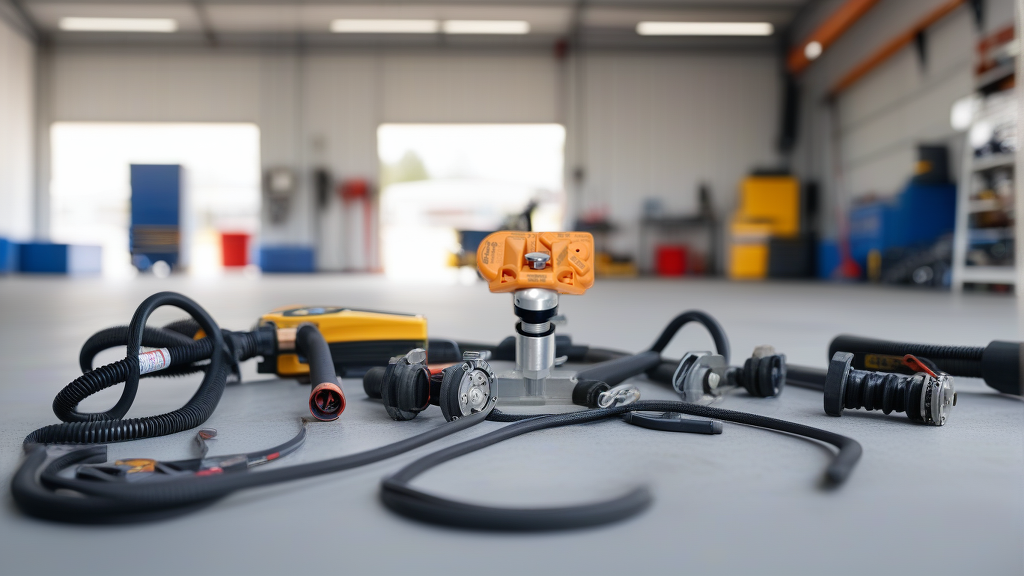
Understanding EQC TPMS Requirements
The EQC uses a direct TPMS system that measures tire pressure and temperature inside each wheel. Unlike indirect systems that rely on ABS wheel speed sensors, direct TPMS requires a physical sensor mounted on the valve stem. For the EQC, the correct frequency is critical: 433MHz is the standard for most models, but always verify against your vehicle’s build date.
Key Specifications to Check Before Ordering
| Parameter | What to Verify |
|---|---|
| Frequency | 433MHz for most EQC models (check your owner’s manual) |
| OE Part Numbers | 0045400217, 407005DA0C, 56029398AB, 670002790 |
| Sensor Type | Direct, valve-mounted (aftermarket or OE-equivalent) |
| Programmability | Pre-programmed vs. programmable via cloning tool |
| Battery Life | Typically 5–7 years; replace if original sensor is over 4 years old |
What to Check Before Ordering a Single Sensor
If you’re replacing a single faulty sensor on your EQC, follow these steps:
- Confirm the frequency – Use a TPMS scan tool or check your service records. 433MHz is the most common, but 315MHz appeared on some early imports.
- Verify the OE number – Look at the old sensor’s label. Matching OE numbers like 0045400217 or 4199034000 ensures correct fitment.
- Check the sensor’s age – If the original sensor is over 4 years old, consider replacing all four. Battery failure is common around year 5–7.
- Choose between pre-programmed and cloneable – Pre-programmed sensors are plug-and-play for specific EQC years. Cloneable sensors let you copy the original sensor’s ID, which is useful if your vehicle requires a dealer tool for relearn.
B2B Bulk Buying Notes for EQC TPMS Sensors
For workshops or fleets ordering multiple EQC sensors, efficiency and cost control matter. Here’s what to keep in mind:
- Programmability saves labor – Bulk-buy programmable sensors (e.g., the RDE036V21 | BH-Sens 433MHz TPMS Tire Pressure Sensor | Fits Alfa Romeo, Aston Martin, BAIC, Chrysler, Dodge & 8 More | OE# 0045400217, 05154876AA, 407005DA0C) that can be cloned or programmed to multiple OE IDs. This reduces inventory SKUs and lets you cover EQC variants plus other models (Alfa Romeo, Chrysler, Dodge) from one stock.
- Verify batch consistency – Ask for a sample first. Check that the valve stem material (rubber or metal) matches EQC wheel specifications. Metal stems are more durable for high-torque applications.
- Consider cross-vehicle fitment – The RDE036V21 sensor fits over 10 brands including Aston Martin and BAIC. If you service mixed fleets, one SKU can replace multiple OE numbers, simplifying your inventory.
- Relearn procedure matters – Some EQC models require a TPMS tool for sensor ID registration. Pre-programmed sensors that match the original ID eliminate the need for relearn, saving 10–15 minutes per vehicle.
Common OE Numbers for EQC TPMS Sensors
| OE Number | Notes |
|---|---|
| 0045400217 | Most common on 2020–2023 EQC models |
| 407005DA0C | Used on later production runs |
| 56029398AB | Interchangeable with 0045400217 |
| 670002790 | Found on European-market EQC |
Recommended Part for EQC TPMS Replacement
For a reliable, cost-effective replacement that covers multiple OE numbers and vehicle brands, consider the RDE036V21 | BH-Sens 433MHz TPMS Tire Pressure Sensor | Fits Alfa Romeo, Aston Martin, BAIC, Chrysler, Dodge & 8 More | OE# 0045400217, 05154876AA, 407005DA0C. It’s a 433MHz BH-Sens sensor from Baolong Technology, with pre-programmed options that match EQC requirements directly. B2B buyers benefit from its wide OE coverage, reducing the need for multiple part numbers in your stock.
FAQ
Can I use a 315MHz TPMS sensor on my EQC?
No. The EQC is designed for 433MHz sensors. Using a 315MHz sensor will not communicate with the vehicle’s receiver, and the TPMS warning light will stay on. Always match the frequency to your car’s original system.
How do I know if my EQC sensor is failing?
Symptoms include a persistent TPMS warning light, incorrect tire pressure readings on the dash, or a “Service TPMS” message. You can confirm using a TPMS diagnostic tool that reads sensor IDs and battery voltage. If the sensor does not respond, it likely needs replacement.
Do I need a TPMS relearn tool after installing a new sensor?
It depends on the sensor type. Pre-programmed sensors that match the original ID do not require a relearn. Cloneable sensors that copy the old ID also skip the relearn step. If you install a generic programmable sensor, you will need a TPMS tool to register it to the EQC’s system.
What is the typical battery life of an EQC TPMS sensor?
Most EQC sensors last 5 to 7 years. Battery life depends on driving conditions and ambient temperature. If your EQC is 4 years old or older, consider replacing all four sensors as a preventative measure during tire changes.