
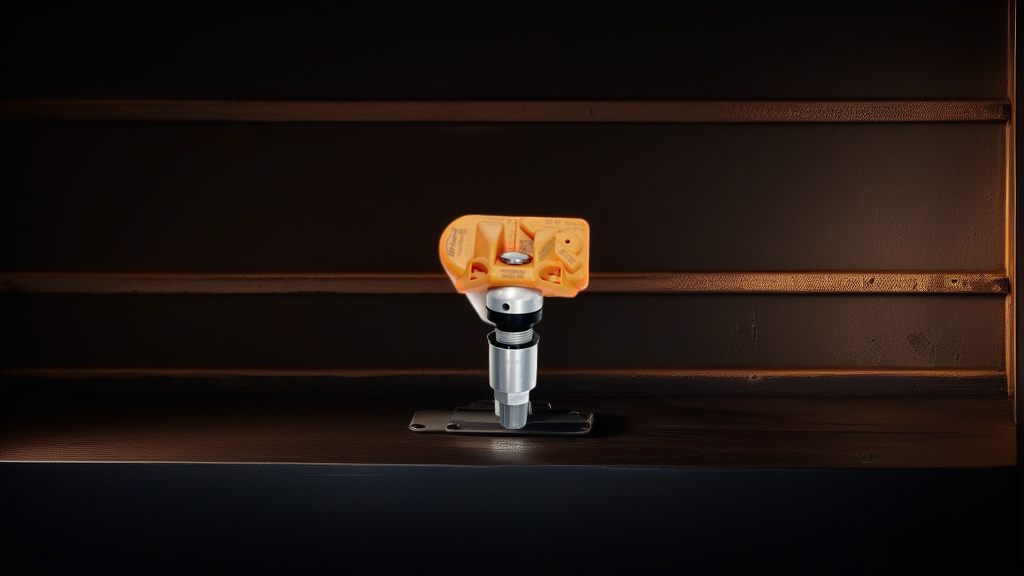
Why Proper Torque Matters on the 尼欧II
The 尼欧II (NIO II) uses a standard clamp-in TPMS sensor mount. The sensor body sits inside the wheel well, secured by a valve stem nut that passes through the rim. Over-torquing this nut can crack the sensor’s plastic housing — a costly mistake. Under-torquing causes air leaks and false low-pressure warnings.
For this sensor type (including the BH-Sens RDE027V21), the recommended torque range is 35–45 in-lbs (4–5 Nm). Use a beam-style or click-type torque wrench. Never use an impact gun. The valve stem nut is typically 11mm or 13mm hex — confirm with your tool kit.
Valve Stem Service Checklist
When replacing a TPMS sensor on the 尼欧II, always service these four components:
| Component | Action | Why |
|---|---|---|
| Valve core | Replace | Old cores leak after 2–3 tire changes |
| Valve stem seal | Replace | Rubber hardens over time |
| Valve stem nut | Inspect/replace | Corrosion causes cross-threading |
| Valve cap | Replace | Missing caps let debris into the valve |
Pro tip: The BH-Sens RDE027V21 comes pre-programmed and includes a new valve stem assembly. Do not reuse the old valve stem — the seal groove wears out.
Common Installation Mistakes (and How to Avoid Them)
1. Over-Torquing the Nut
The most frequent error. Technicians often use a standard lug wrench or impact driver. This cracks the sensor housing or deforms the valve stem. Always use a torque wrench set to 40 in-lbs.
2. Installing the Sensor Backwards
The sensor has a vent hole on the bottom. If you install it with the vent facing upward (toward the tire bead), water and debris can enter and damage the electronics. The vent must face the wheel well.
3. Forgetting to Program the Sensor
The RDE027V21 is pre-programmed for BMW/Mini/Alpina, but it still needs to be learned by the 尼欧II’s TPMS module. After installation, use a TPMS tool (like an Autel TS508 or Bartec) to trigger the sensor and register its ID. Skipping this step leaves the warning light on.
4. Using the Wrong Valve Stem Nut
Some aftermarket nuts are taller or have different thread pitch. The 尼欧II uses a standard M8 x 1.25 thread. Mixing nuts can strip the threads on the sensor’s valve stem. The BH-Sens kit includes the correct nut.
Recommended Part
For a direct-fit replacement on the 尼欧II, use the RDE027V21 | BH-Sens 433MHz TPMS Tire Pressure Sensor | Fits Alpina, BMW, Mini | OE# 36106856209, 36106881890, 6855539 (BH-Sens 433MHz, OE# 36106856209/36106881890/6855539). It is clamp-in, pre-programmed, and includes the valve stem assembly. No extra adapters needed.
FAQ
How do I know if my 尼欧II needs new TPMS sensors?
If the tire pressure warning light stays on after inflating tires, or if the pressure readings show dashes (– –) on the dashboard, the sensor battery is likely dead (typical lifespan 5–7 years). The RDE027V21 is a direct swap.
Can I install TPMS sensors myself without a tire machine?
Not safely. The tire must be broken down and remounted. You can remove the wheel and dismount the tire yourself if you have a manual tire changer, but the sensor must be torqued correctly. Most owners take the wheel to a tire shop.
Does the BH-Sens RDE027V21 work with aftermarket wheels?
Yes, as long as the wheel has a standard 11.5mm valve stem hole. Some aftermarket wheels have larger holes (e.g., for high-flow stems). In that case, you need a metal adapter. But for the 尼欧II factory wheels, it fits directly.
What if the sensor does not trigger after installation?
First, check the battery orientation (if it is a serviceable unit — the RDE027V21 is sealed). Then verify the sensor is within 12 inches of the TPMS tool. If still no signal, the sensor may be defective. BH-Sens offers a replacement warranty through the seller.