
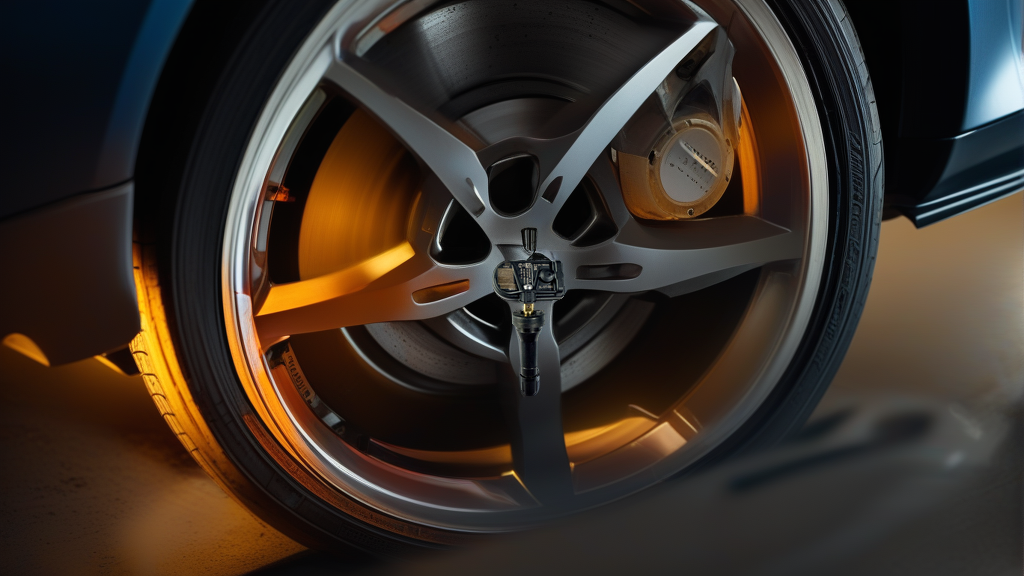
Why 433MHz Matters for Your SONG PRO DM-I
The SONG PRO DM-I relies on a 433MHz frequency band for tire pressure monitoring. This is the standard for most Asian-market vehicles (315MHz is common in North America). The 433MHz signal penetrates vehicle chassis and wheel wells more effectively than lower frequencies, especially in the DM-I’s hybrid drivetrain where battery packs and electric motors add electromagnetic interference.
Unlike older 315MHz systems, 433MHz offers better range for larger vehicles like the SONG PRO DM-I SUV, with a typical transmission distance of 8-12 meters from wheel to receiver. Higher frequency also means faster data packet transmission (typically 20-30ms per burst), critical for real-time pressure alerts during highway driving.
Battery Life: What 5-7 Years Really Means
The BL-ST-096 sensor uses a CR2032 or equivalent lithium battery rated for 5-7 years under normal use. Here’s what shortens that lifespan:
- Extreme temperatures (below -20°C or above 80°C inside the tire)
- Frequent low-pressure alerts (sensor transmits more often when pressure drops)
- High mileage (each ignition cycle triggers a recalibration transmission)
Replace all four sensors at once when one fails — mixing battery ages leads to uneven wear and missed alerts.
IP Rating & Environmental Resistance
| Specification | Value | What It Means |
|---|---|---|
| IP Rating | IP67 | Dust-tight, submersible up to 1m for 30 minutes |
| Operating Temp | -40°C to +125°C | Survives tire bead heating and cold climates |
| Pressure Range | 0–800 kPa (0–116 psi) | Covers all standard passenger and light truck tires |
The IP67 rating is critical for the SONG PRO DM-I because its low-profile tires (often 225/60R18 or 235/50R19) generate more heat during braking regeneration. The sensor’s sealed housing prevents moisture ingress from pressure washing or puddle splashes.
Protocol Compatibility: Why 0x022A Matters
The SONG PRO DM-I uses protocol 0x022A, which is a frequency-shift keying (FSK) protocol specific to BYD’s 2025+ CAN bus architecture. Older BYD models (2020-2024) used 0x021F or 0x0208 — these are not compatible.
The BL-ST-096 | BH-Sens 433MHz TPMS Tire Pressure Sensor | Fits BYD (2025+) | OE# EUEA3609200B, 110964, BLST096 matches the 0x022A protocol exactly, so it auto-relearns without a TPMS programming tool. Installation process:
- Mount sensor with correct torque (check manual — typically 4-5 Nm)
- Inflate tire to specified pressure
- Drive above 25 km/h for 2-3 minutes
- System recognizes sensor automatically via rolling code sync
Fitment Table for BH-Sens BL-ST-096
| BYD Model | Year | OE# | Notes |
|---|---|---|---|
| SONG PRO DM-I | 2025+ | EUEA3609200B | Direct fit, no adapter |
| SONG PLUS DM-I | 2025+ | 110964 | Identical protocol |
| HAN DM-I | 2025+ | BLST096 | Requires same 0x022A |
| YUAN PLUS | 2025+ | EUEA3609200B | Verify tire pressure range |
Fits 34 BYD models total — always cross-reference your VIN with the “110964” OE number.
Recommended Part
For a direct plug-and-play replacement on your SONG PRO DM-I, use the BL-ST-096 | BH-Sens 433MHz TPMS Tire Pressure Sensor | Fits BYD (2025+) | OE# EUEA3609200B, 110964, BLST096. No programming tool, no dealer visit — just mount and drive.
FAQ
Can I use a 315MHz sensor on my SONG PRO DM-I?
No. The SONG PRO DM-I’s TPMS receiver is tuned exclusively for 433MHz. A 315MHz sensor will not communicate, triggering a constant “TPMS fault” warning.
How do I know when my TPMS battery is dying?
You’ll see intermittent “Tire Pressure Sensor Fault” messages on the dashboard, usually followed by a steady warning within 1-2 weeks. The sensor stops transmitting, not the battery failing gradually.
Will the BL-ST-096 work with aftermarket wheels?
Yes, as long as the wheel has standard 11.3mm valve stem holes. For custom wheels with 9.5mm holes (rare on BYD), use a metal valve stem adapter — but verify clearance first.
What’s the torque spec for installing this sensor?
BYD specifies 4.5 Nm for the valve stem nut on OEM wheels. Over-tightening cracks the sensor body. Use a torque wrench — finger-tight is not enough.