
Understanding the 433MHz vs 315MHz Difference
If you’re replacing TPMS sensors on a Bestune, you’ll find that nearly all models — from the Bestune T77 to the X40 — use the 433MHz frequency band. The 315MHz band is more common in older North American and Japanese vehicles (e.g., some Toyota and Honda models), but Chinese domestic brands like FAW and Hongqi standardized on 433MHz early on.
Why does frequency matter? The receiver in your Bestune’s TPMS module is tuned specifically to 433MHz. Installing a 315MHz sensor will not trigger a reading — you’ll get a permanent flashing light and no pressure data. The BL-ST-040 from BH-Sens (Baolong Technology) is pre-programmed to 433MHz, matching the exact frequency of the original sensor.
Battery Life and Replacement Intervals
TPMS sensor batteries are non-replaceable. The BL-ST-040 uses a sealed lithium battery rated for 5-7 years under normal driving conditions. Factors that shorten battery life include:
- Frequent extreme temperature swings (e.g., -30°C to 40°C)
- Continuous high-speed driving (battery drain increases with transmission rate)
- Low battery voltage in the vehicle (sensor wakes up more often)
If your Bestune’s TPMS light comes on intermittently or shows “sensor fault” after 5 years, battery depletion is the most likely cause. Replace all four sensors at once — mixing old and new batteries can lead to uneven reporting.
IP Rating: What IP67 Means for a Clamp-In Sensor
The BL-ST-040 carries an IP67 rating:
- IP6X – Fully dust-tight. No ingress of road grit, sand, or salt.
- IPX7 – Can be submerged in 1 meter of water for 30 minutes without damage.
For Bestune owners, this is especially relevant in winter: road salt and slush can corrode cheap sensors. The IP67 seal protects the internal electronics, but the valve stem and metal housing still need to be checked for corrosion during tire changes.
Protocol Compatibility – What “Pre-Programmed” Really Means
Not all 433MHz sensors speak the same protocol. Bestune, FAW, and Hongqi use a specific communication protocol that is not interchangeable with, say, a 433MHz sensor meant for a Ford or BMW. The BL-ST-040 is pre-programmed to match the original sensor’s ID structure and data format for these brands.
Fitment and Spec Comparison
| Parameter | BL-ST-040 (BH-Sens) | Typical OE Sensor |
|---|---|---|
| Frequency | 433MHz | 433MHz |
| Battery Life | 5-7 years | 5-7 years |
| IP Rating | IP67 | IP67 |
| Installation | Clamp-in | Clamp-in |
| Programming | Pre-programmed | OE-coded |
| Compatible Brands | Bestune, FAW, Hongqi | Bestune, FAW, Hongqi |
| OE Cross References | 3602100FD, 3602100FDA, 3778080DB01A, 3778080DDS1, 3778080E16 | Same numbers |
Recommended Part
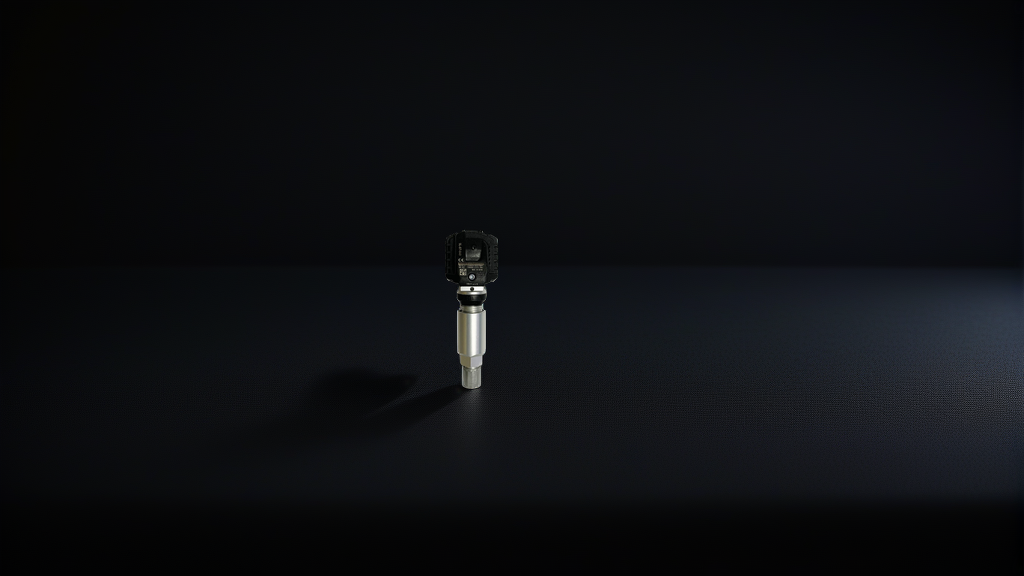
If you need to replace a failing sensor on your Bestune, the BL-ST-040 | BH-Sens 433MHz TPMS Tire Pressure Sensor | Fits Bestune, FAW, Hongqi | OE# 3602100FD, 3602100FDA, 3778080DB01A is a direct-fit, no-programming-required solution. It comes ready to sync with your vehicle’s TPMS module — just install and drive.
FAQ
Can I use a 315MHz TPMS sensor on my Bestune?
No. Bestune, FAW, and Hongqi vehicles are designed for 433MHz sensors. A 315MHz sensor will not communicate with the receiver module — you’ll get no pressure readings and a persistent warning light.
How do I know when the battery is dying in my BL-ST-040 sensor?
The TPMS warning light will flash or stay solid, and the dashboard display may show “sensor fault” or “low battery” for that wheel. The sensor will still transmit data, but the signal becomes intermittent. Replace it as soon as possible.
Do I need to reprogram the BL-ST-040 after installation?
No. It is pre-programmed with the correct protocol and frequency for Bestune, FAW, and Hongqi. However, your vehicle’s TPMS module may need to relearn the sensor ID — this is usually a 5-minute procedure using a TPMS tool or driving at 30-40 km/h for 10 minutes.
Is the BL-ST-040 compatible with aftermarket wheels?
Yes, because it is a clamp-in sensor. It fits any standard 0.453-inch (11.5mm) valve hole used in aluminum or steel wheels. Check that the valve stem nut is torqued to the wheel manufacturer’s spec (typically 4-6 Nm) to avoid air leaks.