
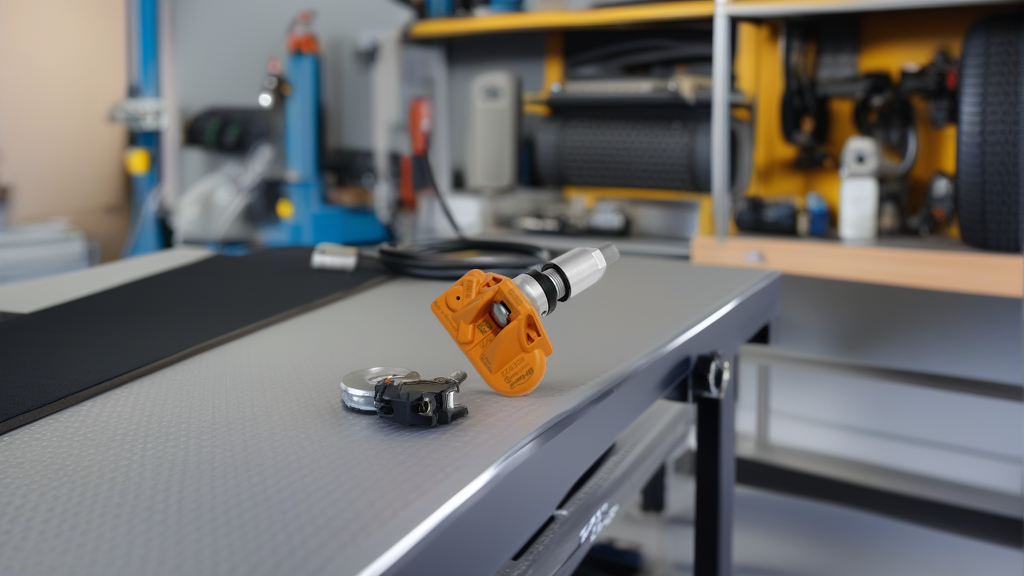
Clamp‑in Sensor Torque Specs
The RDE022V21 | BH-Sens 315MHz TPMS Tire Pressure Sensor | Fits Aston Martin, Audi, BMW, Bentley, Ferrari & 5 More | OE# 249363, 290569, 4F0907275A is a clamp‑in type sensor. Unlike snap‑in sensors, clamp‑ins use a metal nut to secure the sensor to the valve stem hole. Correct torque is critical:
- Sensor nut: 35–40 in-lbs (4–0–4.5 Nm). Never exceed 45 in‑lbs — over‑torquing deforms the sealing washer or cracks the sensor housing.
- Valve stem core: Hand‑tight plus ¼ turn. Use a valve core tool, not pliers.
- Lug nuts: After sensor installation, torque wheels to manufacturer spec (usually 80–100 ft‑lbs for Quattroporte models). Always re‑torque after 50 miles.
Tip: Use a dedicated inch‑pound torque wrench. A standard foot‑pound wrench cannot accurately measure 35 in‑lbs.
Valve Stem Service Procedure
When replacing a TPMS sensor, always replace the valve stem components:
| Component | Action | Common Mistake |
|---|---|---|
| Valve stem cap | Replace with metal cap | Using plastic cap that cracks under heat |
| Valve core | Replace with new | Reusing old core — leaks develop within months |
| Sealing washer | Replace with new | Omission leads to slow air loss |
| Sensor nut | Replace if corroded | Reusing rusted nut — cross‑threading guaranteed |
Step‑by‑step for Quattroporte:
- Break bead and remove tire from wheel (use a touch‑less machine to avoid sensor damage).
- Remove old sensor nut and valve stem assembly.
- Clean the valve hole area with a brass wire brush.
- Install new sealing washer, then sensor, then nut. Torque immediately to 35–40 in‑lbs.
- Install new valve core and cap. Inflate tire to 36–38 psi (check driver door sticker).
- Relearn sensor positions using a TPMS tool or vehicle menu.
Common Installation Mistakes
| Mistake | Consequence | Prevention |
|---|---|---|
| Overtorquing sensor nut | Cracked sensor body, air leak, sensor failure | Use torque wrench, not impact gun |
| Using Teflon tape on valve stem | Blocks sensor vent, causes false low‑pressure alerts | Tape is never needed on clamp‑in sensors |
| Installing sensor with old rubber grommet | Air leak at stem base | Replace grommet every sensor change |
| Forgetting to reset TPMS after rotation | Wrong tire location shown on dash | Always relearn after rotation/tire change |
Recommended Part
For a direct fit on your QUATTROPORTE (2013–2020 models with 315MHz systems), use the RDE022V21 | BH-Sens 315MHz TPMS Tire Pressure Sensor | Fits Aston Martin, Audi, BMW, Bentley, Ferrari & 5 More | OE# 249363, 290569, 4F0907275A. It comes pre‑programmed with OE numbers 4F0907275A/C/H, 7P0907275A, and others — no cloning needed for most vehicles.
FAQ
What happens if I use the wrong torque on a Quattroporte TPMS sensor?
Under‑torque causes air leaks from the valve stem seal; over‑torque cracks the sensor housing or strips the threads. Either results in sensor loss of function or a slow leak. Always stay within 35–40 in‑lbs.
Can I reuse the old valve stem core on a new sensor?
No. The core is a wear item — the rubber seal hardens over time. Replace it with a new brass core every sensor change. It costs pennies and prevents a trip back to the shop.
Why does my Quattroporte show “TPMS Fault” after new sensor install?
Most likely the sensor was not learned to the vehicle. After installation, drive above 20 mph for 5–10 minutes, or use a TPMS activation tool to force a relearn. Also check that the sensor frequency matches — your Quattroporte uses 315MHz, not 433MHz.
Does wheel finish matter for sensor installation?
Yes — aftermarket wheels with thicker barrels or different valve stem hole angles can require a different sensor nut length. Always test fit the sensor before mounting the tire.