
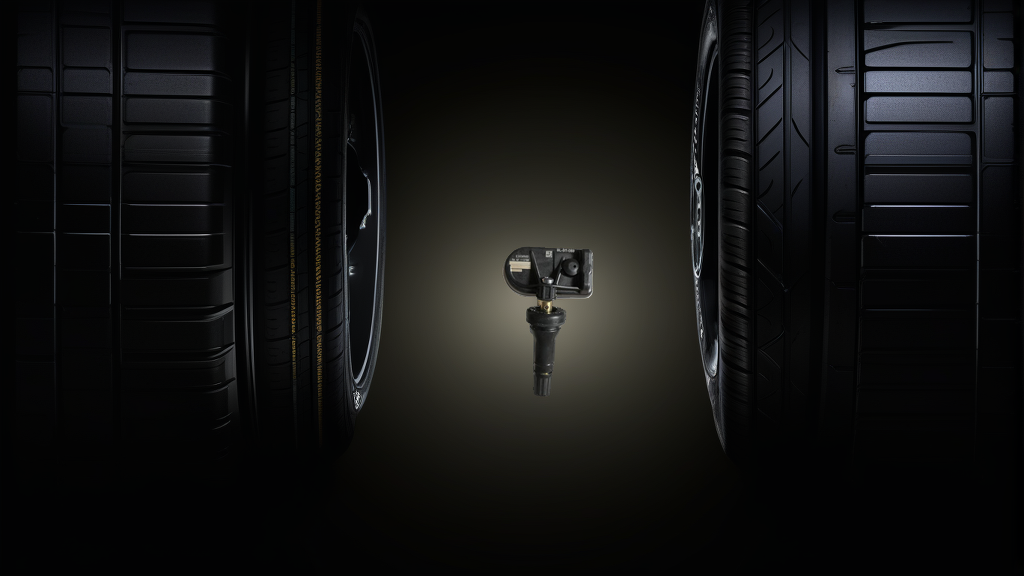
Why Your IX TPMS Light Turns On
The Tire Pressure Monitoring System (TPMS) on your IX IX uses direct sensors mounted inside each wheel. These sensors transmit pressure and temperature data to the vehicle’s receiver module. When the warning light activates, it’s either a pressure issue or a sensor communication problem. Understanding the difference saves diagnostic time.
Common TPMS Light Causes on the IX
| Symptom | Likely Cause | Action |
|---|---|---|
| Light steady on, one tire reads low | Underinflation | Inflate to spec, reset system |
| Light steady on, all tires read normal | Recent pressure loss event | Drive 10+ minutes at 25+ mph |
| Light flashes 60-90 sec then stays on | Sensor fault or dead battery | Diagnose individual sensors |
| Light intermittent, no pressure change | RF interference | Check nearby electronics |
| Light on after tire rotation | Sensor ID not relearned | Perform TPMS relearn procedure |
Dead Sensor Battery Symptoms in the IX
IX TPMS sensors use internal lithium batteries rated for 4–7 years (typical automotive standard). Battery depletion is the #1 reason for sensor failure in vehicles 5+ years old.
Telltale Signs of a Dead Sensor
- No signal on one wheel – The IX dashboard shows “—” or “0 psi” for that specific tire while others read normally.
- Flashing light at cold start – The system attempts to wake the sensor, fails, and triggers the fault sequence.
- Gradual failure – A dying battery may transmit intermittently for weeks before going silent.
- Temperature sensitivity – Dead batteries often fail completely in cold weather when internal resistance rises.
Diagnostic tip: Use a handheld TPMS trigger tool (like the Autel TS508 or similar) to manually wake each sensor. If one sensor doesn’t respond within 3 feet, the battery is likely dead. If it responds after several tries, the battery is weak.
Signal Interference: The Hidden TPMS Trigger
RF interference is less common but more frustrating because it mimics sensor failure. The IX’s TPMS receiver operates on 433MHz (common for Chinese-market vehicles). Other devices operating near that frequency can cause false alerts.
Common Interference Sources
- Aftermarket wireless chargers (especially dashboard-mounted) – These emit RF noise in the 400–500 MHz range.
- High-power LED headlights – Poorly shielded LED drivers can radiate interference.
- Dashcams with wireless transmission – Wi-Fi or Bluetooth models near the windshield may conflict.
- Nearby vehicles – Another car with a 433MHz TPMS transmitting near your IX can trigger a false reading.
- Tire shop equipment – TPMS tools used on adjacent bays sometimes broadcast continuously.
How to Diagnose Interference
- Note when the light appears – Does it happen at the same location (home, parking lot, certain road)? That suggests an external source.
- Check if it’s wheel-specific – If the warning is for the same wheel regardless of position after rotation, it’s the sensor. If it moves with the wheel, it’s location-based.
- Temporary fix test – Move the vehicle 50 feet away and restart. If the light clears, interference is likely.
- Process of elimination – Remove aftermarket electronics one by one and test-drive.
Recommended Part for IX TPMS Replacement
When you confirm a dead sensor (not interference), direct replacement is the cleanest solution. The BL-ST-089 | BH-Sens 433MHz TPMS Tire Pressure Sensor | Fits Avatr, Changan, Deepal, Mazda, Nevo & 1 More | OE# 3601010CD01, 3601010DG01, 3601010MK02 from BH-Sens (Baolong Technology) is a pre-programmed 433MHz clamp-in sensor that fits the IX and several other models (Avatr, Changan, Deepal, Mazda, Nevo). It matches OE specifications 3601010CD01, 3601010DG01, and 3601010MK02, so no programming is required—just install and perform a TPMS relearn.
Installation note: Always replace the valve stem nut and seal when installing a new sensor. Use a torque wrench to tighten to manufacturer spec (typically 4–6 Nm for clamp-in sensors—check your service manual).
Diagnosis Workflow for the IX Owner
- Check tire pressures with a manual gauge. If all are correct, move to step 2.
- Observe the warning light pattern: steady = pressure; flashing then steady = sensor fault.
- Use a TPMS scan tool to read sensor IDs and battery voltage. Healthy sensors report 2.8–3.3V. Below 2.5V means replacement soon.
- If all sensors respond but the light stays on, the receiver module may have a connection issue (less common on IX but possible after water intrusion or accident damage).
- If only one sensor fails to respond, replace that sensor.
FAQ
Does the IX TPMS require a relearn after sensor replacement?
Yes. After replacing any TPMS sensor on the IX, you must perform a relearn procedure so the vehicle’s receiver recognizes the new sensor ID. Some IX models support automatic relearn (drive at 25+ mph for 10 minutes), while others require a TPMS tool. Check your owner’s manual or consult a professional.
Can I replace just one TPMS sensor, or should I do all four?
You can replace a single sensor if the others still have adequate battery voltage (above 2.5V) and respond to a trigger tool. However, if your IX is 5+ years old, replacing all four at once saves labor and prevents a cascade of future failures. The pre-programmed BH-Sens sensor makes this practical.
Why does my TPMS light flash only in winter?
Cold temperatures strain aging batteries. A sensor that barely works at 70°F may fail completely at 20°F. This is normal battery behavior, not interference. If the light clears after driving 10 minutes (wheels warm up), the battery is likely near end of life.
How do I know if it’s interference vs. a dead sensor?
Interference is intermittent and location-dependent. A dead sensor is consistent—it fails to transmit data regardless of where you drive. Use a TPMS scan tool to test all four sensors at the same spot. If three respond and one doesn’t, it’s the sensor. If all respond but the light still triggers in certain locations, suspect interference.