
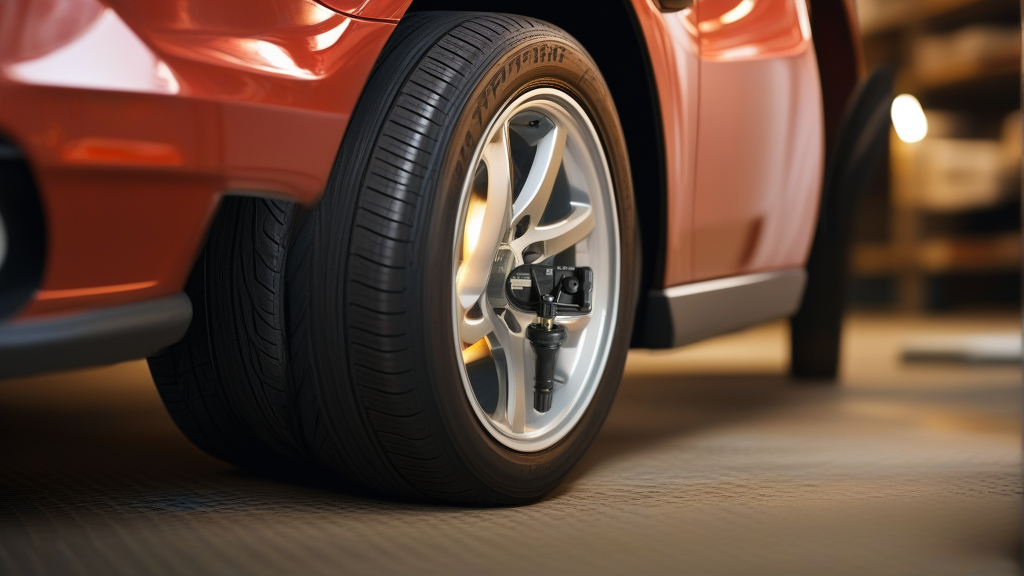
If you own an Avatr and need a replacement TPMS sensor, the BH-Sens BL-ST-089 is a strong candidate. But “fits Avatr” on a product page doesn’t guarantee it works on your specific Avatr—especially if you’re dealing with a 2021 model versus a 2024 model, or if your car has a different ECU revision. This guide walks you through exactly what to check before you click “buy.”
What Is the BL-ST-089 Sensor?
The BL-ST-089 is a clamp-in, pre-programmed TPMS sensor manufactured by BH-Sens (Baolong Technology), a major OE supplier for Chinese automakers. It operates at 433MHz—the most common frequency for Asian-market vehicles—and comes pre-programmed with the OE IDs for multiple brands.
Key specs:
- Frequency: 433MHz
- OE Numbers: 3601010CD01, 3601010DG01, 3601010MK02, 3601010MK02ED01
- Type: Clamp-in (metal valve stem, standard fitment)
- Programming: Pre-programmed (plug-and-play for listed compatible vehicles)
Which Avatr Models and Years Are Compatible?
Avatr (a joint venture between Changan, Huawei, and CATL) launched the Avatr 11 in 2022 and the Avatr 12 in 2023. While the brand is still relatively new, the BL-ST-089 covers its entire production run so far—provided the sensor uses one of the listed OE numbers.
| Vehicle Model | Compatible Years | Notes |
|---|---|---|
| Avatr 11 (EV) | 2022–2025 | Uses OE 3601010CD01 or 3601010DG01 |
| Avatr 12 (EV) | 2023–2025 | Uses OE 3601010MK02 or 3601010MK02ED01 |
| Changan UNI-Series | 2020–2025 | Shared platform with Avatr |
| Deepal S7 / SL03 | 2022–2025 | Same TPMS family |
| Mazda CX-30 EV (China) | 2021–2025 | Uses 3601010CD01 |
| Nevo (Changan NEVO) | 2023–2025 | Newer models use 3601010MK02 |
Important: This sensor is not backward-compatible with pre-2020 Avatr models—there aren’t any, but if you’re cross-shopping with Changan or Mazda, double-check the year.
How to Verify Fitment Before Buying
Don’t rely solely on the product description. Here’s a three-step check you can do in under two minutes:
1. Read the OE Number Off Your Current Sensor
Pop the tire off (or use a mirror and flashlight if the wheel is still on), and look at the TPMS sensor housing. The OE number is usually printed on the metal body or the plastic cap. If it matches any of these—3601010CD01, 3601010DG01, 3601010MK02, 3601010MK02ED01—the BL-ST-089 is a direct swap.
2. Confirm the Frequency
Your vehicle’s TPMS system is designed for a specific frequency. For Avatr, Changan, Deepal, Mazda, and Nevo, the standard is 433MHz. If your current sensor has a different frequency (e.g., 315MHz for some US-market vehicles), the BL-ST-089 won’t work. Check the label on your sensor or your owner’s manual.
3. Verify the Valve Stem Type
The BL-ST-089 is a clamp-in sensor with a metal valve stem. If your vehicle uses a snap-in or band-style sensor (unlikely for these brands, but possible on older Mazda models), you’ll need a different part. Clamp-in sensors are standard on all Avatr models.
What If My Vehicle Isn’t Listed?
The BL-ST-089 is cross-compatible with many Changan and Deepal models that aren’t explicitly listed. If your vehicle shares a platform with Avatr (e.g., Changan UNI-T, Deepal L07), the sensor will likely work—but always check the OE number first. If your OE number isn’t listed, the sensor may still be compatible if the frequency and valve type match, but you’ll need to confirm with the seller or a dealer.
Installation and Programming Notes
Because the BL-ST-089 is pre-programmed, installation is straightforward:
- Remove the old sensor.
- Install the new sensor with a new metal valve stem (included).
- Torque to the manufacturer’s specification (typically 35–45 in-lbs; check your manual).
- The sensor should auto-learn with your vehicle’s TPMS system after a short drive (5–10 minutes at 20 mph or above).
If your vehicle requires a TPMS relearn tool (some Avatr models do), you may need to use a tool like the Autel TS508 or similar. The sensor itself doesn’t require manual programming—it’s ready to go out of the box.
Why Choose the BH-Sens BL-ST-089?
This sensor is an OE-grade replacement at a fraction of the dealer price. Baolong Technology supplies TPMS sensors to Changan and Avatr directly, so the build quality and signal reliability match the original part. The pre-programmed nature saves you the hassle of cloning or programming, and the 433MHz frequency ensures compatibility with modern Asian-market vehicles.
If you’re replacing a faulty sensor on your Avatr, the BL-ST-089 | BH-Sens 433MHz TPMS Tire Pressure Sensor | Fits Avatr, Changan, Deepal, Mazda, Nevo & 1 More | OE# 3601010CD01, 3601010DG01, 3601010MK02 is a reliable choice that covers the most common OE numbers.
FAQ
How do I know if my Avatr uses a 433MHz or 315MHz TPMS sensor?
Check the label on your current sensor, or look up your vehicle’s VIN in the owner’s manual. For Avatr models built after 2022, 433MHz is standard. If you’re unsure, contact a dealer with your VIN.
Can I use this sensor on a 2020 Changan UNI-T?
Yes—provided your UNI-T uses OE number 3601010CD01 or 3601010DG01. Most 2020–2023 Changan models with the TPMS option use 433MHz clamp-in sensors. Verify by checking the part number on your existing sensor.
Will the BL-ST-089 work on a Mazda CX-30 (non-EV)?
Only if the CX-30 is the China-market EV version (which uses the same platform as Avatr). Non-EV Mazda CX-30 models may use a different sensor (315MHz or snap-in). Always confirm with the OE number.
Do I need a TPMS relearn tool after installing this sensor?
In most Avatr and Changan models, the sensor auto-learns after a short drive. However, some vehicles (especially newer Avatr 12 models) may require a relearn tool. If the sensor doesn’t sync after 10 minutes of driving, use a compatible TPMS tool to perform a relearn.