
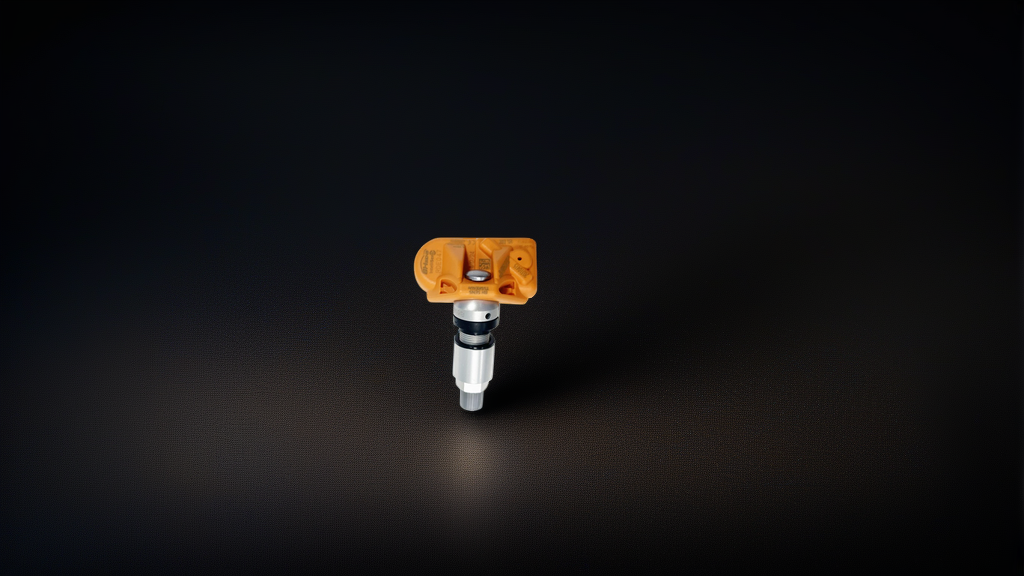
If you own a Jetta and your TPMS light won’t turn off, you’re likely facing a dead sensor battery or a frequency mismatch. This article breaks down the three most critical technical specs—frequency, battery life, and IP rating—and explains how they affect sensor compatibility for Jetta models, especially those built after 2010.
Frequency Band: 315MHz vs. 433MHz for Jetta
Jetta models sold in North America typically use 315MHz TPMS sensors. However, many European-market Jettas and some global variants run on 433MHz. The BH-Sens RDE047V21 operates at 433MHz, making it a direct fit for Jetta vehicles built with that frequency.
| Market | Common Frequency | Compatible Jetta Years (approximate) |
|---|---|---|
| North America | 315MHz | 2008–2020 (varies by trim) |
| Europe / ROW | 433MHz | 2006–2023 (many models) |
| China | 433MHz | 2010–present |
Why does frequency matter? Your Jetta’s TPMS receiver is tuned to either 315MHz or 433MHz. Installing a sensor with the wrong frequency will produce no signal—your dashboard will stay lit.
Tip: Check your original sensor’s FCC ID or part number. If it ends with numbers like
433or lists frequency on the label, you know the MHz. For Jettas covered under OE# 2N0907275A, 5Q0907275, or 9J1907275, 433MHz is the standard.
Battery Life: Real-World Expectations
TPMS sensor batteries are non-replaceable—when they die, you replace the sensor. For Jetta applications, most factory and aftermarket sensors (including the BH-Sens RDE047V21) use a lithium cell rated for 5–7 years under normal driving conditions.
Factors that shorten battery life:
- Short daily trips (battery never fully “rests”)
- Extreme heat or cold (accelerates chemical degradation)
- Sensors that transmit more frequently (some newer protocols)
The BH-Sens RDE047V21 uses a low-power design that meets original equipment battery specs. Expect 6 years on average. If your Jetta is 2015 or older and you’ve never changed sensors, you’re likely overdue.
IP Rating: Water and Dust Protection
All modern TPMS sensors must survive road salt, mud, car washes, and standing water. The industry standard is IP67 or IPX7.
- IP67 – Fully dust-tight, and can be submerged in 1 meter of water for 30 minutes.
- IPX7 – Same water resistance, but dust protection is not rated (still adequate for valve stem mounting).
The BH-Sens RDE047V21 carries an IP67 rating. That means it’s sealed against fine dust and can handle puddles, pressure washing, and even brief submersion. This is critical for Jetta owners who drive in wet climates or on unpaved roads.
Protocol Compatibility: Will It Talk to Your Jetta?
TPMS sensors don’t just broadcast pressure—they use a specific communication protocol. The BH-Sens RDE047V21 is pre-programmed to match OE protocols for Audi, BMW, Bentley, Ferrari, Lamborghini, and several VAG group vehicles including Jetta.
For Jetta, the sensor transmits a unique ID that the vehicle’s receiver learns via a relearn procedure. Most 2010+ Jetta models support two types of relearn:
- Automatic (OBD relearn) – A scan tool triggers the vehicle to listen for new sensor IDs.
- Manual (drive to learn) – Driving above 15 mph for a few minutes automatically catches the new signals.
The RDE047V21 is compatible with both methods. If your Jetta uses a direct-fit protocol (e.g., 2N0907275A, 5Q0907275B), this sensor will work without modifications.
Note: Some early Jetta models (prior to 2008) used indirect TPMS (wheel speed sensors). Those do not need individual sensors. Confirm your Jetta has direct TPMS valve stem sensors before ordering.
Choosing the Right Sensor for Your Jetta
When replacing TPMS on a Jetta, match three things:
- Frequency – 433MHz (verify on original sensor)
- Battery – Look for a minimum 5-year rated lithium cell
- IP rating – IP67 or better recommended
The RDE047V21 | BH-Sens 433MHz TPMS Tire Pressure Sensor | Fits Audi, BMW, Bentley, Ferrari, Lamborghini & 8 More | OE# 2N0907275A, 314818, 36106798872 meets all those criteria. It covers OE numbers: 2N0907275A, 314818, 36106798872, 5Q0907275, 5Q0907275B, 5Q0907275F, and others—so it fits a wide range of Jetta generations from the mid-2000s onward.
Recommended Part
For Jetta owners needing a direct-fit 433MHz replacement, the RDE047V21 | BH-Sens 433MHz TPMS Tire Pressure Sensor | Fits Audi, BMW, Bentley, Ferrari, Lamborghini & 8 More | OE# 2N0907275A, 314818, 36106798872 from BH-Sens (Baolong Technology) is a solid choice. It’s pre-programmed, IP67-rated, and compatible with common OE protocols.
FAQ
Will a 433MHz TPMS sensor work on my North American Jetta?
Only if your Jetta was originally equipped with 433MHz sensors. Most North American Jettas use 315MHz. Check your original sensor’s label or look up your vehicle’s TPMS frequency by year and VIN. Install a 433MHz sensor on a 315MHz system and you’ll get no signal.
How do I know when my Jetta’s TPMS battery is dead?
A solid TPMS warning light that stays on after inflating tires typically means a dead battery inside one or more sensors. If the light flashes briefly then stays solid, a sensor has failed or its battery is depleted. Expect replacement every 5–7 years.
Can I replace just one TPMS sensor on my Jetta?
Yes, but it’s usually better to replace all four at once. After 5–7 years, the other sensors’ batteries are near exhaustion. Replacing one now means you’ll likely need another in a few months. The BH-Sens RDE047V21 is often sold in sets for this reason.
Do I need a special tool to program the BH-Sens RDE047V21 to my Jetta?
No special programming is required for most models—the sensor is pre-programmed. You only need a relearn tool (or a scan tool) to teach your Jetta’s receiver the new sensor IDs. Many tire shops include this service with installation. Some Jettas self-learn after driving 10–15 minutes.