
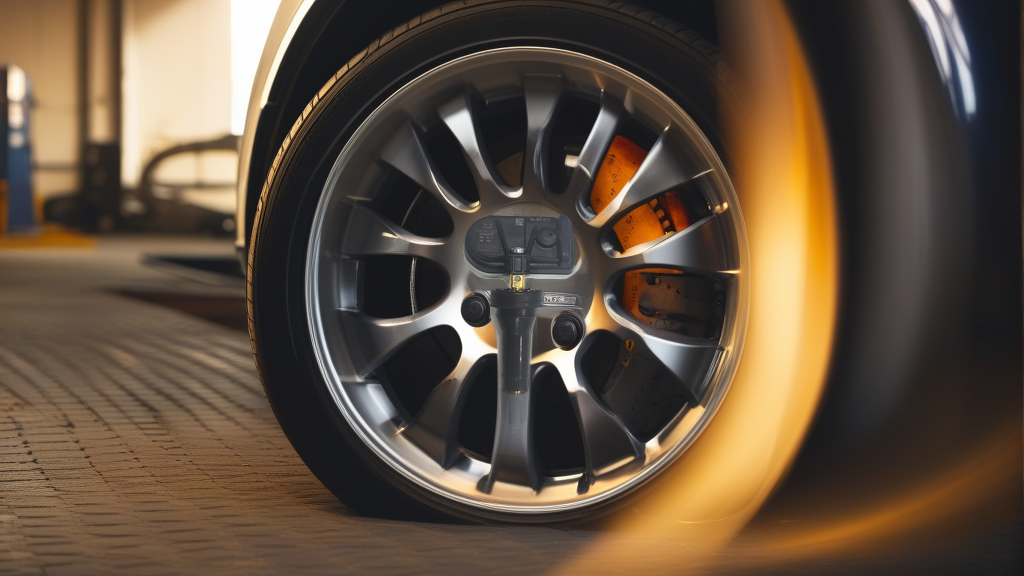
Why “Same Car, Different Sensor” Keeps Happening
The most common mistake we see in aftermarket TPMS orders is buying by model name alone. A DASHING I-DM sold in one market can carry different TPMS hardware than the same car sold elsewhere, and mid-cycle supplier changes are normal. Two things drive this:
- Frequency band. 433MHz is the standard for China, Europe and most Asian markets. North American vehicles typically run 315MHz. If you import a sensor with the wrong band, the car will never learn it — no amount of re-learning, driving cycles or tool work will fix it.
- Protocol and OE revision. Even within 433MHz, the data frame a sensor broadcasts differs between suppliers. That’s why a pre-programmed sensor is matched to a specific OE number family rather than “any 433MHz sensor.”
So the rule is simple: identify the sensor you’re replacing, not the car you’re driving.
The Three Things That Must Match
1. Frequency
Check the old sensor body or the vehicle’s build sheet. 433MHz is what the BL-ST-075 covers. A 315MHz sensor will not communicate on a 433MHz receiver, full stop.
2. OE Number
Look for a stamped or laser-etched number on the old sensor housing. For this platform the relevant numbers are F023114011, F113114011 and F113114011BA. Revisions like the “BA” suffix are usually a supplier or firmware update of the same fitment — any of them works with a correctly pre-programmed replacement.
3. Mounting Type
Clamp-in sensors use a metal valve stem with a nut that clamps through the rim. Snap-in sensors use a rubber stem pulled through. They are not interchangeable without changing the valve hardware, and clamp-in is the fitment here.
Fitment Reference: BL-ST-075
A proper pre-programmed 433MHz clamp-in unit — like the BH-Sens BL-ST-075 BL-ST-075 | BH-Sens 433MHz TPMS Tire Pressure Sensor | Fits Chery, Cowin, Jetour, Karry, Soueast | OE# F023114011, F113114011, F113114011BA — covers the following:
| Spec | Detail |
|---|---|
| Brand | BH-Sens (Baolong Technology) |
| SKU | BL-ST-075 |
| Frequency | 433MHz |
| Sensor type | Clamp-in, pre-programmed |
| OE numbers | F023114011, F113114011, F113114011BA |
| Compatible vehicle brands | Chery, Cowin, Jetour, Karry, Soueast |
| Activation | Trigger with a TPMS tool; some vehicles auto-learn after a drive cycle |
Because these brands share platform architecture across several models, one sensor part number frequently covers a wide spread of vehicles. That’s good news for a workshop, and a trap for anyone ordering by guesswork.
Pre-Order Checklist
Run through this before you click buy:
- Scan the old sensor. Even a dead sensor usually still reports its ID and protocol to a TPMS tool. Write down the OE number and frequency.
- Confirm wheel position. Most modern systems expect a specific sensor ID at a specific corner. If you’re replacing all four, note which ID belongs where — or use a tool with an auto-relearn function.
- Count your stems and seals. Clamp-in sensors ship with a valve stem, nut, washer and seal. If you’re reusing the old stem, inspect the rubber seal — a leaking seal looks exactly like a failed sensor.
- Check for a second set of wheels. Winter or off-road wheel sets often have their own sensors. Buy for both sets at once to avoid a mismatch later.
- Verify the tool you’ll use. A basic activator works for many pre-programmed sensors, but some vehicles need an OE-level relearn through the OBD port.
B2B Bulk Buying Notes
If you’re stocking for a shop or reselling, a few practical points:
- Stock both frequencies only if you actually need them. Dead inventory in TPMS is expensive because battery shelf life is finite. Order to turnover, not to a discount tier.
- Keep one brand family per shelf bin. Mixing 433MHz pre-programmed sensors from different suppliers in the same bin is how wrong parts get shipped.
- Buy activation tools alongside the sensors. A shop that can’t trigger or relearn a sensor will blame the part. Supplying the tool closes that loop.
- Ask for batch consistency. Confirm that a bulk order is a single production batch so IDs and firmware behave identically across the lot.
- Check packaging for stem hardware. Bulk packs sometimes ship sensors without stems. Confirm what’s in the box before quoting a job.
- Test-sample before a large order. Fit one sensor to a known vehicle, relearn it, and verify it reads correctly for a few days. Then commit to volume.
Recommended Part
For the DASHING I-DM and the wider Chery, Cowin, Jetour, Karry and Soueast family running 433MHz clamp-in sensors, the BH-Sens BL-ST-075 is the direct OE-match replacement: BL-ST-075 | BH-Sens 433MHz TPMS Tire Pressure Sensor | Fits Chery, Cowin, Jetour, Karry, Soueast | OE# F023114011, F113114011, F113114011BA
FAQ
How do I know if my DASHING I-DM uses 433MHz or 315MHz?
Check the old sensor housing or scan it with a TPMS tool — the frequency is reported directly. Region is a useful hint (China, Europe and most Asian markets are 433MHz), but the sensor itself is the only reliable source. Never assume based on the badge.
Can I install a pre-programmed sensor myself?
Physically, yes — mounting a clamp-in sensor is a tyre-shop job because the tyre must be broken down off the rim. Programming-wise, pre-programmed sensors usually need a trigger tool to wake them and register the ID with the vehicle. Some cars relearn automatically after a short drive; others need an OBD relearn.
Do I have to replace all four sensors at once?
Not strictly, but it’s usually the better call. Sensors have similar battery life, so if one has failed the others are typically close behind. Replacing all four also avoids a second tyre-shop bill and keeps IDs consistent across the set.
What if the OE number on my old sensor doesn’t match exactly?
Look for a revision suffix difference first — F023114011, F113114011 and F113114011BA are all covered by the same replacement. If the number is entirely different, stop and verify frequency and mounting type before ordering, because a different number usually means different hardware.