
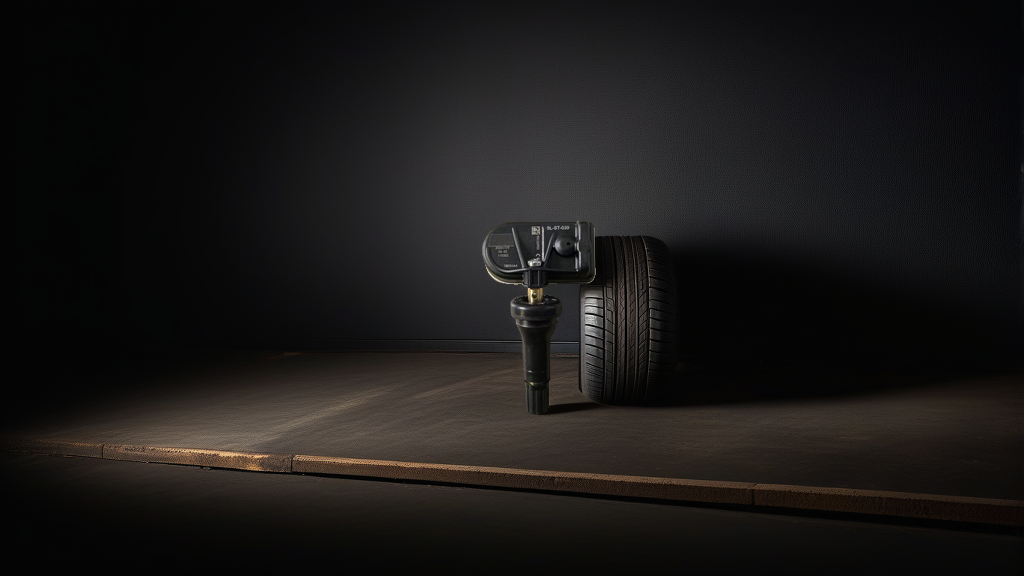
Why These Sensors Fail in the First Place
TPMS sensors don’t die from abuse — they die from chemistry. The coin cell inside has a finite service life, usually somewhere in the 5–10 year range depending on how often the car transmits. Cold weather shortens it. So does a car that sits for weeks at a time, because the sensor still wakes up and broadcasts.
The other failure mode is mechanical. The Eπ family — along with Aeolus, Mhero, Nammi and Voyah — uses clamp-in sensors, where a metal valve stem passes through the rim and the sensor body is secured by a nut on the outside. Road salt, curb strikes and ham-fisted tire techs with impact guns all take a toll on that assembly. When a sensor reads dead but the stem is corroded, replacing the whole unit is usually cheaper than trying to salvage it.
What “OEM” Really Means Here
Here’s the part most buyers don’t realize: the OE sensor isn’t made by the car company. It’s made by a Tier 1 supplier, sold to the assembly plant, and then sold again through the dealer parts network with a markup stacked on top.
BH-Sens is the consumer-facing brand of Baolong Technology, a Tier 1 supplier that builds sensors for Chinese OEMs. So when you buy a BH-Sens replacement for an OE number like E300019160, you’re often buying the same category of part from the same manufacturing ecosystem — minus the dealer margin and the branded box.
BH-Sens BL-ST-039: Specs at a Glance
| Spec | Detail |
|---|---|
| Brand | BH-Sens (Baolong Technology) |
| SKU | BL-ST-039 |
| Frequency | 433 MHz |
| Type | Clamp-in, pre-programmed |
| OE numbers | E300019160, E300020260, H56A7920001AC |
| Compatible brands | Aeolus, Eπ, Mhero, Nammi, Voyah |
| Fitment | Dedicated OE fitment |
The 433MHz detail is non-negotiable. A 315MHz sensor will not talk to a 433MHz receiver, no matter how many times you try to relearn it. Match the frequency first, then match the physical mounting, then worry about brand.
OEM vs Aftermarket: The Honest Comparison
| Factor | OEM (dealer) | Quality aftermarket (BH-Sens) |
|---|---|---|
| Price per sensor | High, often 2–3x | Typically 40–60% less |
| Availability | Order-in, may take days | Usually in stock, ships same/next day |
| Frequency & fitment | Guaranteed | Guaranteed if you match OE number |
| Programming | Pre-programmed for VIN | Pre-programmed, may need relearn |
| Warranty handling | Handled by dealer | Handled by parts seller |
| Cosmetic match | Exact | Usually identical or near-identical |
| Battery life | Comparable | Comparable |
When OEM Is Actually Worth It
There are real cases where paying dealer price makes sense:
- The car is under warranty. Aftermarket parts can complicate a warranty claim if the dealer wants to argue causation. Not worth the fight for a few hundred dollars.
- Insurance is paying. If a collision claim covers the wheel, let the adjuster cover the OEM sensor.
- You’re returning a lease. Some lease contracts specify OEM parts for safety systems. Read your paperwork before rolling the dice.
- You want one phone call. Some owners genuinely value dropping the car off and picking it up fixed, with no parts sourcing on their end.
When Aftermarket Wins
For everyone else, the math is straightforward. A TPMS sensor is a self-contained transmitter with a battery. It either broadcasts the right protocol at the right frequency or it doesn’t. There’s no performance gradient the way there is with, say, brake pads.
Aftermarket wins when:
- The car is out of warranty — which describes most vehicles on the road today.
- You’re replacing all four at once. Sensors from the same batch tend to fail within months of each other. Doing one at a time means paying for mounting and balancing four separate times.
- You run a second set of wheels for winter or track use. Nobody wants to buy four dealer sensors per season.
- You’re a shop or fleet operator. Downtime is the real cost, and next-day availability beats a dealer backorder every time.
Installation Notes That Actually Matter
Pre-programmed does not mean plug-and-play in every case. The sensor already carries the correct protocol, but most vehicles still need the sensor ID written into the TPMS control module with a scan tool or a relearn procedure. Budget for that step.
Two more things:
- Replace the nut and seal, don’t reuse them. They’re single-use crush components on most clamp-in designs. Reusing an old seal is the fastest way to a slow leak.
- Torque the retaining nut to the specification in your vehicle’s manual or service data — do not guess, and do not let anyone hit it with an impact wrench.
After installation, most cars need a short drive above a certain speed before the light clears. If it doesn’t, you likely have a relearn issue, not a bad sensor.
Recommended Part
For Aeolus, Eπ, Mhero, Nammi and Voyah applications, BL-ST-039 | BH-Sens 433MHz TPMS Tire Pressure Sensor | Fits Aeolus, Eπ, Mhero, Nammi, Voyah | OE# E300019160, E300020260, H56A7920001AC covers the 433MHz clamp-in fitment and the three OE numbers listed above. Confirm your OE number against the sensor you’re removing before ordering — it takes thirty seconds and eliminates the only real risk in this whole process.
FAQ
Do I have to replace all four TPMS sensors at once?
Not required, but strongly recommended if the car is more than five or six years old. Sensors from the same production batch age together, so replacing one usually means you’ll be back in the tire shop within a year for the next one — and paying mounting and balancing again each time.
Will an aftermarket sensor void my warranty?
In most markets, a properly matched aftermarket part doesn’t void your overall warranty. However, if the car is still under bumper-to-bumper coverage and a TPMS fault is being repaired under that warranty, using an OEM part avoids any argument entirely. Out of warranty, the question is moot.
How long do these sensors last?
Typical service life is five to ten years depending on climate, driving frequency and how often the vehicle sits. Battery chemistry, not build quality, is the limiting factor — which is why OEM and quality aftermarket sensors land in roughly the same range.
Can I install a sensor myself?
Physically, the sensor mounts from inside the rim, so the tire has to come off the wheel — that means a tire machine. A shop can mount it and perform the relearn in the same visit. If you’re buying four sensors, call ahead and confirm they have a scan tool that supports your vehicle’s TPMS module.