
Understanding TPMS Relearn on V-ONLINE Vehicles
When you replace a TPMS sensor on a V-ONLINE model (including Avatr, Changan, Deepal, Mazda, and Nevo variants), the vehicle’s ECU doesn’t automatically recognize the new sensor IDs. A relearn procedure is required to “teach” the system which sensor is at each wheel position. Without this step, the TPMS warning light will stay on, and you won’t get accurate pressure readings.
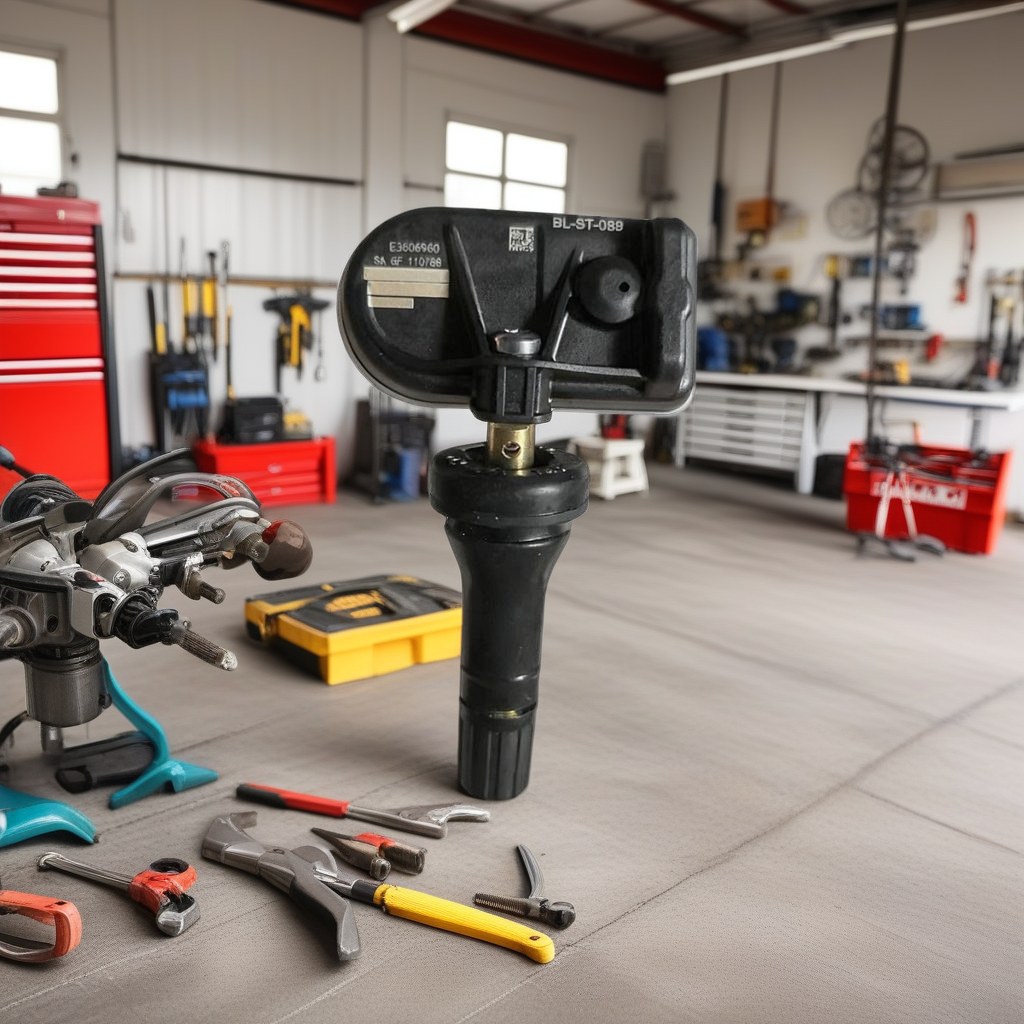
The BH-Sens BL-ST-089 (433MHz, OE# 3601010CD01, 3601010DG01, 3601010MK02) is pre-programmed for plug-and-play installation, but it still needs to be registered via one of the three relearn methods below.
Three TPMS Relearn Methods for V-ONLINE
V-ONLINE TPMS systems support three relearn types. Choose the one that fits your tools and time.
1. Automatic Relearn (Overnight Method)
This is the simplest method and requires no special tools.
How it works: After installing new sensors, the system automatically learns sensor IDs while you drive under specific conditions.
Step-by-step:
- Inflate all tires to the recommended pressure (check your door sticker).
- Drive the vehicle above 25 mph (40 km/h) continuously for 10–20 minutes.
- The system will learn each sensor’s ID in order (LF, RF, RR, LR) as it receives signals.
- The TPMS light should turn off after a successful relearn.
Pros: No tools needed.
Cons: Can take up to 20 minutes of highway driving. Won’t work if the sensor IDs are incompatible or if the ECU has a memory glitch.
2. OBD Relearn (For Quick and Reliable Results)
This is the most reliable method and works in under 5 minutes. You need a TPMS programming tool that supports V-ONLINE protocols.
Step-by-step:
- Connect your TPMS tool (e.g., Autel, Bartec, or ATEQ) to the OBD-II port under the dashboard.
- Select “V-ONLINE” (or the specific sub-brand like Avatr or Changan) from the vehicle menu.
- Choose “Relearn” or “Program Sensors.”
- Follow the tool’s prompts to trigger each wheel (usually by pressing “OK” as you walk around the vehicle).
- Once all four sensors are recognized, the tool will write the IDs to the ECU.
- Verify by checking the TPMS light on the dashboard.
Note: Some OBD tools also allow you to clone the old sensor IDs into the new sensors, eliminating the need for a relearn. The BL-ST-089 sensor supports cloning if you have the original IDs.
3. Stationary Relearn (Magnet Method)
This method is common on older V-ONLINE platforms but may not work on all models. It requires a strong TPMS magnet.
Step-by-step:
- Turn ignition to ON (engine off).
- Within 5 seconds, press the hazard light switch 3 times (or check your manual for the exact sequence).
- The horn will honk once to indicate relearn mode is active.
- Hold a TPMS magnet against each valve stem in this order: LF → RF → RR → LR.
- Wait for the horn to honk after each wheel. It confirms the sensor was learned.
- After the last wheel, the horn will honk twice to confirm completion.
- Turn ignition OFF, then start the engine. The TPMS light should be off.
Pros: Cheap tool (magnet costs under $10).
Cons: Not all V-ONLINE models support this. Check your owner’s manual first.
Fitment Table: BH-Sens BL-ST-089 for V-ONLINE Models
| Vehicle Brand | Common Models | Frequency | OE Number |
|---|---|---|---|
| V-ONLINE | Various | 433MHz | 3601010CD01, 3601010DG01 |
| Avatr | 11, 12 | 433MHz | 3601010MK02 |
| Changan | CS75, Eado, UNI series | 433MHz | 3601010MK02ED01 |
| Deepal | S7, SL03 | 433MHz | 3601010CD01 |
| Mazda | CX-5, CX-30, Mazda3 (some years) | 433MHz | 3601010DG01 |
| Nevo | ES6, ET5 | 433MHz | 3601010MK02 |
Always verify fitment for your specific year and model before purchase.
Tools You’ll Need for Each Method
| Relearn Method | Required Tools | Estimated Cost | Time |
|---|---|---|---|
| Automatic | None | $0 | 10–20 minutes driving |
| OBD | TPMS tool (Autel, Bartec, etc.) | $100–$500 | 5 minutes |
| Stationary | TPMS magnet | $5–$15 | 10 minutes |
Troubleshooting Common Relearn Failures
- Sensor not detected: Make sure the sensor is compatible (433MHz for V-ONLINE). The BL-ST-089 is pre-programmed for these vehicles, so compatibility issues are rare.
- Light still on after relearn: Drive for another 5 minutes above 25 mph. If it persists, check sensor battery life (most last 5–7 years).
- OBD tool says “Failed”: Try the automatic relearn method instead. Some early V-ONLINE ECUs have quirky OBD protocols.
Recommended Part
For V-ONLINE, Avatr, Changan, Deepal, Mazda, and Nevo vehicles, the BL-ST-089 | BH-Sens 433MHz TPMS Tire Pressure Sensor | Fits Avatr, Changan, Deepal, Mazda, Nevo & 1 More | OE# 3601010CD01, 3601010DG01, 3601010MK02 is a direct-fit, pre-programmed 433MHz sensor that works with all three relearn methods. It’s manufactured by BH-Sens (Baolong Technology), an OE-quality supplier for many Chinese and Japanese automakers.
FAQ
What if my V-ONLINE doesn’t have a TPMS relearn option in the infotainment menu?
Most V-ONLINE models don’t have a user-facing menu for TPMS relearn. You must use one of the three methods described above (automatic, OBD, or stationary). Check your owner’s manual for the specific method supported by your year and trim.
Can I mix old and new TPMS sensors on a V-ONLINE?
It’s not recommended. Mixing sensors from different brands or with different frequencies can cause erratic readings or relearn failures. Always use the same frequency (433MHz) and ideally the same brand. The BL-ST-089 is designed to match OE specifications for consistent performance.
How often should I replace TPMS sensors on my V-ONLINE?
Sensor batteries typically last 5–7 years. Replace all four sensors at once when one fails, or when the battery is near the end of its life. The BL-ST-089 has a non-replaceable battery, so the entire sensor must be swapped.
Does the BL-ST-089 sensor work with aftermarket wheels?
Yes, as long as the wheels have standard clamp-in TPMS valve stems. The sensor is a clamp-in type and fits most alloy and steel wheels with a 11.3mm valve hole. For custom wheels with deeper pockets, you may need a longer valve stem.