
Why BAIC EV TPMS Installation Is Different
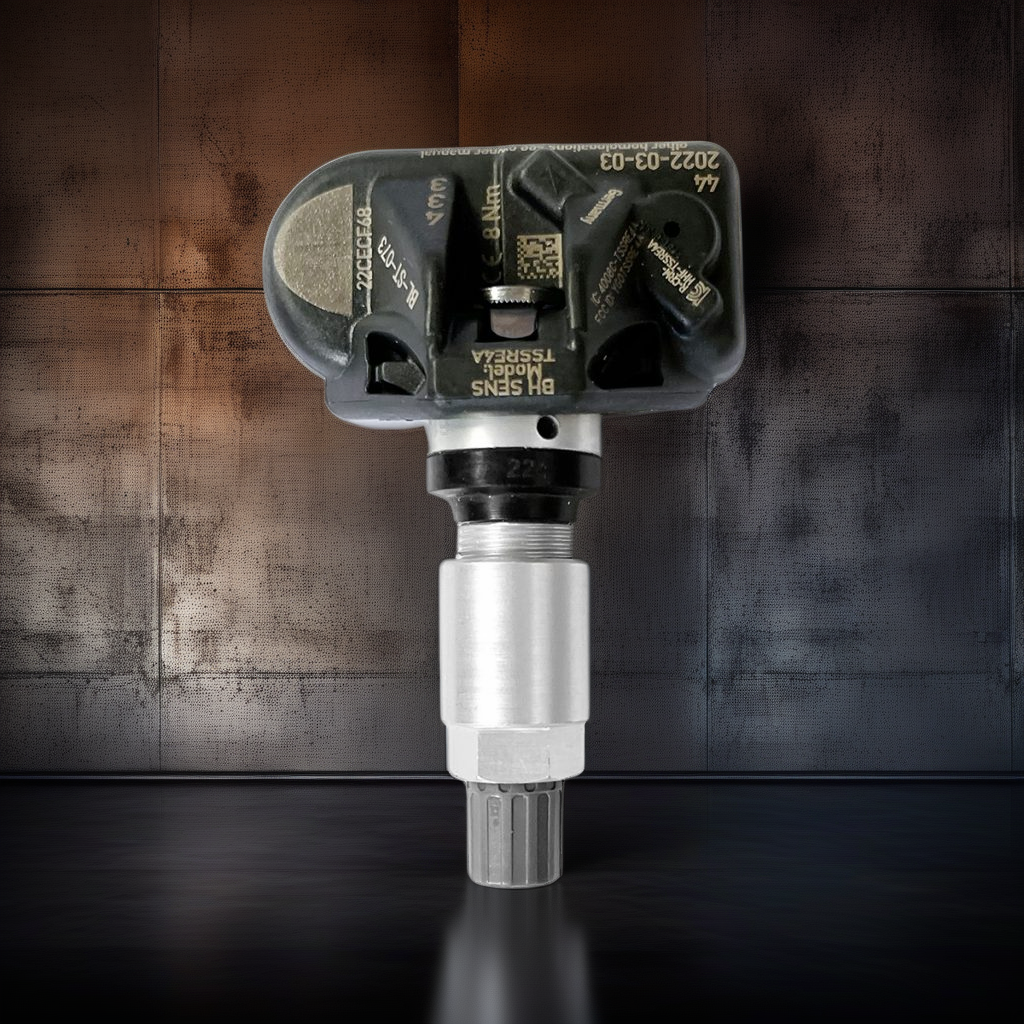
BAIC EV vehicles use a direct TPMS system with clamp-in sensors mounted inside the wheel. Unlike some European brands that use snap-in rubber valves, BAIC EV sensors are metal clamp-in units with a hexagonal nut that secures the sensor body to the wheel’s valve hole. The sensor itself is a combined pressure/temperature transmitter running at 433MHz.
The BL-ST-073 sensor (BH-Sens) is a pre-programmed clone that matches BAIC EV’s OE frequencies and protocols. It fits the 2018–2025 BAIC EV models, including the EU5, EU260, EX3, and EX5. Because it’s pre-programmed, you don’t need a separate programming tool—just install it and let the car learn it.
Critical Torque Specs for BAIC EV TPMS Sensors
The most common installation failure on BAIC EVs is a cracked sensor housing from over-torquing. The sensor nut does not need to be “german-tight.” Here are the real-world torque ranges:
| Component | Torque Range | Notes |
|---|---|---|
| Sensor mounting nut (clamp-in) | 35–42 Nm (26–31 ft-lb) | Use a torque wrench; never exceed 45 Nm |
| Valve stem core | Hand-tight + 1/4 turn | Overtightening strips the brass threads |
| Valve stem cap | Hand-tight only | Plastic caps crack if torqued |
| Wheel lug nuts | 100–120 Nm (74–88 ft-lb) | Check your vehicle manual for exact value |
Important: The sensor nut torque is lower than most lug nuts. Many techs grab a standard 1/2-inch impact gun and send the sensor nut to 60 Nm, which cracks the plastic housing. Always use a 1/4-inch torque wrench for the sensor nut.
Valve Stem Service Procedure
BAIC EV sensors use a standard TR413-style rubber grommet and brass washer setup. Here’s the correct service sequence:
- Remove the old sensor from the wheel. Inspect the valve hole for burrs or corrosion—file any sharp edges.
- Install a new rubber grommet on the sensor stem. Never reuse the old one; the rubber hardens after 3–4 years and leaks.
- Apply a drop of rubber lubricant (soapy water works) to the grommet—this prevents twisting during tightening.
- Insert the sensor through the wheel from the inside. The flat side of the grommet faces the wheel.
- Thread the brass washer and nut from the outside. Hand-tighten first, then torque to spec.
- Replace the valve core with a new OE-quality core. Old cores often leak after sensor replacement because the seal is disturbed.
- Install a metal valve cap (plastic caps degrade in UV and crack, causing slow leaks).
Pro tip: On BAIC EV models, the sensor orientation matters. The logo on the sensor should face outward (visible through the wheel spokes). If installed backward, the signal strength drops by 15–20%, which can cause intermittent “no signal” warnings.
Common Installation Mistakes (And How to Avoid Them)
1. Reusing the Old Valve Core
The valve core is the cheapest part of the system, but many techs skip it. A worn core leaks 0.5–1 psi per week, which triggers a low-pressure warning. Always replace it.
2. Using the Wrong Sealant
Some installers apply thread locker or silicone to the sensor nut. This is unnecessary—the rubber grommet provides the seal. Thread locker can creep into the sensor housing and damage the electronics. Use nothing, or a tiny drop of medium-strength thread locker on the nut threads only (not the stem).
3. Ignoring the Learn Procedure
BAIC EV TPMS systems require a “relearn” after sensor replacement. Even with pre-programmed sensors, the car needs to identify the new sensor IDs. The procedure is:
- Drive above 25 km/h (15 mph) for 5–10 minutes.
- The system automatically detects the new sensors.
- If it fails, use a TPMS trigger tool to manually activate each sensor (hold it against the sidewall near the valve stem).
4. Mixing Sensor Frequencies
BAIC EV uses 433MHz. Some aftermarket sensors are 315MHz (common on US-market cars). Installing a 315MHz sensor in a BAIC EV will not work. The BL-ST-073 is specifically 433MHz and pre-programmed for BAIC, GWM, Geely, and Geometry models.
5. Overlooking the Torque Wrench
Without a torque wrench, most people tighten the sensor nut until it feels “snug.” On BAIC EVs, that’s usually 50–55 Nm—enough to crack the housing. Use a torque wrench. Period.
Recommended Part
For BAIC EV owners, the BL-ST-073 | BH-Sens 433MHz TPMS Tire Pressure Sensor | Fits BAIC, Baic Ev, GWM, Geely, Geometry & 8 More | OE# 01732445, 25M01A031A, 3641100XKR02A is a direct-fit replacement. It’s a clamp-in sensor (same as OE), pre-programmed at 433MHz, and matches OE numbers 01732445, 25M01A031A, and 3641100XKR02A. It also fits GWM, Geely, Geometry, and eight other brands—useful if you work on multiple Chinese EVs.
FAQ
How do I know if my BAIC EV’s TPMS sensor is bad?
If the tire pressure warning light stays on after inflating tires to the correct pressure, or if the display shows “TPMS fault,” one or more sensors likely have dead batteries (typical lifespan 5–7 years). The BL-ST-073 is a common replacement.
Can I install a BAIC EV TPMS sensor myself?
Yes, if you have a tire machine and a torque wrench. The sensor installs from inside the wheel—you’ll need to break the tire bead. For DIYers without tire equipment, have a shop mount the sensor, then perform the learn procedure yourself.
What happens if I use the wrong torque on the sensor nut?
Under-torquing (below 30 Nm) causes air leaks at the grommet. Over-torquing (above 45 Nm) cracks the plastic sensor housing, which can let moisture in and kill the electronics. The sensor will fail silently or give erratic readings.
Does the BL-ST-073 work on all BAIC EV years?
It fits 2018–2025 BAIC EV models with 433MHz TPMS. Check your vehicle’s production date—if it’s earlier than 2018, the system may use a different frequency (315MHz). Always verify with a TPMS tool before purchasing.