
Understanding TPMS Frequency Bands: Why 433MHz Matters for Your POLO
When you’re replacing a TPMS sensor on a Volkswagen POLO, the first technical decision isn’t brand—it’s frequency. TPMS sensors operate on two primary radio bands globally: 315MHz (common in North America and some Asian markets) and 433MHz (standard in Europe, China, and many other regions). Your POLO, depending on its market origin and model year, almost certainly uses 433MHz.
Why does this matter? The sensor communicates wirelessly with your vehicle’s receiver module. A 315MHz sensor will not pair with a 433MHz receiver, and vice versa. Even if the sensor physically fits the tire valve stem, the system won’t register pressure readings. The BH-Sens BL-ST-073 sensor operates at 433MHz, making it technically suited for POLO models designed for European or Chinese markets. However, always confirm your specific vehicle’s frequency by checking the owner’s manual or inspecting the original sensor’s label.
Battery Life: Real-World Expectations for TPMS Sensors
TPMS sensors are battery-powered, and that battery is sealed inside the sensor housing—non-replaceable. The typical lifespan is 5 to 7 years, or roughly 100,000 to 120,000 miles of driving. But several factors can shorten this:
- Temperature extremes: Constant exposure to -40°C or 85°C can degrade lithium batteries faster.
- Driving frequency: Vehicles driven daily will drain the battery faster than occasional-use cars.
- Transmission rate: Most sensors transmit data every 60 seconds while driving and every 6 hours when stationary, but some newer protocols transmit more frequently.
For a POLO owner, the practical takeaway is simple: if your sensor is over 6 years old and you’re seeing intermittent “TPMS fault” warnings, the battery is likely the culprit—not the sensor electronics. The BL-ST-073 sensor uses a standard lithium cell rated for 5-7 years under normal European driving conditions. No, you cannot replace the battery; you must replace the entire sensor.
IP Rating: Why Sealing Matters More Than You Think
IP (Ingress Protection) ratings measure a sensor’s resistance to dust and water. For TPMS sensors mounted inside the tire valve stem, the minimum acceptable rating is IP67:
- 6: Dust-tight (no dust ingress)
- 7: Protected against temporary immersion in water (up to 1 meter for 30 minutes)
Why is this critical? The sensor lives in a harsh environment: road salt, mud, pressure washings, and water splashes during rain. A sensor with a lower IP rating (e.g., IP54) may fail after a single deep puddle or car wash. The BH-Sens BL-ST-073 is rated IP67, which matches or exceeds OEM standards for most Volkswagen applications.
For POLO owners living in wet climates or areas with heavy road salt use, never install a sensor with a rating below IP67. Some budget sensors claim IP65, but that only protects against low-pressure water jets—not immersion.
Protocol Compatibility: Can a Pre-Programmed Sensor Work on Your POLO?
This is where many buyers get stuck. TPMS sensors communicate using specific protocols (e.g., 125kHz, 315MHz, 433MHz) and data formats. The BL-ST-073 is pre-programmed for multiple Chinese-market vehicles, including BAIC, GWM, Geely, and Geometry. But what about a POLO?
The critical factor is OEM part number cross-reference. The BL-ST-073 lists OE numbers including 01732445 and 25M01A031A. These numbers are not Volkswagen-specific; they are used by Chinese manufacturers. However, some POLO models sold in China (produced by SAIC Volkswagen) may use sensors that cross-reference to these numbers.
To check compatibility:
- Remove your existing sensor and read the OEM part number printed on the housing.
- Compare it against the OE list for BL-ST-073: 01732445, 25M01A031A, 3641100XKR02A, 3641101XKN01A, 3666200U3400, B00011299.
- If there’s a match, the sensor will work without programming. If not, you will need a programmable sensor or a sensor cloned to match your vehicle’s protocol.
For a standard European-market POLO (e.g., 2015-2020 models), the factory TPMS sensor is typically from Huf or Schrader, and uses a proprietary protocol. In that case, the BL-ST-073 is not directly compatible unless your POLO is a Chinese-market variant. Always verify before purchase.
Fitment Table: Quick Reference for POLO and Compatible Brands
| Vehicle Brand | Model | OE# Cross-Reference | BL-ST-073 Compatible? | Notes |
|---|---|---|---|---|
| Volkswagen | POLO (EU market) | N/A (Huf/Schrader) | ❌ | Requires OEM-specific sensor |
| Volkswagen | POLO (China market, SAIC) | 01732445 or 25M01A031A | ✅ | Verify OE# on old sensor |
| BAIC | Various | 01732445 | ✅ | Direct fit |
| GWM | Various | 3641100XKR02A | ✅ | Direct fit |
| Geely | Various | 3641101XKN01A | ✅ | Direct fit |
Important: This table is a guide. Always physically match the OE number before installing.
Step-by-Step: How to Verify Your POLO’s TPMS Sensor
- Locate the sensor: It’s mounted inside the tire, attached to the valve stem.
- Remove the tire (or use a TPMS tool to read the sensor ID without dismounting).
- Read the label: The OE number is usually a 10-14 digit alphanumeric string.
- Match to BL-ST-073 OE list: If your number appears, the sensor is compatible.
- Install and auto-learn: Most pre-programmed sensors will begin transmitting immediately. Drive the vehicle above 25 km/h for 10 minutes to trigger the learn process.
If your POLO’s OE number is not listed, you have two options: buy an OEM sensor (from your dealer or a known brand like Huf) or use a universal programmable sensor that can be cloned to your vehicle’s original sensor ID.
Recommended Part for POLO Owners
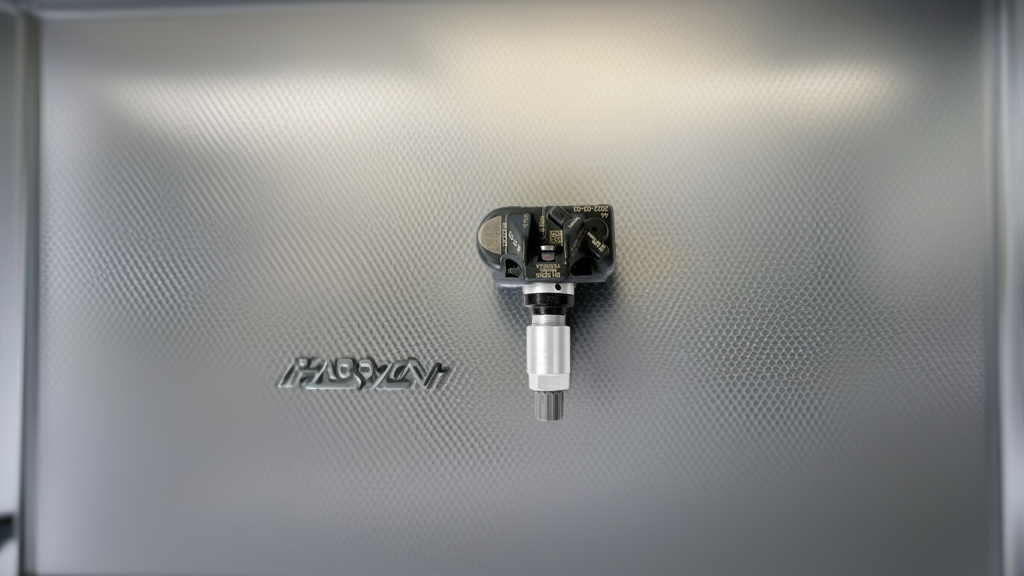
If your POLO is a Chinese-market model and the OE# matches, the BL-ST-073 | BH-Sens 433MHz TPMS Tire Pressure Sensor | Fits BAIC, Baic Ev, GWM, Geely, Geometry & 8 More | OE# 01732445, 25M01A031A, 3641100XKR02A is a solid choice. It’s pre-programmed, IP67-rated, and backed by BH-Sens (a division of Baolong Technology, a major OEM supplier). For European-market POLOs, this part will not work—stick with OEM or a verified aftermarket equivalent.
FAQ
What is the difference between 315MHz and 433MHz TPMS sensors?
The frequency determines which receiver module the sensor can communicate with. 315MHz is used in North America and some Asian markets; 433MHz is standard in Europe, China, and many other regions. Your POLO’s receiver is designed for one frequency only. Using the wrong frequency will result in no signal, even if the sensor physically fits.
How long does a TPMS sensor battery last on a POLO?
Typically 5-7 years under normal driving conditions. Factors like extreme temperatures (below -20°C or above 80°C) and daily driving can reduce this to 4-5 years. The battery is non-replaceable; you must replace the entire sensor when the battery dies.
Can I install a pre-programmed TPMS sensor myself?
Yes, if the sensor is pre-programmed and matches your vehicle’s OE number. Installation involves dismounting the tire, replacing the sensor (clamp-in type), re-mounting, and balancing the wheel. After installation, drive for 10-15 minutes above 25 km/h to allow the system to auto-learn the new sensor ID. If the sensor is not pre-programmed, you will need a programming tool to clone the original sensor ID.
How do I know if my POLO uses a Chinese-market TPMS sensor?
Check the vehicle’s VIN. If the 11th character is a “C” or “M,” it may indicate Chinese-market production. The easiest way is to remove the sensor and read the OEM part number. If it matches one of the numbers listed for the BL-ST-073 (e.g., 01732445, 25M01A031A), then your POLO uses a compatible sensor. If not, assume it uses a standard European-market sensor.