
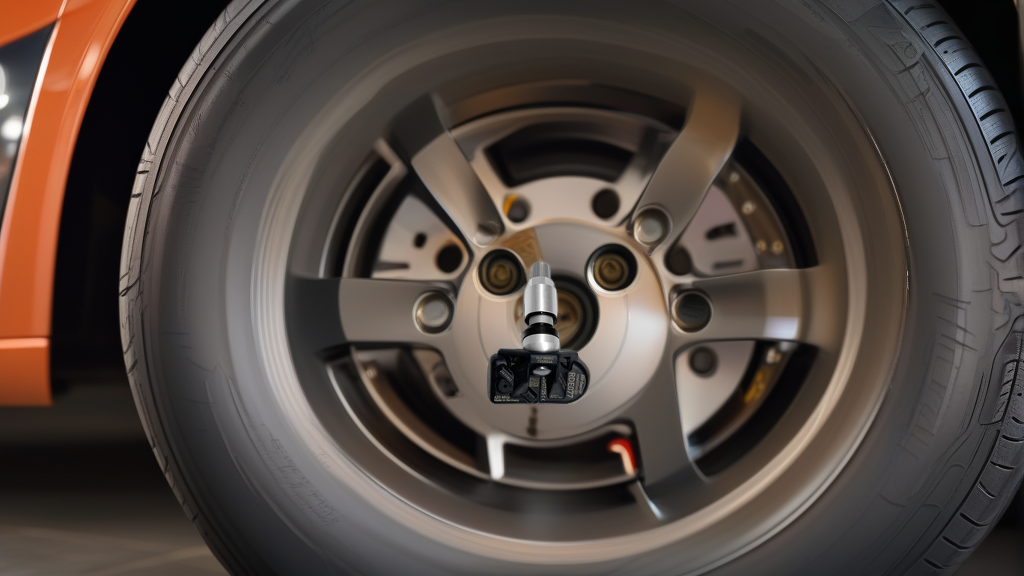
Frequency Band: Why 433MHz Matters for Your A CLASS
When selecting a TPMS sensor for your A CLASS, frequency compatibility is non-negotiable. European-market vehicles, including the Mercedes-Benz A-Class, BMW, and Mini platforms, predominantly use the 433MHz frequency band for tire pressure monitoring. This differs from many North American vehicles that use 315MHz.
The BH-Sens RDE077V21 is fixed at 433MHz, which means it will communicate correctly with the A-Class receiver module located near the rear axle or under the dashboard. If you accidentally install a 315MHz sensor on a 433MHz system, the sensor will never transmit data, and the TPMS light will stay on.
Key frequency facts:
- 433MHz offers better signal penetration through vehicle chassis and wheel wells compared to 315MHz
- European regulations (RDE, ECE R64) mandate 433MHz for most post-2010 passenger cars
- The A-Class W176 (2012-2018) and W177 (2018-present) both use 433MHz
Battery Life: What 5-7 Years Means in Real-World Terms
The BH-Sens RDE077V21 uses a sealed lithium battery rated for 5-7 years under normal driving conditions. Here’s what affects that lifespan:
| Factor | Impact on Battery Life |
|---|---|
| Annual mileage (15,000 km/year) | Full 7 years possible |
| Frequent short trips (< 10 km) | Reduces life by 10-15% (battery drains faster during cold starts) |
| Extreme temperatures (below -20°C or above 80°C) | May shorten life by 6-12 months |
| Continuous high-speed driving (above 130 km/h) | Increases transmission frequency, minor reduction |
Practical tip: When the battery dies, the sensor stops transmitting. You cannot replace the battery—the entire sensor must be swapped. For A-Class owners, this typically happens between years 5 and 7. If you’re buying a used A-Class, check the TPMS sensor date code (usually stamped on the metal housing) to gauge remaining life.
IP Rating: IP67 Protection Against Road Debris and Moisture
The RDE077V21 carries an IP67 rating, which means:
- IP6: Dust-tight. No ingress of dust, even in severe off-road conditions.
- IP7: Protected against temporary immersion in water up to 1 meter for 30 minutes.
This is critical for a clamp-in sensor. The sensor sits inside the tire, exposed to moisture from rain, road salt, and even high-pressure car washes. The IP67 seal prevents water from corroding the internal electronics, which is a common failure mode in cheaper aftermarket sensors.
A CLASS-specific note: The A-Class uses 17-19 inch wheels, and some models have run-flat tires. The IP67 rating ensures the sensor survives the higher sidewall flex and heat buildup associated with run-flat operation.
Protocol Compatibility: 125kHz and 433MHz Trigger Systems
TPMS sensors use one of two trigger protocols to wake up and transmit data:
- Low-frequency (LF) trigger (125kHz): A small antenna near each wheel transmits a wake-up signal. The sensor receives this, takes a pressure/temperature reading, and transmits on 433MHz.
- Auto-learn (433MHz direct): The sensor transmits at regular intervals (every 60-90 seconds when rotating) without an external trigger.
The BH-Sens RDE077V21 supports both protocols, making it compatible with:
- Mercedes-Benz A-Class (W176, W177) – uses LF trigger
- BMW 1/2/3/4/5 Series – uses LF trigger
- Mini Cooper (R56, F56) – uses auto-learn
- Aston Martin and Maybach – uses LF trigger
Important: The sensor is pre-programmed with the correct protocol for your vehicle. When you purchase the RDE077V21, specify your vehicle’s make and model year to ensure the correct firmware is loaded.
Fitment and OE Cross-Reference
This sensor directly replaces the following OEM part numbers:
| OE Number | Vehicle Application |
|---|---|
| 36106872774 | Mercedes-Benz A-Class (2012-2020) |
| 42607WAA02 | BMW 1/2/3 Series (2013-2019) |
| 5A3DC0401 | Mini Cooper (2014-2020) |
| A0009052102 | Mercedes-Benz A-Class, C-Class |
| A0009054104 | Mercedes-Benz A-Class, CLA |
| A0009057205 | Mercedes-Benz A-Class, GLA |
Recommended Part
If your A CLASS needs TPMS replacement, the RDE077V21 | BH-Sens 433MHz TPMS Tire Pressure Sensor | Fits Aston Martin, BMW, Maybach, Mercedes-Benz, Mini & 2 More | OE# 36106872774, 42607WAA02, 5A3DC0401 is a direct fit. It’s a clamp-in, pre-programmed sensor that matches the OE specs exactly. No additional programming tool is required for most shops—just install and drive.
FAQ
How do I know if my A CLASS uses 315MHz or 433MHz TPMS sensors?
Check the label on your current sensor (visible after tire removal). If it reads “433MHz” or “FCC ID: M3N-…”, it’s 433MHz. For Mercedes-Benz A-Class models from 2012 onward, 433MHz is standard. If you’re unsure, use a TPMS scan tool to read the sensor ID and frequency.
Can I install the BH-Sens sensor myself, or do I need a shop?
You can install it yourself if you have a tire machine and can properly torque the clamp-in nut (typically 35-40 Nm, check your manual). However, you will need a TPMS tool to register the new sensor ID to the vehicle’s ECU. This is a straightforward process for most tire shops.
What happens if I use a 315MHz sensor on my A CLASS?
The sensor will not communicate with the vehicle’s receiver. The TPMS warning light will remain on, and you will not receive pressure readings. Do not mix frequencies—always match the sensor to your vehicle’s system.
How often should I replace TPMS sensors on my A CLASS?
Replace sensors when the battery dies (5-7 years) or if the sensor is damaged during tire replacement. Some owners replace all four sensors at once to avoid staggered failures. If your A CLASS is 6 years old or older, consider replacing them proactively.