
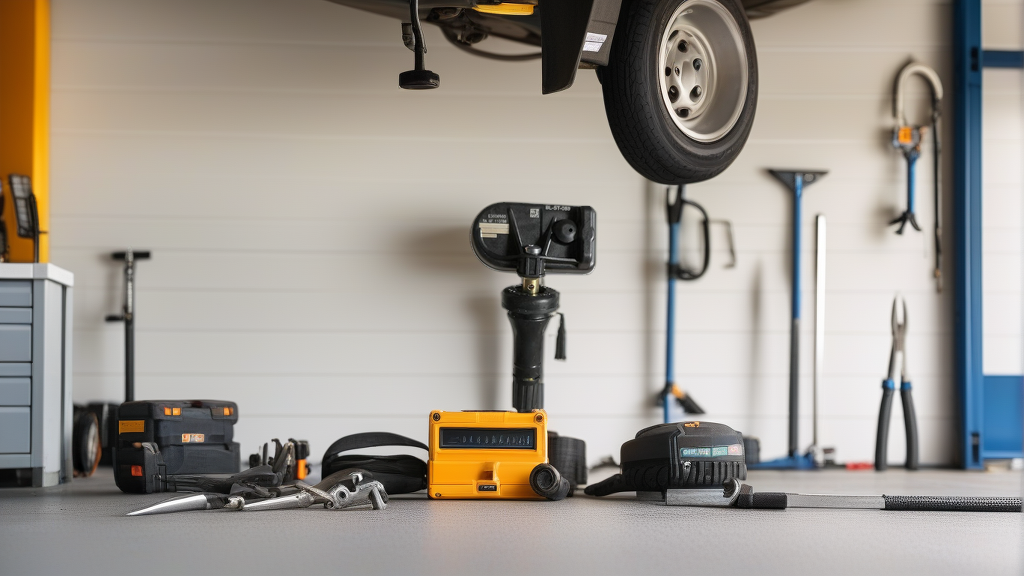
Understanding the COUNTRYMAN TPMS System
The COUNTRYMAN uses a direct TPMS system, meaning each wheel has a physical sensor mounted inside the tire that measures pressure and temperature. These sensors transmit data via radio frequency (433MHz for most models) to a receiver module. When the warning light stays on solid or flashes, it’s your car telling you something is wrong—not just low pressure.
Most COUNTRYMAN models built after 2008 use this direct system. The sensors are powered by internal lithium batteries that are sealed inside the sensor body. When that battery dies, the sensor stops transmitting, and you get a warning light. You cannot replace just the battery—you replace the whole sensor.
TPMS Warning Light Causes on the COUNTRYMAN
Let’s break down the most common reasons your COUNTRYMAN’s TPMS light is on. I’ve seen these exact scenarios in shop diagnostics.
1. Dead Sensor Battery (The Most Common Cause)
Sensor batteries are designed to last 5-7 years under normal driving conditions. If your COUNTRYMAN is approaching that age range, battery failure is the first thing to suspect.
Symptoms of a dead sensor battery:
- TPMS light comes on and stays solid after driving a few minutes
- The light may flash for 60-90 seconds at startup, then stay solid
- You check tire pressures manually—they’re all fine
- One or more sensors stop transmitting data to the car’s system
- You might see “Tire Pressure System Fault” or an individual tire pressure reading showing dashes
How to confirm: Use a TPMS scan tool (like an Autel or Bartec) to check each sensor’s battery voltage. A healthy sensor shows 2.5V–3.0V. Below 2.3V, the sensor is marginal and should be replaced. Below 2.0V, it’s effectively dead.
2. Signal Interference
This is more common than many owners realize. The TPMS sensors communicate with your COUNTRYMAN’s receiver module via radio waves. Anything that blocks or distorts that signal can trigger a false warning.
Common interference sources:
- Metalized window tint – Certain ceramic or metallic tints on the windshield can block the RF signal from reaching the receiver (the receiver is often behind the dashboard or under the center console)
- Aftermarket electronics – Dashcams, radar detectors, or USB chargers plugged into the 12V port can emit stray RF noise that interferes with the 433MHz frequency
- Aftermarket LED lights – Low-quality LED bulbs in the interior or license plate area can cause electrical noise
- Tire pressure monitoring system (TPMS) repeaters – Some aftermarket tire pressure monitoring devices create signal conflicts
How to diagnose: Temporarily unplug any aftermarket electronics. If the light goes off after a drive cycle, you found the culprit. Metalized tint requires a professional test with an RF meter.
3. Temperature Drop and Low Pressure
When ambient temperature drops by 10°F (about 6°C), tire pressure drops by roughly 1–2 PSI. A sudden cold snap can trigger the TPMS light even if you were fine the day before. This is normal, but if the light stays on after you’ve filled tires to spec, the issue is likely something else.
4. Sensor Physical Damage
Potholes, curb impacts, or tire mounting errors can crack the sensor body or break the valve stem. This is less common than battery failure but still worth checking if the sensor is relatively new.
Diagnosing the Exact Problem: Step-by-Step
You don’t need to be a professional mechanic to narrow this down. Here’s a practical workflow.
Step 1: Check Actual Tire Pressure
Use a quality tire gauge. Don’t trust the dash display if it’s showing dashes or errors. Fill all four tires to the pressure listed on your driver’s door jamb (usually 32-35 PSI for COUNTRYMAN models). Drive for 10-15 minutes. If the light resets, it was just a pressure issue. If it stays on, move to Step 2.
Step 2: Visual Inspection
Look at each valve stem. Do any of them look bent, cracked, or different from the others? Are any missing the valve cap? A damaged sensor typically needs immediate replacement.
Step 3: Scan with a TPMS Tool
This is the most reliable method. A TPMS scan tool reads each sensor’s ID, pressure, temperature, and battery voltage. If one sensor shows 0 PSI or no data, that sensor is dead or the battery is gone. If all sensors show data but the light is still on, check for:
- A sensor ID that doesn’t match the car’s memory (someone installed a non-programmed sensor)
- Battery voltage below 2.3V on any sensor
- Inconsistent temperature readings (could indicate a slow leak)
Step 4: Check for Interference
If all sensors read healthy and pressures are correct, interference is likely. Park in a different location away from power lines or large metal structures. Turn off all aftermarket electronics. Drive for 20 minutes. If the light goes out, you have an interference problem.
Sensor Compatibility and Replacement
When you need to replace a dead sensor on your COUNTRYMAN, not all TPMS sensors are created equal. The original equipment sensors (like those from BH-Sens/Baolong Technology) are pre-programmed and match the 433MHz frequency used by COUNTRYMAN’s TPMS system.
For many COUNTRYMAN models compatible with Avatr, Changan, Deepal, Mazda, and Nevo, the BL-ST-089 | BH-Sens 433MHz TPMS Tire Pressure Sensor | Fits Avatr, Changan, Deepal, Mazda, Nevo & 1 More | OE# 3601010CD01, 3601010DG01, 3601010MK02 is a direct fit. It’s a clamp-in sensor with OE numbers 3601010CD01, 3601010DG01, and 3601010MK02. Pre-programmed means you don’t need to clone or program it—just install it, and the car will learn it automatically after a short drive.
Fitment Reference Table
| Sensor Feature | Specification |
|---|---|
| Brand | BH-Sens (Baolong Technology) |
| Frequency | 433MHz |
| Type | Clamp-in, Pre-programmed |
| OE Numbers | 3601010CD01, 3601010DG01, 3601010MK02, 3601010MK02ED01 |
| Compatible Brands | Avatr, Changan, Deepal, Mazda, Nevo, and COUNTRYMAN-compatible models |
| SKU | BL-ST-089 |
Repair vs. Replacement: What to Do
If the battery is dead: Replace the sensor. You cannot replace the battery alone. A sensor that reads below 2.3V on a scan tool should be replaced.
If there’s signal interference: Remove the source. Unplug aftermarket electronics. If metalized tint is the cause, you may need to relocate the TPMS receiver module (a job for a professional installer).
If it’s a temperature drop: Nothing is broken. Fill tires to spec, and the light should reset after driving.
If a sensor is physically damaged: Replace it immediately. A cracked sensor can leak air rapidly.
Recommended Part: For a direct replacement that eliminates programming headaches, the BL-ST-089 | BH-Sens 433MHz TPMS Tire Pressure Sensor | Fits Avatr, Changan, Deepal, Mazda, Nevo & 1 More | OE# 3601010CD01, 3601010DG01, 3601010MK02 is a solid choice for COUNTRYMAN models that use 433MHz sensors.
FAQ
How do I know if my COUNTRYMAN TPMS sensor battery is dead?
The most reliable sign is that the TPMS light stays on solid after checking tire pressures and filling them. If you use a TPMS scan tool, a battery voltage reading below 2.3V confirms it’s dying. Driving with a dead sensor won’t damage your car, but you lose the safety benefit of real-time pressure monitoring.
Can aftermarket electronics really cause the TPMS light to come on?
Yes. Aftermarket dashcams, radar detectors, and poor-quality USB chargers can emit radio frequency noise that interferes with the 433MHz TPMS signal. This is especially common in vehicles where the TPMS receiver is mounted near the dashboard. Try unplugging all aftermarket accessories for one drive cycle to test.
Do I need to reprogram a pre-programmed TPMS sensor for my COUNTRYMAN?
No. Pre-programmed sensors like the BL-ST-089 come ready to install. They are already programmed with the correct OE IDs and frequency for the listed compatible vehicles. The car’s TPMS module should learn the new sensor automatically after driving at speeds above 15 mph for 10-20 minutes.
What’s the difference between a dead sensor battery and a faulty sensor?
A dead battery means the sensor has no power to transmit data. A faulty sensor may have power but gives incorrect pressure readings or fails to communicate. A scan tool can distinguish between the two: a dead battery shows low voltage, while a faulty sensor may show normal voltage but erratic data or no data at all.