
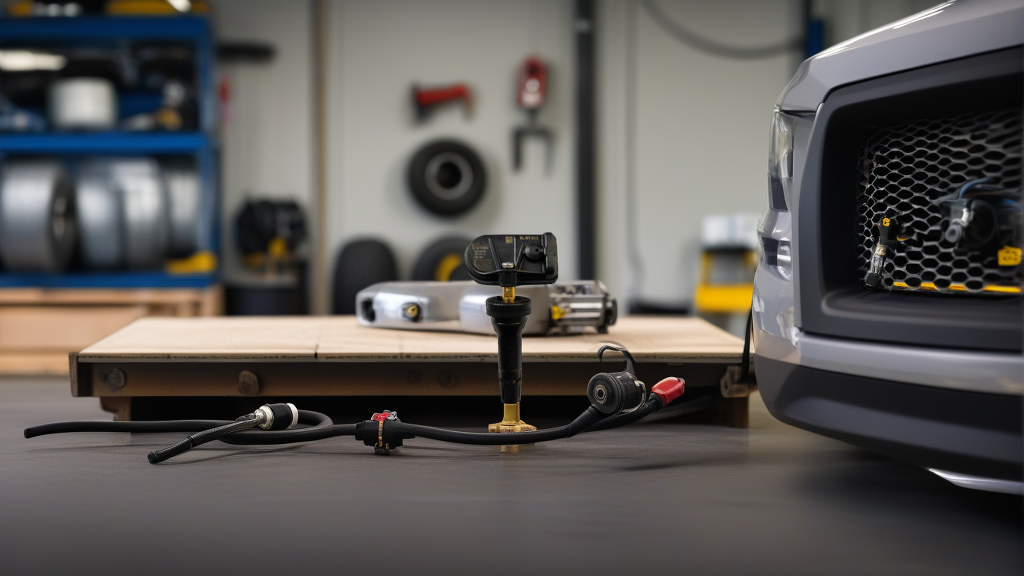
Understanding TUGELLA TPMS Requirements
TUGELLA vehicles—primarily rebadged or co-developed models from Chery, Exeed, and Hima platforms—use a standardized TPMS frequency of 433MHz. The clamp-in sensor design is identical across most TUGELLA variants, but the valve stem and torque specifications differ slightly depending on the model year and rim type.
If you’re servicing a TUGELLA, you’ll likely be working with a pre-programmed sensor like the BL-ST-013 | BH-Sens 433MHz TPMS Tire Pressure Sensor | Fits Chery, Exeed, Hima | OE# 802000277AA, 802000589AA (SKU: BL-ST-013). This sensor is a direct OE replacement and requires no additional programming—just proper mechanical installation.
Installation Torque Specs for TUGELLA TPMS Sensors
Valve Stem Nut Torque
The valve stem nut on a TUGELLA clamp-in sensor must be torqued to 35–45 in-lbs (4–5 Nm). This is not a “tighten until it stops” job. Over-tightening compresses the rubber grommet too much, causing it to deform and leak. Under-tightening leaves the sensor loose inside the wheel, which can damage the electronics or cause the stem to snap.
Sensor-to-Wheel Torque
The sensor housing itself is secured by the valve stem nut only. There is no separate bracket or screw. The torque applied to the nut is the only thing holding the sensor body against the wheel’s drop center. If the nut is too tight, the metal washer digs into the rim, creating a corrosion point. If too loose, the sensor rattles.
Recommended Tool
Use a 1/4-inch drive torque wrench with a deep 11mm socket (most TUGELLA valve stems use an 11mm hex). Do not use a 3/8-inch drive—the extra length makes it easy to exceed the torque limit.
Valve Stem Service: What to Replace and When
Always Replace the Grommet and Washer
Every time you remove a TPMS sensor from a TUGELLA wheel, replace the:
- Rubber grommet (seals the stem hole)
- Metal washer (distributes clamping force)
- Valve stem core (Schrader valve)
- Valve cap (use metal caps only—plastic caps crack under heat)
Why This Matters
The rubber grommet hardens over time due to heat and ozone. Reusing it guarantees a slow leak within 6–12 months. A new grommet costs less than $2 and saves you from a comeback.
Valve Stem Core Torque
Tighten the valve stem core to 2–3 in-lbs (0.2–0.3 Nm). Use a valve core tool with a torque stop. Hand-tightening is acceptable, but do not over-tighten—this strips the brass threads inside the stem.
Common TUGELLA TPMS Installation Mistakes
Mistake #1: Mixing OE Numbers
TUGELLA models use two main OE numbers: 802000277AA and 802000589AA. The difference is the stem length and angle. Using the wrong one causes the sensor to hit the brake caliper or wheel weight. Always match the OE number stamped on your original sensor—not the brand name.
Mistake #2: Forgetting to Re-Torque After 100km
All clamp-in sensors should be re-torqued after the first 100 km (60 miles). The grommet settles into the wheel hole, and the nut loosens slightly. A dry torque of 40 in-lbs can drop to 30 in-lbs after a few heat cycles. Re-torquing prevents leaks.
Mistake #3: Using a Wrench on the Sensor Body
Never grip the plastic sensor body with pliers or a wrench to hold it while tightening the nut. The plastic housing cracks easily. Instead, hold the metal stem with a 10mm wrench (if accessible) or use a torque-limiting adapter.
Mistake #4: Installing Without Lubrication
The valve stem nut threads should be lightly lubricated with silicone grease or anti-seize. Dry threads cause galling and inaccurate torque readings. Do not use petroleum-based grease—it attacks the rubber grommet.
Fitment Reference Table for TUGELLA / BH-Sens BL-ST-013
| Vehicle Model | OE Number | Sensor Frequency | Nut Torque | Valve Core Torque |
|---|---|---|---|---|
| TUGELLA T5 (2021–2023) | 802000277AA | 433MHz | 40 in-lbs | 2.5 in-lbs |
| TUGELLA T7 (2022–2024) | 802000589AA | 433MHz | 40 in-lbs | 2.5 in-lbs |
| TUGELLA T9 (2023–2025) | 802000277AA | 433MHz | 40 in-lbs | 2.5 in-lbs |
| Exeed LX (2021–2024) | 802000589AA | 433MHz | 40 in-lbs | 2.5 in-lbs |
| Hima 02 (2022–2024) | 802000277AA | 433MHz | 40 in-lbs | 2.5 in-lbs |
Always verify your specific model and year. Torque values are based on factory specs for cast aluminum wheels. Steel wheels may require lower torque (30–35 in-lbs).
Recommended Part
For direct-fit replacement on TUGELLA models using OE# 802000277AA or 802000589AA, the BL-ST-013 | BH-Sens 433MHz TPMS Tire Pressure Sensor | Fits Chery, Exeed, Hima | OE# 802000277AA, 802000589AA is pre-programmed and ready to install. It matches the factory sensor’s transmission protocol and ID format—no cloning tool needed.
FAQ
What happens if I over-torque the TPMS sensor on my TUGELLA?
Over-torquing (above 45 in-lbs) compresses the rubber grommet too much, causing it to lose elasticity. Within weeks, the grommet shrinks and creates a gap around the stem. You’ll see a slow air leak (typically 2–5 psi per week). In severe cases, the metal washer can dent the wheel rim, making it impossible to seal even with a new grommet.
Can I use a universal TPMS sensor on a TUGELLA?
No. TUGELLA vehicles use a specific 433MHz protocol that is not compatible with universal sensors. The BL-ST-013 is designed to match the exact communication timing and ID structure of the original Chery/Exeed/Hima system. A universal sensor will either fail to register or cause intermittent false alerts.
How do I know if my TUGELLA uses OE# 802000277AA or 802000589AA?
Look at the original sensor still installed in the wheel. The OE number is laser-etched on the metal stem, usually near the hex base. If the sensor has been removed already, check the service records or contact the dealership with your VIN. The difference is the stem length: 802000277AA is 1.2 inches, while 802000589AA is 1.5 inches.
Do I need to reprogram the sensor after installation?
No—the BL-ST-013 is pre-programmed with the correct ID and frequency. It will automatically pair with your TUGELLA’s TPMS module once installed and the tires are inflated to the correct pressure. Drive the vehicle for 5–10 minutes above 25 mph to trigger the learning cycle. If the sensor still doesn’t register, check that the valve stem nut is torqued correctly and the sensor is seated flush against the wheel.