
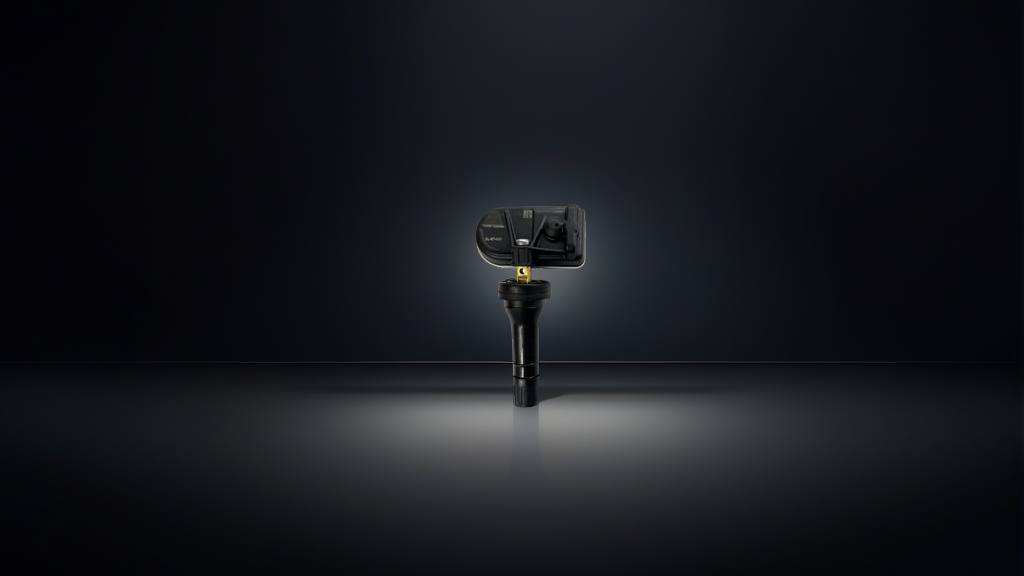
Understanding the UNI-K IDD TPMS System
The UNI-K IDD uses a direct TPMS system, meaning each wheel has a sensor that transmits pressure and temperature data to the vehicle’s ECU. When you replace a sensor—like with the BH-Sens BL-ST-066—the ECU needs to “learn” the new sensor’s unique ID. If you skip this, the TPMS light stays on, and the system won’t display pressure readings.
There are three relearn methods for this vehicle: auto relearn, OBD relearn, and stationary relearn. Each has its own use case, tools, and steps.
| Method | Tools Needed | Time | Best For |
|---|---|---|---|
| Auto Relearn | None (just driving) | 10–15 min | After battery replacement or tire rotation (no sensor swap) |
| OBD Relearn | TPMS programming tool (e.g., Autel TS508, Bartec) | 2–5 min | After sensor replacement or when auto relearn fails |
| Stationary Relearn | TPMS activation tool (e.g., EL-50448) | 5–10 min | When OBD tool is unavailable; works with magnet |
Auto Relearn Procedure
This is the simplest method—no tools required. However, it only works if the new sensor is already transmitting a valid ID and the vehicle recognizes it during driving. The UNI-K IDD’s auto relearn activates when the car detects a consistent signal from each corner.
Steps:
- Inflate all tires to the recommended pressure (check driver’s door jamb label).
- Start the engine and drive steadily above 25 mph for 10–15 minutes.
- The TPMS light should go off after the ECU matches the sensor IDs.
- If the light stays on after 20 minutes, switch to OBD or stationary method.
Note: This method doesn’t work if you installed a sensor with a different frequency (e.g., if you replaced a 433MHz with a 315MHz). The BL-ST-066 is 433MHz, which is correct for this vehicle.
OBD Relearn Procedure (Fastest)
For sensor replacement, the OBD method is recommended. You’ll need a TPMS programming tool that supports UNI-K IDD—most universal tools (like Autel or Bartec) work. The BL-ST-066 is pre-programmed with OE IDs, but the tool still needs to register it.
Steps:
- Connect the TPMS tool to the OBD-II port (under the dashboard, driver’s side).
- Select “UNI-K IDD” or “Chang’an” (UNI-K is a Chang’an model) from the vehicle menu.
- Activate each sensor using the tool’s trigger function (hold the tool near each tire valve stem).
- The tool will display the sensor ID and location (LF, RF, RR, LR).
- Follow the tool’s prompt to “Write” or “Program” the IDs to the ECU.
- Disconnect the tool and start the engine—the TPMS light should go out within 30 seconds.
Troubleshooting: If the tool can’t activate the sensor, check the battery in the sensor (the BL-ST-066 has a built-in lithium battery, lifespan ~5–7 years). Also, ensure the sensor is within 6 inches of the tool’s antenna.
Stationary Relearn Procedure (Magnet Method)
This is a backup method if you don’t have an OBD tool. It uses the vehicle’s TPMS learn mode, triggered by a magnet or the hazard light button (depending on the year). For the UNI-K IDD (2022–present), the stationary method requires a TPMS activation tool or a strong magnet.
Steps:
- Park the vehicle, turn the ignition to ON (engine off).
- Press and hold the hazard light button for 5 seconds until the TPMS light blinks twice—this enters learn mode.
- Starting with the left front tire, hold a TPMS activation tool (or magnet) near the valve stem.
- The horn will sound once (or the turn signal will flash) to confirm the sensor is learned.
- Repeat for right front, right rear, and left rear in that order.
- After the fourth sensor, the horn sounds twice, and the TPMS light goes out—learn mode ends.
- Turn the ignition OFF, then start the engine to verify.
Important: Some UNI-K IDD models require the magnet method only (no horn confirmation). If the horn doesn’t sound, check the owner’s manual for exact trigger sequence—some years use the “SET” button on the steering wheel instead.
Recommended Part for UNI-K IDD TPMS Replacement
The BL-ST-066 | BH-Sens 433MHz TPMS Tire Pressure Sensor | Fits Fengon, Ineos, Infiniti, Mitsubishi, Nammi & 4 More | OE# 3641050RD01, 407002GL0A, 407002GN0A is a direct-fit clamp-in sensor that matches the OE part numbers for this vehicle. It’s pre-programmed with the correct 433MHz frequency and works with all three relearn methods. Always replace the valve stem nut and seal when installing—torque to 4–5 Nm (check manual for exact spec).
FAQ
Why won’t my UNI-K IDD TPMS light turn off after sensor replacement?
Most likely the sensor ID wasn’t learned by the ECU. If you used the auto relearn, ensure you drove above 25 mph for at least 10 minutes straight. If that fails, try the OBD method—it’s the most reliable. Also verify the sensor frequency is 433MHz (not 315MHz) and the battery isn’t dead.
Can I use the auto relearn after a tire rotation?
Yes, if the sensors were already learned to the vehicle, auto relearn will re-assign their positions during driving. Just drive above 25 mph for 10 minutes. If the light stays on, you may need to use the stationary method to manually reassign positions.
What tools do I need for the stationary relearn on a UNI-K IDD?
You need a TPMS activation tool (like the Autel TS508 or a generic 125kHz activator) or a strong neodymium magnet. Some owners report success with a bar magnet held to the valve stem for 2–3 seconds. If using a magnet, the sensor must be metal-cased (the BL-ST-066 is metal, so it works). Avoid plastic-only sensors.
How do I know if the BL-ST-066 is compatible with my UNI-K IDD year?
The BL-ST-066 fits all UNI-K IDD models from 2022 onward. It replaces OE numbers 407002GL0A, 407002GN0A, and several others listed on the product page. If your vehicle uses a different OE number, check with the seller—most BH-Sens sensors are cross-referenced by frequency and shape. Always confirm the valve stem length (clamp-in vs. snap-in) before ordering.