
Understanding Honda TPMS Sensor Compatibility
Honda has used TPMS (Tire Pressure Monitoring System) sensors since the mid-2000s, but the technology and sensor designs have changed across generations. The most common frequency for Honda TPMS sensors is 433MHz, which covers models from around 2015 through present day. However, earlier models (2007-2014) may use 315MHz sensors, and some newer hybrid or EV models have moved to Bluetooth-based systems.
The key to avoiding a wasted purchase is understanding that TPMS sensors are not one-size-fits-all, even within the same brand. Honda uses different sensor protocols depending on the supplier (Continental, Schrader, or Denso), and these protocols are not interchangeable without proper programming.
Honda Model Years and TPMS Sensor Types
Here’s a general breakdown of Honda TPMS systems by era:
| Honda Model Year Range | TPMS Type | Frequency | Sensor Style | Notes |
|---|---|---|---|---|
| 2007-2014 | Direct (OEM) | 315MHz | Clamp-in | Requires programming; Schrader or Continental |
| 2015-2020 | Direct (OEM) | 433MHz | Clamp-in | Pre-programmed sensors available |
| 2021-present | Direct (OEM) | 433MHz | Clamp-in or Snap-in | Some models use Bluetooth; check compatibility |
| Hybrid/EV (2018+) | Varies | 433MHz or Bluetooth | Clamp-in | Verify with OE part number |
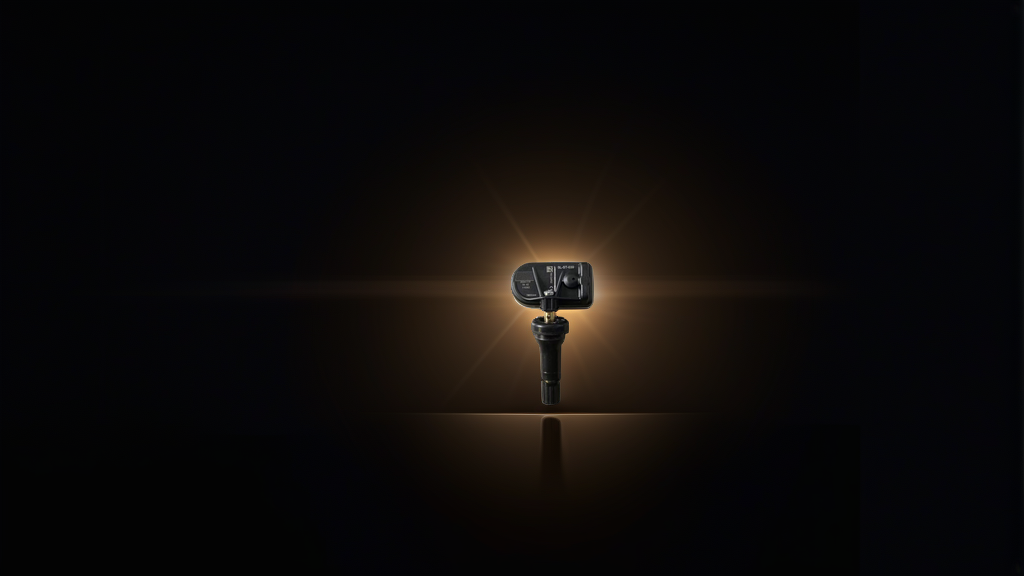
Important: The BH-Sens BL-ST-039 operates at 433MHz and is a clamp-in, pre-programmed sensor. This means it is designed for Honda vehicles from approximately 2015 onward that use the 433MHz system. If your Honda is older than 2015, you likely need a 315MHz sensor instead.
How to Verify Fitment for Your Honda
Before buying any aftermarket TPMS sensor—including the BL-ST-039—take these three steps:
1. Check the OE Part Number on Your Existing Sensor
The most reliable way to confirm compatibility is to remove one wheel and look at the label on the current sensor. Honda uses several OE part numbers depending on the supplier:
- E300019160 – Commonly found on Honda CR-V, Accord, Civic (2016-2020)
- E300020260 – Used on newer Honda models (2020+)
- H56A7920001AC – Found on some Honda HR-V and Fit models
The BL-ST-039 is pre-programmed to match these exact OE numbers. If your sensor shows one of these numbers, the BH-Sens sensor is a direct replacement.
Don’t have access to the sensor? Check your glovebox manual or call a Honda dealer with your VIN. They can tell you the original TPMS part number.
2. Confirm Your Honda’s Production Date
Honda transitioned from 315MHz to 433MHz around the 2015 model year, but some early 2015 models still used 315MHz. Look at the sticker on the driver’s door jamb for the month and year of manufacture:
- Manufactured after July 2014: Likely 433MHz
- Manufactured before July 2014: Likely 315MHz
If your car was built in the transition period (mid-2014 to early 2015), check the OE part number to be certain.
3. Verify the Sensor Type: Clamp-in vs. Snap-in
Honda uses two sensor mounting designs:
- Clamp-in (metal band): Secured with a nut and metal band around the valve stem. Common on older models and most 433MHz systems.
- Snap-in (rubber grommet): Pressed into the wheel hole. Used on some newer models (2021+ Civic, HR-V).
The BL-ST-039 is a clamp-in sensor. If your Honda has snap-in sensors, this product will not physically fit. You can identify the type by looking at the valve stem—clamp-in sensors have a visible nut, while snap-in sensors have a rubber base flush against the wheel.
What Models Does the BL-ST-039 Fit?
Based on the OE number cross-reference, the BH-Sens BL-ST-039 is compatible with:
- Honda CR-V (2015-2021) – Most trims
- Honda Accord (2016-2022) – EX, LX, Sport trims
- Honda Civic (2016-2021) – Sedan, Coupe, Hatchback
- Honda HR-V (2016-2022) – LX, EX, EX-L
- Honda Fit (2015-2020) – All trims
- Honda Odyssey (2018-2021) – EX, EX-L, Touring
Note: This list is not exhaustive. Always verify with your specific VIN or OE part number. For Honda models outside these ranges (like the Ridgeline, Pilot, or Passport), check the OE number first—they may use different part numbers.
Why Pre-Programmed Sensors Are a Good Choice for Honda Owners
Pre-programmed sensors like the BH-Sens BL-ST-039 come already configured to match the OE frequency and protocol. This means:
- No special programming tool needed – The sensor will be recognized by your Honda’s TPMS module immediately after installation.
- Simpler installation – Just install the sensor, inflate the tire, and drive. The system will auto-learn the new sensor ID within a few miles.
- Lower cost – Compared to dealer OEM sensors, aftermarket pre-programmed sensors save 30-50% while maintaining OE-level performance.
However, pre-programmed sensors only work if the OE part number matches. If your Honda uses a different OE number, you would need a programmable sensor instead.
Common Fitment Mistakes to Avoid
- Assuming all 433MHz sensors are the same – Honda’s protocol (often called “Continental” or “Schrader”) differs from Toyota or Nissan. The BL-ST-039 is specifically programmed for Honda-compatible OE numbers.
- Ignoring the sensor type – A clamp-in sensor will not fit a wheel designed for snap-in, and vice versa.
- Buying based on model year alone – Example: a 2018 Honda Accord Hybrid may use a different sensor than a 2018 Accord LX because the hybrid system has a different TPMS module.
- Forgetting to replace the valve stem core – When installing new clamp-in sensors, always use a new valve core and tighten to the manufacturer’s recommended torque (usually 35-40 in-lbs).
Recommended Part
For Honda owners with 433MHz systems and compatible OE numbers, the BL-ST-039 | BH-Sens 433MHz TPMS Tire Pressure Sensor | Fits Aeolus, Eπ, Mhero, Nammi, Voyah | OE# E300019160, E300020260, H56A7920001AC is a solid choice. It is pre-programmed, clamp-in, and covers the most common Honda models from 2015-2021. If your OE number matches E300019160, E300020260, or H56A7920001AC, this sensor will plug-and-play without extra programming steps.
FAQ
Will the BL-ST-039 work on a 2014 Honda CR-V?
No, the 2014 Honda CR-V uses a 315MHz TPMS system. The BL-ST-039 is 433MHz and will not communicate with the vehicle’s TPMS module. For 2014 and earlier models, look for a 315MHz sensor instead.
How do I know if my Honda has a clamp-in or snap-in TPMS sensor?
Look at the valve stem from outside the wheel. If you see a small metal nut holding the valve stem in place, it is a clamp-in sensor. If the valve stem has a rubber base that sits flush against the wheel without a visible nut, it is a snap-in. You can also check your owner’s manual or ask a tire shop to confirm.
Can I install the BL-ST-039 myself without a TPMS tool?
Yes, because it is pre-programmed. After installation, drive the car for 10-15 minutes above 15 mph. Most Honda TPMS systems will auto-learn the new sensor IDs during this drive. If the warning light stays on, you may need a TPMS tool to initiate the relearn procedure (common on 2018+ models).
What if my Honda’s OE part number isn’t listed for the BL-ST-039?
If your OE number is not E300019160, E300020260, or H56A7920001AC, the BL-ST-039 may still work—but it is not guaranteed. Contact the seller with your OE number to verify. Alternatively, choose a programmable sensor that can be set to match any Honda TPMS ID.