
Why Winter Tire Swaps Demand Extra TPMS Attention
Every Lynk & Co model sold globally — from the 01 to the 09 — is equipped with direct TPMS sensors that monitor real-time pressure and temperature at each wheel. Unlike indirect systems that rely on ABS wheel speed sensors, direct sensors contain a battery and a pressure transducer inside the valve stem assembly. When you swap to winter tires, you have three options:
- Reuse the existing sensors by transferring them to the winter wheels.
- Install a dedicated set of pre-programmed sensors on the winter wheels and re-learn them to the vehicle.
- Ignore the sensors and live with the warning light (not recommended — you lose low-pressure alerts critical for winter driving).
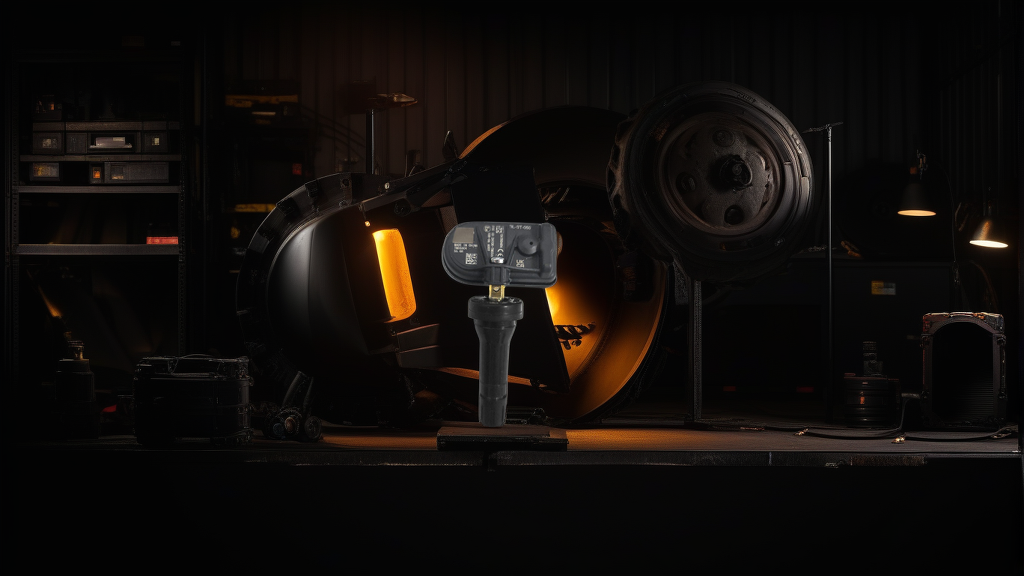
For Lynk & Co owners, option 2 is the most practical long-term solution. It avoids the labor cost of dismounting and remounting sensors twice a year and reduces the risk of damaging the valve stem during seasonal swaps. The BL-ST-050 from BH-Sens (Baolong Technology) is a direct-fit, pre-programmed 433MHz sensor that covers 13 vehicle fitments including Geelygalaxy, Lynk & Co, and Zeekr. It matches OE numbers 6608082005 and 8894215959, which are common on Lynk & Co models from 2017 onward.
Understanding Pressure Changes with Temperature
Rubber compounds stiffen in cold weather, and the air inside your tires contracts. For every 10°F drop in ambient temperature, tire pressure decreases by approximately 1 PSI. If you filled your tires to 36 PSI at 70°F in the garage, and the outside temperature drops to 20°F, your tires will read around 31 PSI when cold. That’s a 5 PSI drop — enough to trigger the TPMS warning light on most Lynk & Co models (which typically warn below 25% of the recommended pressure).
Cold vs. Hot Inflation
Always set tire pressures when the tires are cold — meaning the vehicle has been parked for at least three hours or driven less than one mile. Driving even a few miles heats the air inside the tire, raising pressure by 4–6 PSI. If you set pressures after a drive, you’ll be under-inflated once the tires cool down.
| Condition | Typical PSI Change | When to Adjust |
|---|---|---|
| Cold (ambient) | Baseline | Before driving |
| After 15 min highway | +4 to +6 PSI | Do not adjust |
| 10°F temp drop | -1 PSI | Compensate at fill-up |
| Altitude gain 5,000 ft | +0.5 PSI | Minor effect, ignore |
For winter, Lynk & Co recommends adding 2–3 PSI above the summer specification to account for the pressure drop and to improve sidewall stability on snow. Check your driver door jamb sticker — it lists the cold pressure for the original tire size. If you downsized to narrower winter tires, consult the tire manufacturer’s load/inflation table.
Storage Tips for Spare TPMS Sensors
If you buy a second set of sensors for your winter wheels, you’ll have a spare summer set to store for half the year. Proper storage extends battery life and prevents corrosion.
- Temperature: Store sensors at 60°F to 80°F (15°C to 27°C). Extreme heat above 120°F degrades the lithium battery; extreme cold below -20°F can crack the housing.
- Humidity: Keep them in a sealed plastic bag with a silica gel desiccant pack. Moisture can corrode the internal circuit board.
- Metal contact: Do not store sensors loose in a metal toolbox or touching steel rims. Galvanic corrosion can form between the aluminum valve stem and steel surfaces. Wrap each sensor in bubble wrap or a microfiber cloth.
- Battery preservation: Sensors are always “on” in a low-power sleep mode, but they wake up when they detect rotation. Storing them off the vehicle is fine — the battery drain is negligible (less than 1% per year in storage).
Step-by-Step: Winter Tire Swap with TPMS
1. Confirm Sensor Compatibility
Your Lynk & Co uses a 433MHz frequency system. Do not use 315MHz sensors — they will not communicate with the vehicle’s receiver. The BH-Sens BL-ST-050 is pre-programmed to the correct protocol, so no cloning or manual programming is needed. Just install and drive.
2. Install Sensors on Winter Wheels
Clamp-in sensors like the BL-ST-050 are torqued to the valve stem. The correct torque is typically 4–5 Nm (35–44 in-lbs). Over-tightening can crack the sensor body. Use a torque wrench with a crow’s foot adapter if possible.
3. Mount and Balance
After mounting the tires, balance the wheel assembly. Sensors add about 30 grams of weight, so the balancer will compensate.
4. Re-learn the Sensors
Lynk & Co vehicles use an auto-learn process. After installing the winter wheels, drive above 20 mph for 10–15 minutes. The TPMS receiver learns the new sensor IDs automatically. If the warning light stays on after 30 minutes of driving, use a TPMS re-learn tool (available at any tire shop) to trigger each sensor in sequence — left front, right front, right rear, left rear.
5. Set Cold Pressure
Inflate all four tires to the winter recommended pressure. For most Lynk & Co models with 18- or 19-inch wheels, that’s 35–38 PSI cold. Check the driver door sticker for your specific trim.
Common Mistakes to Avoid
- Mixing sensor frequencies: 433MHz sensors will not work on 315MHz systems, and vice versa. Verify your Lynk & Co model year and region. Most global Lynk & Co vehicles use 433MHz, but some early China-market models used 315MHz.
- Using old batteries: TPMS sensor batteries last 5–7 years. If your summer sensors are over 5 years old, replace them now instead of storing them. A dead sensor in summer means a dashboard light for months.
- Ignoring the spare tire: Some Lynk & Co models (like the 01 PHEV) have a full-size spare. If it has a sensor, check its pressure and battery before winter.
- Over-tightening the valve stem nut: Use a torque wrench. Hand-tightening often results in overtightening, which strips the plastic threads on the sensor.
Recommended Part
For Lynk & Co owners looking for a drop-in replacement sensor that works out of the box, the BL-ST-050 from BH-Sens is a solid choice. It is pre-programmed to OE specifications (6608082005, 8894215959), clamp-in design, and comes ready to pair with your vehicle’s TPMS receiver. No cloning, no special tools needed — just install and drive.
FAQ
Can I use my Lynk & Co summer sensors on winter wheels by just swapping them over?
Yes, but you’ll need to dismount the tires from the summer wheels, remove the sensors, install them in the winter wheels, and rebalance. This costs more than buying a second sensor set after 2–3 swaps. Also, the valve stem seals wear out with each removal, increasing the risk of air leaks.
How do I know if my Lynk & Co uses 433MHz or 315MHz TPMS?
Check the label on your original sensor (visible when the wheel is off the car) or contact a Lynk & Co dealer with your VIN. Most 2017–2024 Lynk & Co models sold in Europe and China use 433MHz. If you have a gray-market import from the Middle East or North America, it may use 315MHz.
Is it safe to drive with the TPMS light on during winter?
It is not recommended. The TPMS light means at least one tire is 25% or more below the recommended pressure. In winter, under-inflated tires generate more heat, reduce traction on snow, and increase the risk of a blowout from pothole impacts. Replace or re-learn the sensor as soon as possible.
How long do BH-Sens TPMS sensor batteries last?
The BL-ST-050 uses a lithium battery rated for 5–7 years of normal use (about 30,000–50,000 miles). Battery life depends on driving frequency and ambient temperatures. In severe cold climates, expect the lower end of that range.