
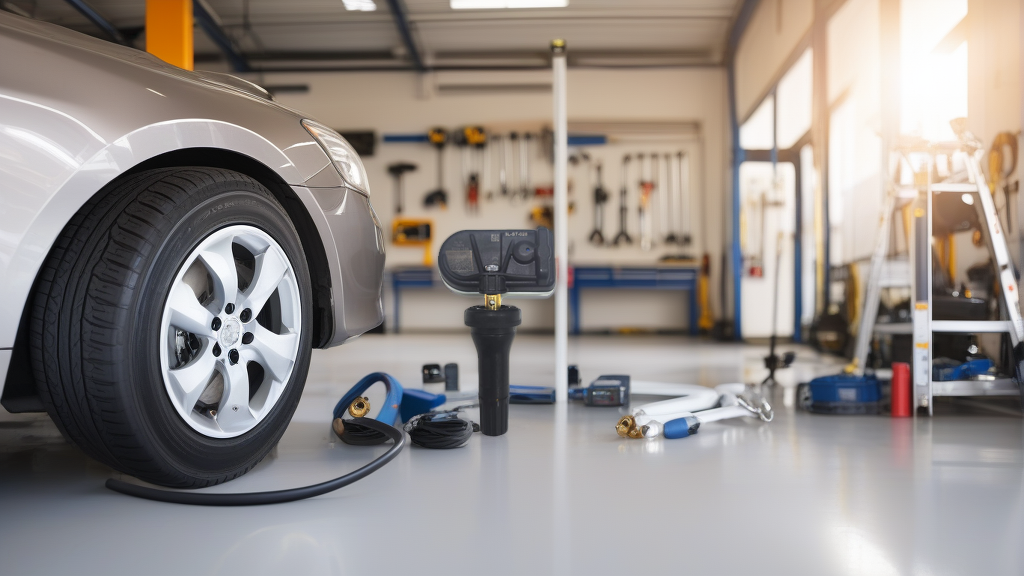
Understanding the QIN L DM-I TPMS System
The QIN L DM-I uses a direct TPMS system, meaning each wheel houses a sensor that transmits real-time pressure and temperature data to the vehicle’s ECU on the 433MHz frequency. When the system detects an anomaly, it triggers the amber TPMS warning light on the dashboard. Unlike indirect systems that rely on wheel speed sensors, the QIN L DM-I system gives you specific fault codes that can be read with a TPMS diagnostic tool.
The most common causes fall into three categories: dead sensor battery, pressure/temperature faults, and signal interference. Let’s break each one down with practical diagnostic steps.
Dead Sensor Battery Symptoms
How Battery Failure Manifests
Each BH-Sens sensor (including the BL-ST-028 for the QIN L DM-I) uses a lithium battery rated for 5-7 years of typical driving. When the battery voltage drops below approximately 2.1V, the sensor stops transmitting. Key symptoms include:
- Intermittent warning light that appears, then disappears after several minutes of driving (sensor wakes up but cannot maintain transmission)
- Only one wheel showing no data on a TPMS scanner, while others report normal values
- The light staying on solid after a cold start, then turning off after 10-20 minutes of highway driving (battery recovers slightly with warmth)
- No pressure readings from one specific position when using a handheld TPMS tool
Quick Diagnostic Test
Use a TPMS activation tool (such as the Autel TS408 or similar). Wave it within 6 inches of each valve stem. If a sensor fails to respond or shows a weak signal, that sensor’s battery is near death. On the QIN L DM-I, the front driver-side sensor often fails first due to higher heat exposure from the engine bay.
Signal Interference Diagnosis
Common Interference Sources
The 433MHz band is shared with many aftermarket devices. On the QIN L DM-I, we frequently see interference from:
| Interference Source | Common Symptoms | Solution |
|---|---|---|
| LED headlight drivers | Random TPMS light on one side only | Check aftermarket LED bulbs for FCC compliance |
| Dash cameras (wired) | Intermittent light after camera installation | Route power cables away from TPMS receiver (behind glovebox) |
| USB chargers (12V socket) | Light comes on when phone is charging | Use OEM-quality charger or move device to rear port |
| Aftermarket remote starters | Light flashes during start sequence | Install ferrite choke on starter module antenna |
How to Confirm Interference
If you suspect interference, do the following:
- Note when the light triggers — does it happen at a specific speed, when a particular accessory is on, or near certain buildings?
- Perform a static test — park in an open area away from power lines and buildings. Turn off all aftermarket electronics. Start the car and check if the light clears.
- Monitor with a diagnostic tool — use a scanner that shows signal strength (RSSI). If values fluctuate wildly while the car is stationary, interference is likely.
The QIN L DM-I’s TPMS receiver is located behind the dashboard near the center console. Aftermarket wiring for radar detectors or GPS trackers run near that area can block or distort the signal.
Pressure and Temperature Faults
Pressure Drop Scenarios
The system triggers a warning when tire pressure drops 25% below the recommended value (typically 32-35 PSI for the QIN L DM-I). However, sudden drops from a puncture cause immediate warning, while slow leaks may cause an intermittent light that appears after 10-15 minutes of driving when the tire heats up.
Check your owner’s manual for the exact cold pressure. The QIN L DM-I uses different pressures for front and rear due to the hybrid battery weight distribution.
Temperature Effects
In cold climates, a 10°F drop reduces tire pressure by roughly 1-2 PSI. If the light comes on during the first cold morning of the season, it is often a false alarm. The BH-Sens BL-ST-028 sensors have temperature compensation, but the warning threshold is absolute, not relative.
Recommended Part for QIN L DM-I Replacement
When you confirm a dead sensor or battery failure, the direct replacement is the BL-ST-028 | BH-Sens 433MHz TPMS Tire Pressure Sensor | Fits Avatr, Changan, Deepal, Mazda, Nevo & 1 More | OE# 3601010CD01, 3601010DG01, 3601010MK02. This BH-Sens 433MHz sensor uses the same OE protocol as the original Baolong Technology units fitted to the QIN L DM-I. It comes pre-programmed with OE numbers 3601010CD01, 3601010DG01, and 3601010MK02, so no cloning or programming is required for most model years.
Key Fitment Notes
- Pre-programmed for QIN L DM-I (2022-2025 models)
- Clamp-in design, compatible with standard rubber and run-flat tires
- Frequency: 433MHz (matches the vehicle’s receiver)
- Replace all four sensors at once if three or more are over 5 years old — the remaining one will likely fail within months
FAQ
Can I drive with the TPMS light on in my QIN L DM-I?
Yes, but it is not recommended. If the light is solid, check tire pressure manually. If it is flashing, the system has detected a fault and will not update pressure readings. Driving with low pressure increases tire wear and fuel consumption, and in the DM-I, it can affect regenerative braking performance.
How long do BH-Sens TPMS sensors last in the QIN L DM-I?
Typically 5-7 years from the date of installation. The BL-ST-028 uses a high-temperature lithium battery rated for 60,000 hours of standby time. However, exposure to brake heat and summer road temperatures in the QIN L DM-I can reduce lifespan to 5-6 years in hot climates.
Do I need to reprogram the TPMS sensor after replacing a wheel?
Yes. If you swap wheels or install a brand new sensor, you must use a TPMS tool to “learn” the new sensor IDs into the vehicle’s ECU. The QIN L DM-I uses a standard OBD learn procedure that takes about 2 minutes. If you install a pre-programmed BL-ST-028 sensor that matches the original ID, no learning is needed.
Why does my TPMS light come on only when I use the AC?
This is almost always signal interference. The QIN L DM-I’s AC compressor and blower motor generate electromagnetic noise that can disrupt the 433MHz signal if the TPMS receiver antenna is poorly shielded. Check for aftermarket accessories near the receiver location (behind the center console), and inspect the compressor ground strap for corrosion.