
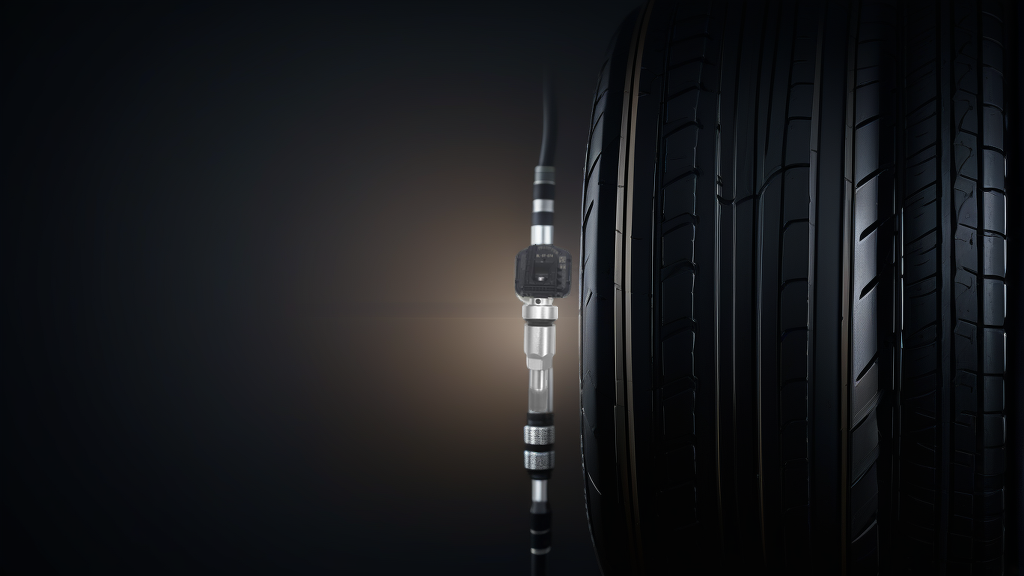
Understanding the 炫界 TPMS System
The 炫界 (also sold as the Cowin Xuanjie or Chery Xuanjie in some markets) is a compact crossover produced by Chery’s Cowin brand. Its tire pressure monitoring system uses direct TPMS sensors mounted inside each wheel. Unlike some older systems that operate at 315MHz, the 炫界 uses 433MHz sensors—a frequency common to most modern Asian and European vehicles.
When the TPMS warning light appears on your 炫界 dashboard, or you’re replacing tires and want to swap sensors, you need to understand four critical specs: frequency, battery life, ingress protection (IP rating), and protocol compatibility. Getting any of these wrong means the sensor won’t communicate with the vehicle’s receiver module.
Frequency Band: 433MHz vs 315MHz
The single most common mistake when buying aftermarket TPMS for the 炫界 is choosing a 315MHz sensor. Here’s the breakdown:
| Frequency | 炫界 Compatibility | Common Vehicles Using This Freq |
|---|---|---|
| 433MHz | ✅ Yes (factory spec) | Most Chery, Cowin, Geely, BYD models; most European & Asian cars after 2010 |
| 315MHz | ❌ No | Older US-market vehicles (pre-2010), some Ford, GM, Toyota models |
The 433MHz band offers better signal penetration through metal and rubber at the cost of slightly shorter range compared to 315MHz. But for a compact SUV like the 炫界, the tire-to-receiver distance is never an issue. The BH-Sens BL-ST-074 operates at 433MHz and is pre-programmed to match the original Baolong Technology sensors found in the 炫界.
Practical tip: If you’re buying a used 炫界 and see a TPMS warning that won’t clear after tire rotation, check whether a previous owner installed 315MHz sensors by mistake. A simple scan tool that reads TPMS IDs will confirm the frequency.
Battery Life: What to Expect
TPMS sensors are sealed units with non-replaceable batteries. The 炫界 factory sensors use a 3V lithium coin cell (typically CR2450 or CR2450HR). Under normal driving conditions (1-2 hours daily), expect:
- Factory sensors: 5-7 years
- Aftermarket sensors like BL-ST-074: 4-6 years (varies by brand and battery quality)
The BH-Sens BL-ST-074 uses a high-temperature lithium battery rated for -40°C to +125°C. This is important because the 炫界 is sold in markets with extreme climates (Middle East, South America, China). The battery capacity is typically 240–260 mAh.
When to replace: If your 炫界 is 5+ years old and you haven’t changed the TPMS sensors, replace them proactively with the next tire change. A dead sensor battery cannot be revived—only replacement works.
IP Rating: Dust and Water Protection
All modern TPMS sensors must survive road spray, pressure washing, and mud. The IP rating tells you exactly how well they’re sealed:
- IP67: Protected against dust ingress and immersion in 1 meter of water for 30 minutes
- IP68: Protected against dust and continuous immersion beyond 1 meter (varies by manufacturer spec)
The 炫界 factory sensors are typically IP67. Aftermarket sensors like BL-ST-074 are also IP67 or IP68. This means you can safely drive through puddles, wash the car with a pressure washer (from a distance), and drive in heavy rain without sensor failure.
Watch out for: Cheap no-name sensors online that claim “waterproof” but don’t list an IP rating. If the spec sheet doesn’t show IP67 or IP68, assume they’re not properly sealed. Moisture ingress is the second most common cause of TPMS failure after dead batteries.
Protocol Compatibility: Why Pre-Programmed Matters
This is where most DIY installers get confused. The frequency is only half the story. Each automaker uses a specific data protocol—the language the sensor uses to talk to the receiver module. The 炫界 uses a Baolong Technology protocol (also used by Chery and Cowin).
The BL-ST-074 comes pre-programmed with the correct protocol. That means you do NOT need a TPMS programming tool to clone or program it. You simply install it, and the car’s receiver will recognize it automatically after a short drive (typically 5-10 minutes at speeds above 25 km/h).
Compatibility table for 炫界 TPMS:
| OE Number | Compatible Sensor | Protocol | Pre-Programmed? |
|---|---|---|---|
| 11652AWARDKS | BL-ST-074 | Baolong 433MHz | Yes |
| 802000012AA | BL-ST-074 | Baolong 433MHz | Yes |
| Other Baolong OE | BL-ST-074 | Baolong 433MHz | Yes |
If you buy a universal sensor that requires programming, you’ll need a tool like the Autel TS508 or Bartec Tech400. For most 炫界 owners, the pre-programmed option is simpler and cheaper.
Installation Notes for the 炫界
The 炫界 uses clamp-in (metal stem) sensors with a standard valve stem. Torque the sensor nut to the manufacturer’s specification (typically 3.5–4.5 Nm for aluminum stems, 4.5–5.5 Nm for steel). Overtightening can crack the sensor housing; undertightening causes air leaks.
After installation, you must perform a TPMS relearn procedure. On the 炫界, this is usually done with a TPMS trigger tool (OBD-based or handheld). Some models automatically relearn after driving 10–20 minutes at 30 km/h. Consult your owner’s manual for the exact method.
Recommended Part
For a direct replacement that matches the 炫界’s factory specs, use the BL-ST-074 | BH-Sens 433MHz TPMS Tire Pressure Sensor | Fits Chery, Chery Ev, Cowin | OE# 11652AWARDKS, 802000012AA. It’s a pre-programmed 433MHz sensor with IP67 rating, Baolong protocol compatibility, and the correct OE cross-references (11652AWARDKS, 802000012AA). No programming tool required—just install and drive.
FAQ
How do I know if my 炫界 uses 433MHz or 315MHz TPMS?
Check the OE number on your current sensor (visible through the valve stem area after removing the tire). If it matches 11652AWARDKS, 802000012AA, or any Baolong Technology number, it’s 433MHz. You can also use a TPMS scan tool to read the sensor frequency. All 炫界 models from 2019 onward use 433MHz.
Can I replace just one TPMS sensor on my 炫界?
Yes, but the new sensor must match the frequency and protocol of the existing three. If the other three sensors are original Baolong 433MHz units, a single BL-ST-074 will work. If your car is older than 6 years, consider replacing all four at once to avoid sequential failures.
What happens if I install a 315MHz sensor on my 炫界?
The TPMS receiver module will not detect the sensor. The dashboard warning light will stay on, and no pressure or temperature data will be transmitted. The sensor itself will appear to work (green LED flash during installation) but the car will never recognize it.
How long does a 炫界 TPMS sensor battery last in cold climates?
In extreme cold (-30°C or lower), battery life may drop to 3–4 years because cold temperatures reduce lithium battery capacity. The BL-ST-074 is rated for -40°C operation, but the usable battery life shortens in sustained extreme cold. If you live in a northern climate, check your TPMS annually after year 4.