
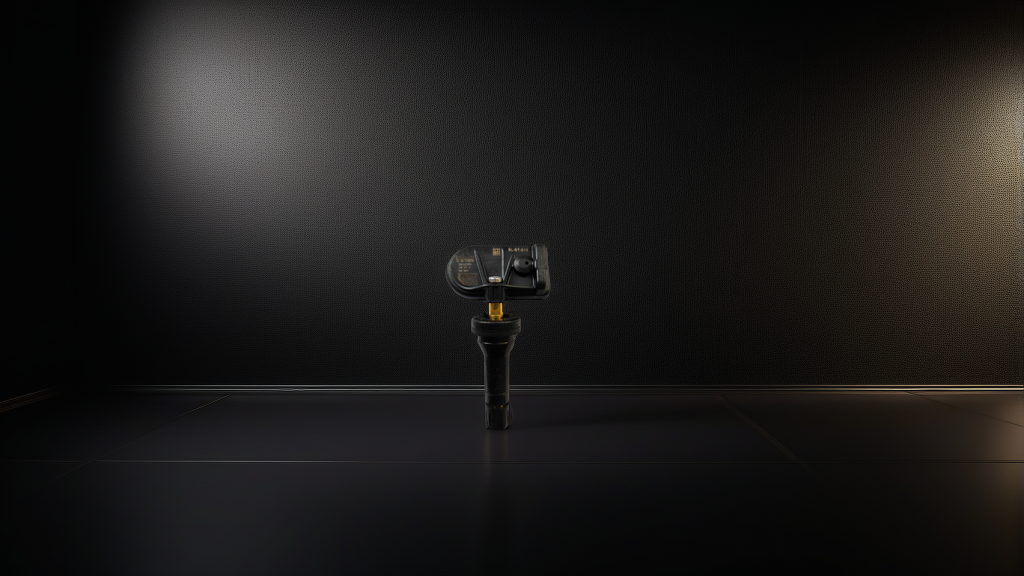
Proper Torque Specs for GHOST TPMS Sensors
GHOST vehicles use a standard clamp-in TPMS sensor design. The recommended tightening torque for the sensor retaining nut is 4–6 Nm (35–53 in-lbs). Do not guess—use a torque wrench. Overtightening cracks the plastic sensor housing or deforms the sealing washer, causing slow leaks. Undertightening allows vibration loosening and air loss.
For the valve stem cap, hand-tighten only. Never use a tool on the cap—it can damage the valve core.
Valve Stem Service: Do It Right Every Time
When replacing a TPMS sensor on a GHOST, always perform the following steps:
- Replace the valve stem core – Old cores collect debris and may not seal 100%.
- Replace the valve stem nut – The factory nut uses a nylon locking insert; reuse increases risk of loosening.
- Replace the sealing gasket – The rubber or metal gasket between sensor and wheel compresses permanently. Reusing it risks air leaks.
- Lubricate the valve stem – Apply a small amount of tire mounting lubricant to the stem to prevent the rubber from binding during installation.
Common Installation Mistakes with GHOST TPMS Sensors
| Mistake | Consequence | Prevention |
|---|---|---|
| Overtightening sensor nut | Cracked housing, stripped plastic threads | Use torque wrench set to 4–6 Nm |
| Reusing old valve core | Slow leak, false low-pressure warnings | Always install new core |
| Skipping gasket replacement | Air leak at sensor-to-wheel interface | Replace gasket every time |
| Improper sensor orientation | Signal interference, wheel balance issues | Align sensor with wheel recess; mark before disassembly |
| Using impact gun on nut | Instant sensor damage | Hand tighten, then torque to spec |
Recommended Part for GHOST TPMS Replacement
For GHOST vehicles requiring a 433MHz clamp-in sensor, the BL-ST-013 | BH-Sens 433MHz TPMS Tire Pressure Sensor is a direct OE replacement. It fits multiple Chery, Exeed, and Hima models with OE numbers 802000277AA and 802000589AA. This sensor is pre-programmed—no cloning or relearn required on most GHOST systems. BL-ST-013 | BH-Sens 433MHz TPMS Tire Pressure Sensor | Fits Chery, Exeed, Hima | OE# 802000277AA, 802000589AA
FAQ
What happens if I overtighten the TPMS sensor nut on my GHOST?
Overtightening (above 6 Nm) can crack the plastic sensor body around the valve stem base, causing an immediate or slow leak. The sensor may also become difficult to remove next time, risking damage to the wheel.
Can I reuse the old valve stem nut and gasket?
No. The locking insert in the nut degrades after one use, and the gasket compresses permanently. Reusing either increases the chance of a leak. Always install new hardware included with the sensor.
Why does my GHOST show a TPMS warning after tire rotation?
If you rotated tires without reprogramming the sensor positions, the system may display incorrect wheel locations. Use a TPMS tool to re-learn the sensor IDs to their new positions. The BL-ST-013 sensor supports this process.
Does the BL-ST-013 sensor work with GHOST vehicles from all production years?
Check your vehicle’s TPMS frequency. GHOST models typically use 433MHz sensors from 2015 onward. For older models (pre-2014), verify the OE number: 802000277AA or 802000589AA. BL-ST-013 | BH-Sens 433MHz TPMS Tire Pressure Sensor | Fits Chery, Exeed, Hima | OE# 802000277AA, 802000589AA