
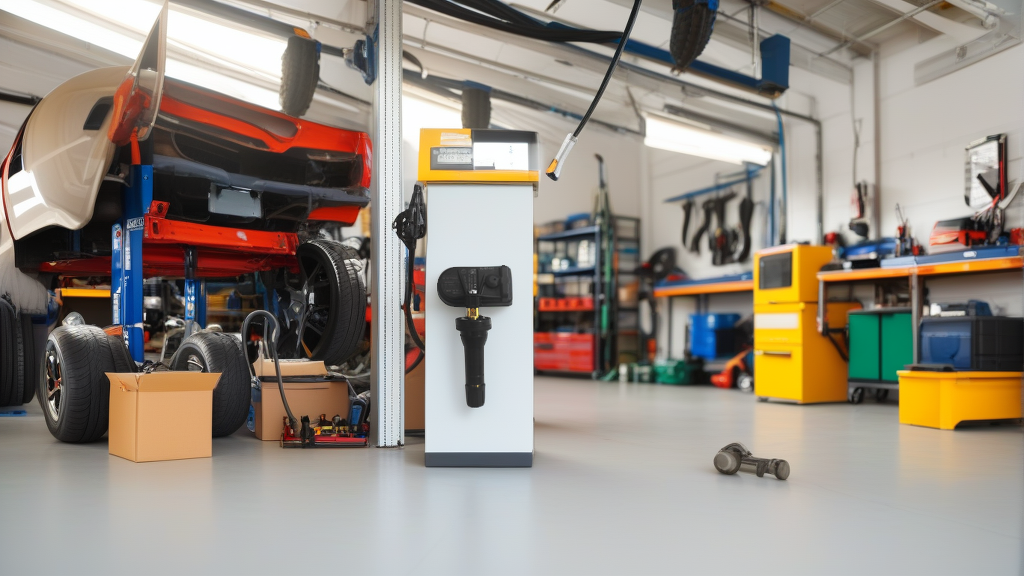
Why TPMS Torque Specs Matter on Haval Vehicles
Haval SUVs and crossovers (like the H6, Jolion, and Big Dog) use clamp-in TPMS sensors mounted at the valve stem. Unlike snap-in sensors common on some Asian brands, clamp-in sensors rely on a metal nut and gasket to seal the tire. Overtightening strips the aluminum threads on the sensor body—once that happens, the entire sensor is junk. Undertightening causes air leaks and false low-pressure warnings.
The factory spec for most Haval models using the Baolong/BH-Sens sensor (including the BL-ST-085) is 30–40 in-lbs (3.4–4.5 Nm). That’s a two-finger snug on a 1/4-inch drive torque wrench—not arm-strength tight.
Valve Stem Service: Don’t Skip These Steps
When replacing a TPMS sensor on a Haval, the valve stem and its components are your first line of defense against leaks.
What to Replace
- Valve core (the tiny brass or nickel-plated piece inside the stem). Always install a new one. Old cores develop micro-cracks.
- Valve cap (plastic or metal). Use a metal cap with a rubber seal, not the cheap plastic ones that crack in winter.
- Rubber grommet (the seal between the sensor and the wheel rim). On the BH-Sens BL-ST-085, this grommet is pre-installed. If it’s dry-rotted or deformed, replace it.
Installation Order for Clamp-In Sensors
- Insert the sensor stem through the wheel hole from inside the tire.
- Slide the flat washer (if supplied) over the stem.
- Thread the hex nut by hand—do not use a tool yet.
- Torque to spec with a 11mm or 13mm crowfoot wrench (check your sensor’s hex size).
- Install a new valve core with a core tool—hand-tight plus 1/4 turn.
- Install the valve cap.
Common TPMS Installation Mistakes on Haval
I’ve seen these errors from DIYers and even some shops:
Mistake #1: Using an Impact Gun
Never use an impact driver or air ratchet on a TPMS sensor nut. The sudden torque spike cracks the sensor body or strips the threads. Always use a torque wrench set to the low end of the spec (30 in-lbs).
Mistake #2: Ignoring the Grommet Orientation
The BH-Sens BL-ST-085 has a tapered rubber grommet. The wide side faces the wheel rim. Installing it backwards creates a permanent leak.
Mistake #3: Overtightening the Valve Core
Valve cores only need hand-tight plus 1/8 turn. Crank it too hard and you’ll damage the core seal. Haval TPMS systems run at 32–36 PSI—a damaged core will weep air slowly until the low-pressure light comes on.
Mistake #4: Mixing Up Sensor Frequencies
Haval models vary by year and market:
- Most 2015+ Haval models use 433MHz sensors (like the BL-ST-085).
- Some newer models (2022+ Haval H6S, Shenshou) use 315MHz or dual-frequency sensors.
Always confirm your vehicle’s frequency before buying. The BL-ST-085 is pre-programmed to 433MHz and fits Haval applications that match OE# 8083010BA01.
Mistake #5: Skipping the Relearn Procedure
After installing a new sensor, the Haval ECU needs to “learn” the new sensor ID. This usually requires a TPMS scan tool (like an Autel or Bartec). Some Haval models can do a stationary relearn by lowering tire pressure to 18 PSI, waiting 10 seconds, then reinflating. Check your owner’s manual or call your dealer.
Fitment Note: BL-ST-085 on Haval
The BH-Sens BL-ST-085 (433MHz, clamp-in, pre-programmed) is a direct replacement for Haval models using OE part 8083010BA01. This includes:
- Haval H6 (2012–2018)
- Haval H2 (2014–2019)
- Haval Jolion (2020+)
- Haval Big Dog (2020+)
Always verify your specific model year—Haval produced some export models with different sensor suppliers.
Recommended Part
For a reliable, pre-programmed 433MHz TPMS sensor that fits your Haval, use the BL-ST-085 | BH-Sens 433MHz TPMS Tire Pressure Sensor | Fits Leapmotor | OE# 8083010BA01. It comes with the correct grommet, nut, and valve core. Weight is approximately 1 oz—no balance issues.
FAQ
What happens if I overtighten the TPMS sensor nut on my Haval?
Overtightening strips the aluminum threads on the sensor stem. The sensor becomes loose inside the tire, leaks air, and must be replaced—you cannot rethread it. Always use a torque wrench set to 30–40 in-lbs.
Can I reuse the same TPMS sensor when mounting new tires?
Yes, if it’s still functioning and less than 5 years old. Replace the rubber grommet, valve core, and cap. Reuse the sensor body and nut if threads are clean and undamaged.
My Haval TPMS light is on after new sensor installation—what did I do wrong?
Most likely you skipped the relearn procedure. The new sensor has a different ID than the old one. The system won’t recognize it until you perform a relearn with a scan tool or the pressure-drop method. Also check that the sensor is programmed to 433MHz—some Haval models require 315MHz.
How do I know if the BL-ST-085 fits my specific Haval model?
Check your OE part number on the original sensor. If it ends in 8083010BA01, it’s a match. If not, email us with your VIN—we’ll confirm compatibility before you order.