
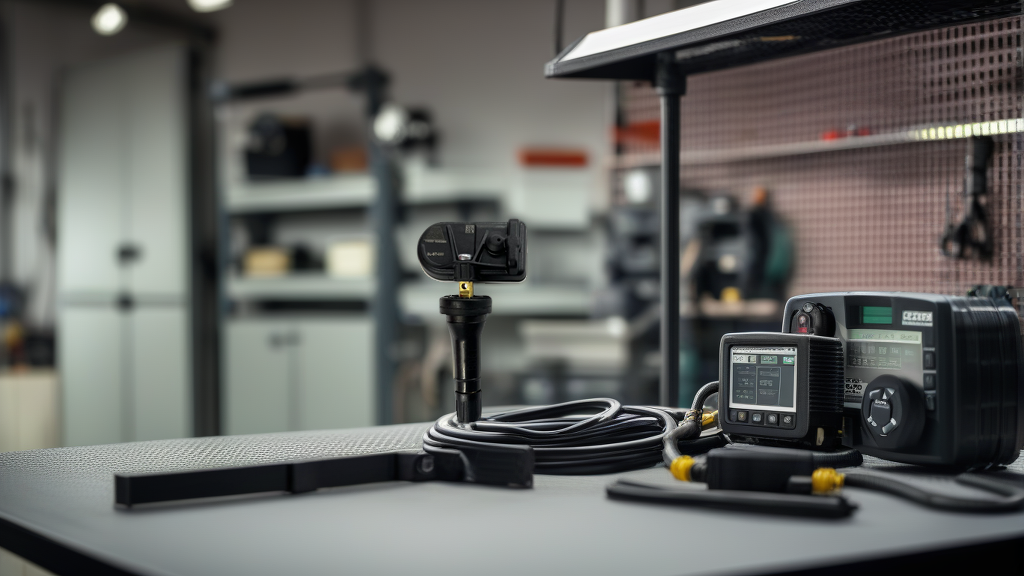
Understanding the RANGE ROVER VELAR TPMS System
The Range Rover Velar (2017-present) uses a direct TPMS system with individual wheel-mounted sensors transmitting pressure and temperature data to a central receiver module. Unlike some Land Rover models that support “auto-learn” with OEM sensors, the Velar requires a positive relearn procedure when you rotate tires, replace sensors, or swap between summer and winter wheels. The system operates at 433MHz, and the most common fault after sensor replacement is the TPMS warning light staying on because the vehicle’s ECU hasn’t registered the new sensor IDs.
TPMS Relearn Methods for the Range Rover Velar
1. Automatic Relearn (Drive-Based)
This method works only if you installed identical OE sensors or sensors already programmed with the vehicle’s original IDs. It does NOT work for new aftermarket sensors with fresh IDs.
Procedure:
- Inflate all tires to the recommended pressure (check driver’s door jamb sticker; typically 35-39 psi for the Velar).
- Drive the vehicle above 25 mph for 10-20 minutes continuously.
- The system may take up to two driving cycles to clear the warning.
Limitation: This method frequently fails on Velars with mixed sensor brands or aftermarket sensors. If the warning persists after 30 minutes of highway driving, proceed to the OBD method.
2. OBD Relearn (Fastest Method — Recommended)
This is the preferred method for both DIYers and workshops. You need a compatible TPMS programming tool (Autel TS508, TS608, Bartec Tech400Pro, or similar). This method writes new sensor IDs directly to the vehicle’s ECU.
Tools Needed:
- OBD2-compatible TPMS programming tool (must support Land Rover/JLR protocol)
- TPMS trigger tool (if your programmer doesn’t have a built-in LF trigger)
- Replacement sensor (e.g., BL-ST-066 | BH-Sens 433MHz TPMS Tire Pressure Sensor | Fits Fengon, Ineos, Infiniti, Mitsubishi, Nammi & 4 More | OE# 3641050RD01, 407002GL0A, 407002GN0A)
Step-by-Step OBD Procedure:
- Install new sensors in the wheels and mount them on the vehicle.
- Connect the TPMS tool to the vehicle’s OBD2 port (located under the driver’s dash, left of the steering column).
- Select Land Rover > Range Rover Velar > 2017-2024 > TPMS Relearn.
- Follow the tool’s on-screen prompts to trigger each sensor (left front, right front, right rear, left rear). Use a trigger tool or the programmer’s activation antenna near the valve stem.
- After all four sensors are triggered, the tool will display “Write IDs to ECU” or “Relearn Complete.”
- Disconnect the tool and start the engine. The TPMS light should turn off within 30 seconds.
Note: Some aftermarket sensors (including the BH-Sens BL-ST-066) come pre-programmed with cloneable IDs. If cloning an existing sensor, skip step 4-5 — just install the cloned sensor and use the OBD tool to “learn” the existing IDs without triggering.
3. Stationary Relearn (Trigger-Only Method)
This method works without an OBD tool but requires a TPMS trigger tool (like the ATEQ Quickset or Autel MaxiTPMS). It’s slower and requires precise timing.
Procedure:
- Turn the ignition to ON (engine off).
- Use the trigger tool to activate each sensor in this sequence: LF, RF, RR, LR (left front, right front, right rear, left rear). Hold the tool within 2 inches of the valve stem for 3-5 seconds per wheel.
- After the fourth sensor is triggered, the horn will chirp once, and the TPMS light will blink 3 times, then turn solid.
- Turn the ignition OFF, then start the engine. Drive for 2-3 minutes to confirm.
Common Failure Point: If the horn does not chirp, the sequence timing was off. Wait 2 minutes, then repeat from step 1.
Sensor Compatibility Table
| Parameter | Specification | |||
|---|---|---|---|---|
| Recommended Sensor | [BL-ST-066 | BH-Sens 433MHz TPMS Tire Pressure Sensor | Fits Fengon, Ineos, Infiniti, Mitsubishi, Nammi & 4 More | OE# 3641050RD01, 407002GL0A, 407002GN0A](https://risensauto.com/product/bh-sens-433mhz-tpms-tire-pressure-sensor-fits-fengon-ineos-infiniti-mitsubishi-nammi-4-more-oe-3641050rd01-407002gl0a-407002gn0a-bl-st-066/) |
| Frequency | 433MHz | |||
| OE Cross-Reference | 3641050RD01, 407002GL0A, 407002GN0A, 40700-series | |||
| Type | Clamp-in (metal valve stem) | |||
| Fitment | Range Rover Velar (2017-2024), plus Nissan, Infiniti, Mitsubishi, and others | |||
| Programming | Pre-programmed clone option or OBD-learnable |
Recommended Part
For a direct-fit, 433MHz replacement that covers all RANGE ROVER VELAR model years 2017-2024, use the BH-Sens BL-ST-066 (BL-ST-066 | BH-Sens 433MHz TPMS Tire Pressure Sensor | Fits Fengon, Ineos, Infiniti, Mitsubishi, Nammi & 4 More | OE# 3641050RD01, 407002GL0A, 407002GN0A). This sensor is manufactured by Baolong Technology (OEM supplier for many JLR vehicles) and supports both clone and OBD relearn methods. It replaces multiple Infiniti, Mitsubishi, and Nissan applications, making it a versatile inventory addition for shops.
FAQ
Why won’t my Range Rover Velar auto-relearn after new sensor installation?
Auto-relearn only works if the sensor IDs are already stored in the vehicle’s ECU. Aftermarket sensors come with unique IDs that the ECU has never seen, so auto-relearn will fail. You must perform an OBD or stationary relearn to register the new IDs.
Can I use a trigger tool without an OBD programmer on a Velar?
Yes, the stationary relearn method works with a trigger tool alone, but it’s less reliable than the OBD method. If the horn doesn’t chirp after four triggers, the sequence failed. OBD programming is strongly recommended for first-time installations.
What pressure should I set before starting the relearn?
Always set all four tires to the pressure listed on the driver’s door jamb sticker. For the Velar, this is typically 35-39 psi depending on tire size and load rating. Incorrect pressure does not prevent relearn but can cause false low-pressure warnings afterward.
How do I know if the sensor is 433MHz or 315MHz for my Velar?
All Range Rover Velar models from 2017 onward use 433MHz sensors. If you’re replacing sensors on a 2016 or earlier Land Rover, confirm frequency via the original part number. The BH-Sens BL-ST-066 is 433MHz only.