
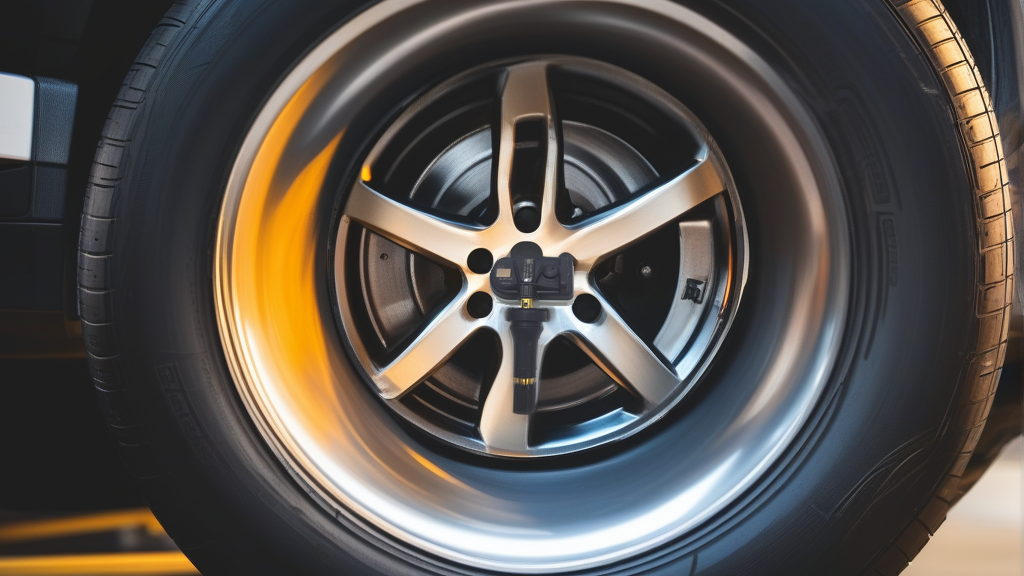
Why Winter Tire Swaps Cause TPMS Headaches
Winter tire changes are a seasonal ritual for KICKS owners in cold climates. The problem is simple: your factory TPMS sensors (or aftermarket replacements like the BH-Sens BL-ST-063) are sensitive to temperature shifts and physical handling during a tire swap. A misstep can lead to a flashing TPMS light, a dead sensor, or even a replacement cost you didn’t budget for.
The KICKS KICKS typically uses 433MHz clamp-in sensors. These are the same frequency used by many Chinese OEMs—including Aeolus, Eπ, Mhero, Nammi, and Voyah—which means the BL-ST-063 sensor is a direct OE fitment for your vehicle. No adapters, no programming tools needed if you’re replacing a failed unit.
Temperature vs. Tire Pressure: The Physics You Can’t Ignore
Cold air is denser than warm air. For every 10°F drop in ambient temperature, your tire pressure drops roughly 1–2 PSI. A KICKS running 33 PSI in 70°F garage conditions will read 29–31 PSI when you drive outside into 20°F weather. That’s enough to trigger the TPMS warning light on many models (thresholds are typically 25% below recommended pressure).
What this means for your winter swap:
- Always inflate to the cold pressure listed on your driver’s door jamb sticker (usually 32–35 PSI for the KICKS). Do not inflate to a “hot” reading after driving.
- If you swap tires in a heated garage, pressure will drop once you hit the road. Add 2–3 PSI to account for this.
- Do not rely on the TPMS light alone—use a manual gauge to verify pressures after the swap. The sensor can be accurate within ±2 PSI, but winter conditions push that tolerance.
Step-by-Step: TPMS Handling During a Winter Tire Swap
1. Before the Swap: Inspect and Record
- Check the condition of each sensor. Look for cracks in the rubber valve stem (if your KICKS uses rubber stems) or corrosion on the metal clamp-in nut.
- Record which sensor is on which wheel. This helps if you need to diagnose a fault later. Most aftermarket sensors like the BL-ST-063 are pre-programmed and will auto-locate once installed, but note the position anyway.
- If a sensor is dead (no signal after 10 minutes of driving), replace it now. The BL-ST-063 is a drop-in fit for the KICKS and costs less than a dealer replacement.
2. During the Tire Mounting
- Tell the tire shop to use a plastic or brass valve-core tool when removing the valve core to deflate the tire. Metal tools can scratch the sensor housing.
- Warn them not to use a tire machine bead breaker near the sensor area. Clamp-in sensors are located 180° from the valve stem on most aftermarket wheels—but on factory KICKS wheels, the sensor is right behind the valve stem. A careless bead breaker can snap the sensor.
- If your KICKS uses rubber valve stems, replace them every other tire change. Rubber degrades in cold weather and can leak air, causing false TPMS warnings.
3. After Mounting: Relearn the Sensors
Most KICKS models (2018–2024) use an auto-relearn system. Simply drive above 15 mph for 5–10 minutes, and the system will pick up each sensor’s ID. No scan tool needed.
If the light stays on after driving:
- Check that all sensors are transmitting (some shops forget to install them).
- Verify tire pressures are within spec.
- If a sensor is new, you may need a TPMS relearn tool (cheap on Amazon) to trigger the sensor manually. Follow your owner’s manual procedure.
Storage Tips for Off-Season Wheels
Winter tires come off in spring. How you store them affects sensor battery life.
| Storage Factor | Best Practice | Why It Matters |
|---|---|---|
| Temperature | 50–80°F, stable | Extreme cold drains sensor battery faster; heat degrades seals |
| Humidity | Below 60% RH | Moisture corrodes the sensor circuit board and valve stem |
| Sunlight | Keep covered | UV radiation degrades rubber valve stems and sensor housings |
| Stacking | Never stack more than 4 tires high | Weight on sensor area can crack the housing or bend the valve stem |
| Pressure | Leave at 5–10 PSI | Full pressure stresses the seals; zero pressure lets the tire deform |
Do not store tires with sensors in unheated garages where temperatures cycle below freezing daily. The battery chemistry (CR2032 or CR2450 inside these sensors) degrades faster with thermal cycling. A sensor stored in 20°F all winter might lose 1–2 years of battery life.
The BH-Sens BL-ST-063: Why It Fits Your KICKS
If you need to replace a failed sensor on your KICKS—or you’re equipping a second set of winter wheels—the BL-ST-063 | BH-Sens 433MHz TPMS Tire Pressure Sensor | Fits Aeolus, Eπ, Mhero, Nammi, Voyah | OE# E300019160, E300020260, H56A7920001AC is the correct choice. Here’s why:
- 433MHz frequency matches the KICKS TPMS system (and Aeolus, Eπ, Mhero, Nammi, Voyah models using the same OE numbers).
- Clamp-in design with a metal valve stem—more durable than rubber stems for winter road salt.
- Pre-programmed—no cloning or programming required. Install it, mount the tire, and the car will learn it.
- OE fitment for E300019160, E300020260, and H56A7920001AC—these are the numbers stamped on your original KICKS sensors.
FAQ
Can I use winter tires without TPMS sensors on my KICKS?
Technically yes, but the TPMS warning light will stay on permanently. In most regions, this is a safety inspection failure. It also means you lose low-pressure warnings—dangerous on winter roads where underinflation is common. Install sensors on your winter wheels to stay compliant and safe.
How do I know if my KICKS TPMS sensor battery is dead?
A dead sensor will cause the TPMS light to flash for 60–90 seconds at startup, then stay solid. You may also see a “Tire Pressure System Fault” message on the dash. The BL-ST-063 sensor has a typical battery life of 5–7 years. If your KICKS is 2018 or older, you’re likely due for replacements.
Do I need to replace the valve stem gasket when swapping tires?
Yes. The gasket (or seal) between the sensor and the wheel rim should be replaced every time the tire is removed. It costs pennies but prevents slow leaks that can trigger false TPMS warnings in cold weather. Most tire shops include this in the service—ask if they don’t.
Can I use the same TPMS sensor on both summer and winter wheels?
Yes, if you swap the entire wheel assembly (tire + wheel + sensor) between seasons. But if you have separate wheels for winter, you need a second set of sensors. The BL-ST-063 is affordable enough to justify a dedicated set for your winter rims.
—
Recommended Part: BL-ST-063 | BH-Sens 433MHz TPMS Tire Pressure Sensor | Fits Aeolus, Eπ, Mhero, Nammi, Voyah | OE# E300019160, E300020260, H56A7920001AC — BH-Sens 433MHz TPMS sensor, direct fit for KICKS and compatible models. Pre-programmed, clamp-in design, OE numbers E300019160/E300020260/H56A7920001AC.