
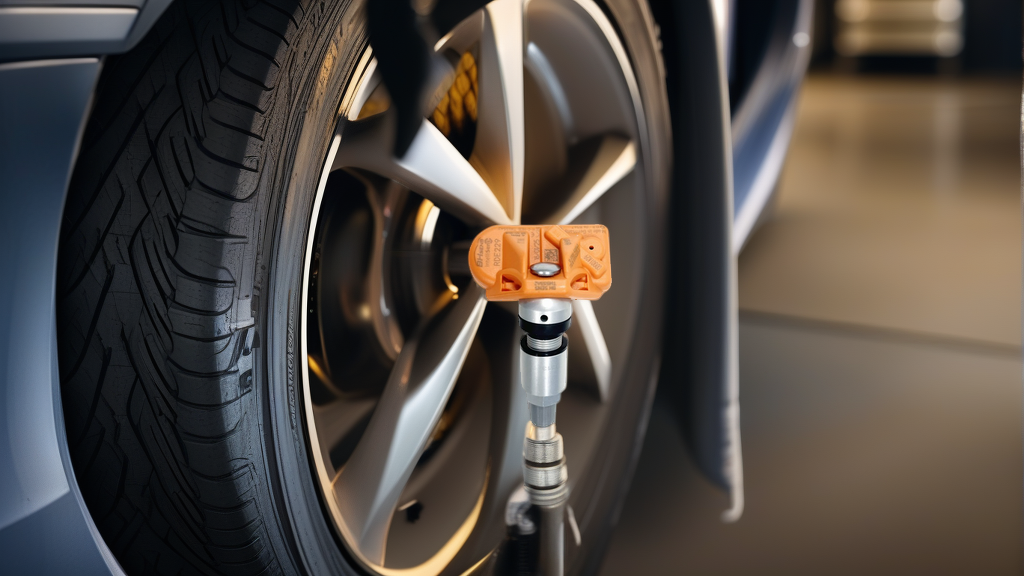
Understanding the Icar TPMS System and the RDE229V21 Sensor
Icar vehicles, while sharing many chassis and electronics components with Jaguar and Land Rover models, use a dedicated TPMS protocol that operates at 433MHz. The BH-Sens RDE229V21 sensor (SKU: RDE229V21) is a pre-programmed clamp-in unit that directly replaces OE part numbers C2D21599, C2D47173, LR021935, LR066378, LR070840, and LR156918. It is compatible across multiple Icar models manufactured after 2010 that use the Land Rover-derived TPMS architecture.
Before installing, always confirm the sensor frequency and programming. The RDE229V21 arrives pre-programmed for plug-and-play fitment on Icar, Jaguar, and Land Rover vehicles. Do not attempt to reprogram a sensor designed for a different protocol—it will not synchronize with the Icar body control module.
Critical Torque Specifications for Clamp-In Sensors
The single most common service failure on Icar TPMS sensors is improper torque application. Clamp-in sensors like the RDE229V21 use a threaded stem that passes through the wheel rim and secures with a nut on the outside.
| Component | Recommended Torque | Tool Required |
|---|---|---|
| Sensor nut (to wheel) | 4.0–6.0 Nm (35–53 in-lbs) | Dedicated TPMS torque wrench or socket with torque limiter |
| Valve core | 0.35–0.45 Nm (3–4 in-lbs) | Hand-tighten + ¼ turn |
| Valve cap | Hand-tight only | Fingertip |
Why this matters: Overtightening the sensor nut warps the aluminum housing, cracking the internal pressure sensor substrate. Undertightening allows air seepage and sensor rotation inside the wheel, which can shear the stem over time. Impact guns or standard lug nut torque sticks guarantee damage—use only a calibrated TPMS torque wrench.
Valve Stem Service: The Overlooked 10-Minute Fix
Every time you replace a TPMS sensor on an Icar, do the following:
- Remove the old grommet and sealing washer—they are single-use. The RDE229V21 ships with new ones; if you are reinstalling a used sensor, order the consumable kit separately.
- Replace the valve core—old cores accumulate corrosion and can leak. Use brass or nickel-plated cores, never steel.
- Lubricate the rubber grommet with a dab of silicone-based tire mounting lubricant. Dry installation causes the grommet to roll or tear.
- Thread the sensor nut by hand until it seats flush against the wheel face. Then apply the torque wrench.
- Install a metal valve cap—plastic caps crack under the heat generated during braking and can cause slow leaks.
Warning: Never use a valve stem extension or a metal cap with a rubber seal that compresses against the valve core. Both can depress the core and cause a continuous leak.
Three Common Installation Mistakes That Ruin TPMS Sensors
1. Using Teflon Tape on the Valve Threads
This is a persistent myth. Teflon tape (PTFE) is intended for pipe threads, not Schrader valve threads. The tape shreds when the valve core is installed, and small pieces enter the tire cavity. I have seen these fragments lodge inside the sensor’s pressure port, causing erratic readings and eventual failure. The RDE229V21 uses an O-ring seal at the base of the stem—additional tape is unnecessary and harmful.
2. Cross-Threading the Sensor Nut
The aluminum sensor nut is soft. If you start it at an angle, the threads gall immediately. Once cross-threaded, the nut cannot achieve proper torque, and the sensor will loosen during driving. Always start the nut by hand for at least three full rotations before using the torque tool.
3. Over-Tightening the Sensor Nut with a Standard Socket
A standard 6-point socket applies force unevenly to the sensor nut’s hex, often exceeding the 6 Nm limit. Use a dedicated TPMS torque socket (available as a T-handle or ¼-inch drive tool) that clicks when the correct torque is reached. If you do not have one, a beam-style torque wrench set to 45 in-lbs works—but never use a click-type torque wrench set below 20% of its range; accuracy drops.
Recommended Part
For direct replacement on Icar models that share Jaguar/Land Rover TPMS architecture, use the RDE229V21 | BH-Sens 433MHz TPMS Tire Pressure Sensor | Fits Jaguar, Land Rover | OE# C2D21599, C2D47173, LR021935. It is pre-programmed for 433MHz systems and includes the necessary sealing components. Always verify your Icar’s model year and TPMS protocol before ordering.
FAQ
Do I need to program the RDE229V21 sensor for my Icar, or is it ready to install?
The RDE229V21 is pre-programmed to match OE frequencies and IDs for Jaguar, Land Rover, and Icar vehicles using 433MHz systems. In most cases, it will auto-learn after a short drive (5–10 minutes at speeds above 25 mph). If the TPMS light does not clear, perform a relearn with an OBD tool or TPMS trigger tool—the procedure is the same as for Jaguar XF or Land Rover Discovery.
Can I reuse my old TPMS sensor if I replace the valve core and grommet?
Technically yes, but it is not recommended for Icar vehicles. The sensor battery life is typically 5–7 years from the manufacturing date. If the sensor is over four years old, the battery may fail within a year. Replacing with a new RDE229V21 during tire service is more cost-effective than paying for a second dismount and mount in six months.
What happens if I overtighten the sensor nut to 10 Nm?
At 10 Nm (double the recommended spec), the aluminum sensor housing can crack around the stem base. The sensor will either fail immediately or develop an intermittent leak inside the tire. In some cases, the stem separates from the housing during high-speed driving. If you suspect overtightening, remove the sensor and inspect the housing for hairline cracks under bright light before reinstalling.
Why does my Icar TPMS light flash after installation, then stay solid?
A flashing TPMS light (usually 60–90 seconds) followed by a solid light indicates a sensor that has been detected but not learned by the vehicle’s receiver. This is normal for a first-time installation. Drive the vehicle above 25 mph for a few minutes to complete the auto-learn. If the light remains solid after 15 minutes of driving, verify the sensor frequency matches your Icar (433MHz only) and that the sensor was not damaged during installation.