
—
Understanding the BL-ST-063 Sensor
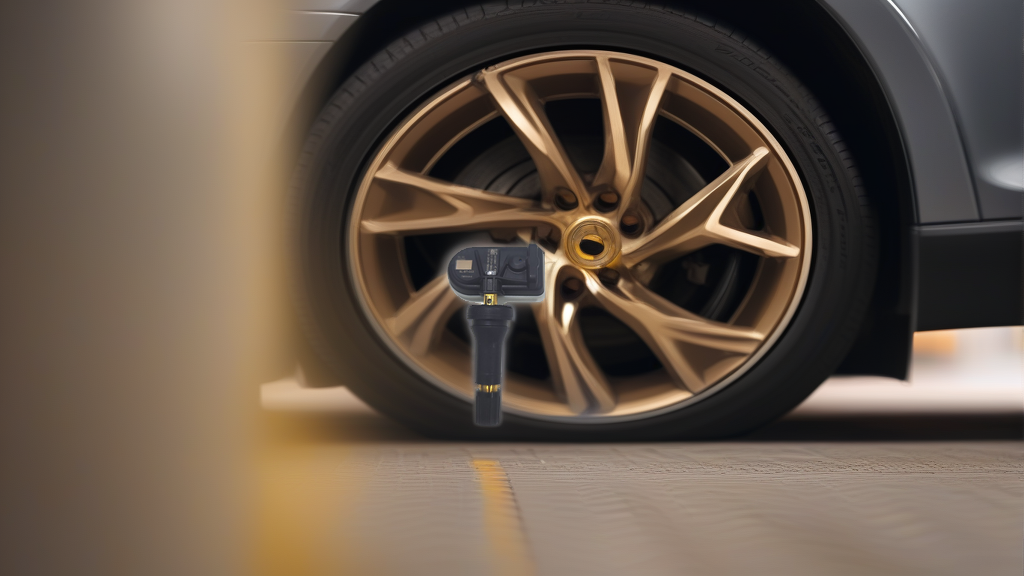
The BL-ST-063 is a clamp-in, pre-programmed TPMS sensor manufactured by BH-Sens, which is a sub-brand of Baolong Technology—one of China’s largest OE TPMS suppliers. Unlike universal sensors that require programming at the time of installation, this sensor arrives already programmed with the correct protocols for the compatible vehicles listed below. That means no additional programming tool is needed for most applications; it will sync with your vehicle’s ECU once installed and driven for a short distance.
Key specs at a glance:
| Parameter | Value |
|---|---|
| Brand | BH-Sens (Baolong Technology) |
| Frequency | 433 MHz |
| Type | Clamp-in (metal valve stem) |
| Programming | Pre-programmed (no manual programming required) |
| OE Replacements | E300019160, E300020260, H56A7920001AC |
—
Compatible Vehicle Brands Under FREE
The BL-ST-063 is not a one-size-fits-all sensor. It is engineered specifically for five brands that fall under the FREE corporate umbrella. These are:
- Aeolus – Focused on compact and mid-size sedans/SUVs.
- Eπ – A newer sub-brand targeting electric and hybrid models.
- Mhero – Off-road oriented SUVs and trucks.
- Nammi – Urban electric vehicles (EVs).
- Voyah – Premium electric and hybrid models.
While FREE itself is a relatively young corporate group, these sub-brands have been producing vehicles since the early 2020s onward. TPMS sensors from earlier production years (2021–2023) may use different frequencies or protocols, so always double-check the OE number.
—
Year Coverage and Fitment Table
Based on available OE cross-reference data and service bulletins, the BL-ST-063 covers the following approximate model years. Note that some models may have used a different sensor from a prior supplier—always verify using your original sensor’s part number.
| Brand | Model | Approx. Years Covered | OE Numbers |
|---|---|---|---|
| Aeolus | Yixuan, Haohan, Haohan GT | 2022–2024 | E300019160 |
| Eπ | 007, 008 | 2023–2024 | E300020260 |
| Mhero | 917 | 2023–2024 | E300019160, H56A7920001AC |
| Nammi | 01 | 2024 | E300020260 |
| Voyah | Free, Dreamer, Passion | 2022–2024 | E300019160, H56A7920001AC |
Important: This table is based on current market data. Some 2021 models may have used a different sensor (often 315MHz), while 2025 models may carry new revisions. If your vehicle’s year is not listed, see the verification steps below.
—
How to Verify Fitment Before Buying
Do not rely solely on the model name and year. TPMS sensors can differ by trim level, production month, or even regional market. Follow these steps to confirm the BL-ST-063 fits your vehicle:
Step 1: Check the OE Number on Your Original Sensor
Remove the wheel and look at the sensor body (usually mounted on the valve stem inside the tire). The OE number is printed on the housing. If it matches E300019160, E300020260, or H56A7920001AC, the BL-ST-063 is a direct replacement.
Step 2: Verify Sensor Type
The BL-ST-063 is a clamp-in sensor with a metal valve stem. If your original sensor is a snap-in (rubber stem) style or has a plastic valve, this sensor will not physically fit. Clamp-in sensors are typically found on higher-trim or larger vehicles.
Step 3: Confirm Frequency
Most FREE vehicles from 2022 onward use 433MHz TPMS sensors. However, a small number of early 2022 models may still use 315MHz. You can check this by looking at the frequency printed on the sensor label, or by calling a dealer with your VIN.
Step 4: Use Your VIN
Your vehicle identification number (VIN) can be used to look up the exact TPMS sensor specification from the manufacturer’s database. Many aftermarket parts stores (including risensauto.com) offer VIN-check tools. If in doubt, input your VIN before checkout.
Step 5: Check Tire Pressure Monitoring System Reset Procedure
After installing a pre-programmed sensor like the BL-ST-063, most modern vehicles will automatically recognize it after driving above 25 mph for a few minutes. However, some models (especially Voyah and Mhero) may require a simple TPMS reset via the vehicle’s infotainment menu. Your owner’s manual will cover this.
—
Why Pre-Programmed Sensors Matter
If you’ve replaced TPMS sensors before, you know the hassle of programming universal sensors with a dedicated tool. The BL-ST-063 eliminates that step entirely for the listed vehicles. It arrives ready to install—just mount it, torque the valve stem to the manufacturer’s specification (typically 35–45 in-lbs for clamp-in sensors—check your vehicle manual), and drive.
This is especially useful for DIY owners or small repair shops that don’t want to invest in a multi-brand TPMS programmer.
—
Recommended Part
If you’ve confirmed that your FREE vehicle uses one of the three OE numbers listed above, the BL-ST-063 | BH-Sens 433MHz TPMS Tire Pressure Sensor | Fits Aeolus, Eπ, Mhero, Nammi, Voyah | OE# E300019160, E300020260, H56A7920001AC is the direct, hassle-free replacement. It’s the same sensor BH-Sens supplies to OE assembly lines, so you’re not gambling with aftermarket compatibility.
—
Installation Tips
- Tire dismount: Have the tire removed from the rim to access the old sensor. Clamp-in sensors are mounted from inside the wheel.
- Valve stem nut torque: Over-tightening can crack the sensor housing. Use a torque wrench if possible.
- O-ring replacement: Always replace the rubber sealing ring (included with the BL-ST-063) when installing a new sensor.
- Re-learn procedure: After installation, inflate tires to the correct pressure, then drive the vehicle for 10–15 minutes above 15 mph. The TPMS warning light should turn off automatically on most models.
—
FAQ
How do I know if my FREE vehicle uses a 433MHz or 315MHz sensor?
The easiest way is to check the OE number on your existing sensor. If it matches E300019160, E300020260, or H56A7920001AC, it is 433MHz. If you don’t see a number, look for a printed “433” or “315” on the sensor body. You can also contact a FREE dealer with your VIN—they can tell you the exact sensor frequency.
Can I use the BL-ST-063 on a FREE vehicle older than 2021?
Unlikely. FREE as a corporate entity was formed in 2021, and most sub-brands began production in 2022 or later. If your vehicle is a 2020 or earlier model that has been rebadged or imported, it almost certainly uses a different sensor. Stick to the years listed in the fitment table above.
What if my vehicle is not listed in the fitment table?
The BL-ST-063 is limited to Aeolus, Eπ, Mhero, Nammi, and Voyah models. If your car is from a different FREE sub-brand (such as Dongfeng or Fengon), this sensor will not work. You need a sensor that matches your specific OE number.
Is the BL-ST-063 compatible with aftermarket wheels?
Yes, as long as the wheel has a standard TPMS valve stem hole (typically 11.3mm diameter) and the sensor is mounted as a clamp-in type. Aftermarket wheels with thicker valve stem holes may require a different sensor or an adapter. Test fit the sensor in the wheel before mounting the tire.