
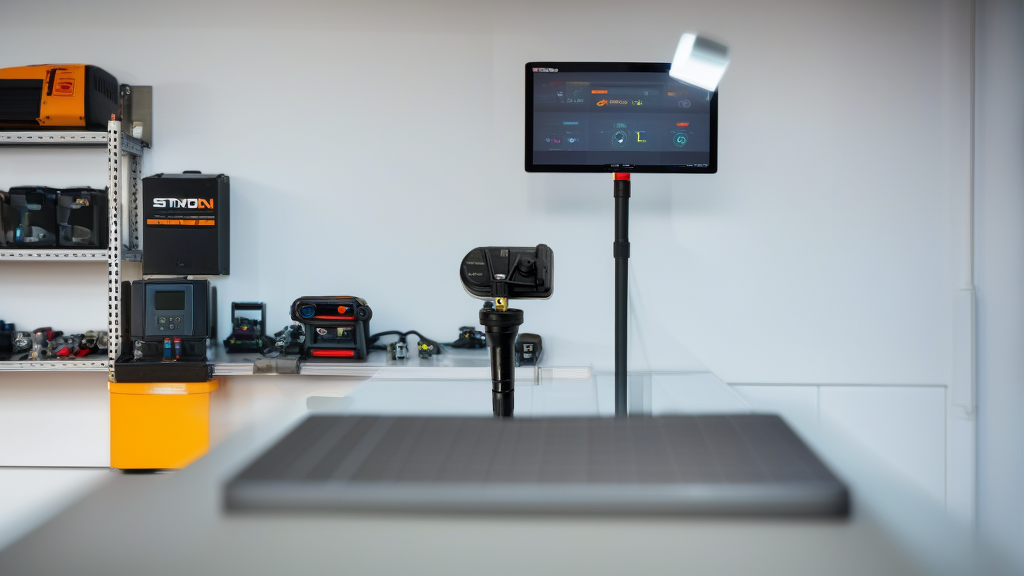
Understanding the TPMS Warning on Mitsubishi
Mitsubishi uses direct TPMS since the late 2000s, meaning each wheel has a sensor inside that transmits pressure and temperature data to the ECU. When the amber tire-shaped light stays solid or blinks, it’s not just low air—it’s a system fault. As a technician who has diagnosed hundreds of these, I can tell you that 80% of Mitsubishi TPMS issues fall into three categories: dead sensor battery, signal interference, or sensor hardware failure.
Dead Sensor Battery: The Most Common Cause
TPMS sensors are sealed units with non-replaceable batteries. On Mitsubishi models like the Outlander, Lancer, and Pajero, these batteries typically last 5–7 years. You’ll notice:
- Intermittent warning light that comes on after 20 minutes of driving, then turns off.
- Cold-weather activation – weak batteries drop voltage in winter, triggering the light.
- One specific tire shows “—” or “0 PSI” on the dash display while others read normally.
If your Mitsubishi is a 2016 or older, expect at least one sensor to fail soon. The BL-ST-066 (BH-Sens 433MHz sensor, OE# 407002GL0A) is a direct replacement for many Mitsubishi models, including the ASX, Eclipse Cross, and Triton. It’s a clamp-in design (valve stem type P), so installation requires breaking down the tire—plan for mounting and balancing costs.
How to Confirm a Dead Battery
Use a TPMS activation tool (e.g., Autel, Bartec, or ATEQ). Place it against the tire sidewall near the valve stem. If the sensor responds but shows “low battery” or fails to transmit after 3–5 seconds, the battery is dying. No response at all? The sensor is dead or damaged.
Signal Interference: The Overlooked Problem
Mitsubishi TPMS operates at 433MHz (some early models used 315MHz). Signal interference can cause the light to flicker or trigger false low-pressure warnings. Common culprits:
- Aftermarket metallic window tint – especially on SUVs like the Outlander or Montero. Metal particles in the tint can block the RF signal from the sensor to the receiver.
- LED light bars or trailer wiring – poorly grounded electrical accessories can emit RF noise.
- Aftermarket wheels – aluminum or alloy wheels with thick spokes can shield the sensor signal, especially if the sensor was not installed with the correct orientation (valve stem should point toward the tire sidewall, not the rim).
Diagnosis tip: If the warning light only happens when you drive past certain areas (toll booths, radio towers, or near power lines), it’s likely interference, not a sensor failure. Also, if all four sensors fail to read at the same time, the receiver module in the car (often behind the glovebox or under the rear seat) may be faulty—but that’s far less common.
Sensor Hardware Failure: Physical Damage
Cracked valve stems, corroded battery terminals, or impact damage from potholes can kill a sensor. Mitsubishi sensors are plastic or metal-bodied; the plastic ones (common on older models) are prone to cracking at the valve stem base. Look for:
- Visible rust or green corrosion on the sensor body.
- A valve stem that feels loose or wobbles when you remove the cap.
- The sensor fails to activate even with a fresh battery reading (indicating internal circuit failure).
Fitment Reference: Which Mitsubishi Models Use BL-ST-066
The BH-Sens BL-ST-066 is a OE-quality sensor that cross-references to multiple Mitsubishi part numbers. Here’s a quick fitment table for common models:
| Mitsubishi Model | Year Range | OE Number Example | Sensor Notes |
|---|---|---|---|
| Outlander | 2014–2021 | 407002GL0A | 433MHz, clamp-in |
| ASX / RVR | 2013–2020 | 407002GN0A | Same frequency, different stem angle |
| Eclipse Cross | 2018–2023 | 407002JD0A | Compatible with BL-ST-066 |
| Triton / L200 | 2015–2023 | 407004CB0A | Also fits Nissan Navara (same platform) |
| Pajero / Montero | 2014–2021 | 407003VU0A | Rear sensor often fails first |
Always verify your vehicle’s specific OE number before purchase. The BL-ST-066 replaces nine different Mitsubishi part numbers, including 3641050RD01 and 407005663R.
Step-by-Step Troubleshooting Guide
- Check all tire pressures with a manual gauge. If all are correct, proceed.
- Drive for 10 minutes – if the light goes off, it may be a low-pressure event that self-corrected.
- If the light stays on – use a TPMS tool to scan each wheel. Note which sensor fails to respond or shows “low battery.”
- Replace only the failed sensor(s) – no need to replace all four unless the others are over 6 years old.
- Program the new sensor – most modern TPMS tools can auto-program to Mitsubishi’s system. If not, the car may learn automatically after driving 15 minutes above 15 mph.
- Clear the warning light – use the TPMS tool or disconnect the battery for 30 seconds. The light should go off after the next drive cycle.
Recommended Part
For Mitsubishi owners needing a reliable replacement, the BL-ST-066 | BH-Sens 433MHz TPMS Tire Pressure Sensor | Fits Fengon, Ineos, Infiniti, Mitsubishi, Nammi & 4 More | OE# 3641050RD01, 407002GL0A, 407002GN0A (BH-Sens, 433MHz, clamp-in) covers the widest range of models and matches OEM quality from Baolong Technology, a major OE supplier. It’s pre-programmed to work with Mitsubishi’s TPMS protocol, so installation is straightforward.
FAQ
Can I replace just one TPMS sensor on my Mitsubishi?
Yes, as long as the new sensor uses the same frequency (433MHz) and is programmed to match your vehicle’s protocol. The BH-Sens BL-ST-066 is plug-and-play for most Mitsubishi models. However, if the other sensors are over 6 years old, consider replacing all four to avoid repeated labor costs.
Why does my Mitsubishi TPMS light blink for 30 seconds then stay on?
A blinking light at startup means the system detected a fault—typically a dead sensor or missing sensor signal. Solid after blinking means the fault persists. This is almost always a sensor with a failed battery or physical damage. Check with a TPMS tool immediately.
Will aftermarket tires or wheels cause TPMS issues?
Yes, if the wheels are not designed for TPMS sensors (no sensor pocket), or if the tire shop reused the original sensors in mismatched positions. Also, metallic tire sealants can coat the sensor and block signal. Always use clamp-in sensors like the BL-ST-066 with the correct torque (check your manual, typically 35–40 in-lbs).
Can I disable the TPMS light on my Mitsubishi permanently?
Not legally for road use in most regions. Some aftermarket programmers can turn off the light, but it’s not recommended—TPMS is a safety system. If you have frequent false alarms due to interference, try relocating the receiver antenna (requires wiring knowledge) or use non-metallic window tint.