
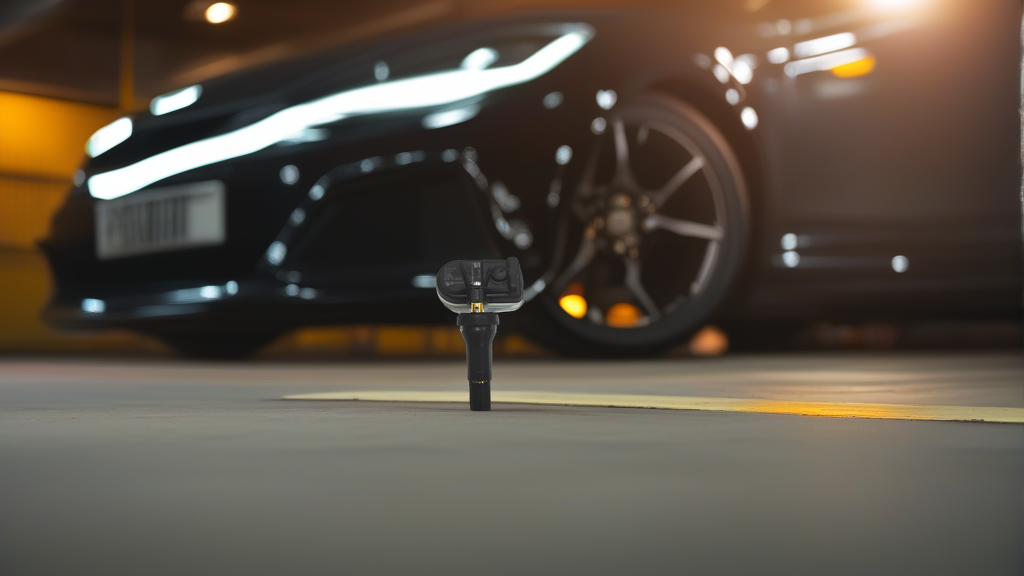
Why Proper Installation Matters for Your ENCORE
The ENCORE uses a direct TPMS system where each wheel has a sensor mounted inside the tire, transmitting pressure and temperature data to the vehicle’s ECU. When that sensor fails—or is installed incorrectly—you get a TPMS warning light, erratic readings, or a slow leak that ruins tire life and fuel economy.
The ENCORE relies on the 314.9/315MHz frequency band. If you’re replacing a dead sensor or doing a full set, getting the installation right the first time saves you a return trip to the tire shop.
Critical Torque Specifications
Torque is the single most overlooked detail in TPMS service. Too loose, and the sensor rattles or leaks. Too tight, and you crack the sensor housing or strip the valve stem threads.
| Component | Recommended Torque Range | Notes |
|---|---|---|
| Sensor nut (to valve stem) | 35–40 in-lbs (4–4.5 Nm) | Hand-tighten then torque; do not impact |
| Valve core | 62–74 in-lbs (7–8.4 Nm) | Snug + ¼ turn max |
| Valve stem cap | Hand-tight only | Overtightening cracks the cap seal |
| Wheel lug nuts | 100 ft-lbs (135 Nm) | Check your ENCORE owner’s manual for exact spec |
Why these numbers matter: The BH-Sens BL-ST-072 sensor has a brass valve stem that threads into the sensor body. Over-torquing the nut can deform the sealing surface or crack the sensor housing at the base. Under-torquing leaves the sensor loose, causing vibration damage and air loss past the grommet.
Always use a calibrated inch-pound torque wrench for the sensor nut. A standard foot-pound wrench won’t give you the precision needed.
Valve Stem Service: Don’t Skip This Step
Many DIYers and even some shops replace the sensor but slap the old rubber valve stem back on. That’s a mistake. The valve stem seal degrades over time—especially on ENCORE models driven in salt-belt winters.
When installing the BL-ST-072 | BH-Sens 314.9, 315MHz TPMS Tire Pressure Sensor | Fits Brilliance, Buick, Cadillac, Chevrolet, Gmc & 3 More | OE# 12768826, 13516164, 13540604 (BL-ST-072), always replace:
- The valve stem grommet/seal
- The valve core (use a brass or nickel-plated core, not steel)
- The dust cap (use a metal or heavy-duty rubber cap, not a cheap plastic one)
Service procedure:
- Remove the old sensor and valve stem as one unit.
- Clean the wheel hole with a wire brush or drill-mounted nylon brush. Rust and debris cause leaks.
- Lubricate the new grommet with rubber-safe lube (dish soap or silicone paste). Never use petroleum grease—it swells the rubber.
- Insert the valve stem through the wheel hole from the inside.
- Thread the sensor nut onto the stem from the outside. Hand-tighten first.
- Torque to 35–40 in-lbs.
- Install the valve core and torque to spec.
- Inflate the tire to 35–38 psi (check your ENCORE door sticker), then spray soapy water on the valve stem base and core. No bubbles = good seal.
Common Installation Mistakes (And How to Avoid Them)
1. Using an Impact Wrench on the Sensor Nut
This is the #1 killer of TPMS sensors. An impact gun can easily deliver 80+ in-lbs to the nut, cracking the sensor housing immediately. Always use a hand tool and torque wrench.
2. Forgetting to Program the Sensor
The BL-ST-072 ships as a blank sensor that must be programmed with the correct ID before it will communicate with your ENCORE. If you install it without programming, the TPMS light stays on. Use a TPMS programming tool (like an Autel or Bartec) to clone the old sensor ID or learn the new one.
Quick check: After installation, drive above 20 mph for 2–5 minutes. If the light doesn’t go out, the sensor isn’t communicating.
3. Cross-Threading the Valve Core
Valve cores are fine-threaded. It’s easy to start them crooked. Cross-threading destroys the seal and can damage the stem. Always start the core by hand—turn it counterclockwise until you feel the threads “drop in,” then turn clockwise. Use a valve core tool, not pliers.
4. Ignoring the Tire Bead Seal
When seating the tire bead, the machine can hit the sensor if you’re not careful. Modern tire changers with a “TPMS mode” or “low-profile mode” help. If your shop doesn’t have that, ask them to position the sensor at the 12 o’clock position (away from the bead breaker) during mounting.
5. Reusing the Old Grommet
The grommet compresses permanently after the first install. Reusing it guarantees a slow leak. The BL-ST-072 kit usually includes a new grommet and nut. If yours didn’t, buy a service kit separately.
Fitment Note: Which ENCORE Years Use the BL-ST-072?
The BL-ST-072 (OE cross: 12768826, 13516164, 13540604, and others) is compatible with ENCORE models from 2013–2022 (first and second generation). It also fits Buick, Cadillac, Chevrolet, GMC, and several other GM platforms.
| Brand | Model Years | Frequency |
|---|---|---|
| Buick ENCORE | 2013–2022 | 315MHz |
| Chevrolet Trax | 2013–2022 | 315MHz |
| GMC Terrain | 2010–2017 | 315MHz |
| Cadillac SRX | 2010–2016 | 315MHz |
If your ENCORE is a 2023+ model, you may need a different sensor. Always verify by removing the old sensor and checking the OE number on the label, or use a TPMS scan tool to read the existing sensor ID and frequency.
Recommended Part
For a direct fit replacement on your ENCORE, use the BL-ST-072 | BH-Sens 314.9, 315MHz TPMS Tire Pressure Sensor | Fits Brilliance, Buick, Cadillac, Chevrolet, Gmc & 3 More | OE# 12768826, 13516164, 13540604 — a BH-Sens (Baolong Technology) sensor that matches the 314.9/315MHz frequency and OE specifications. It’s plug-and-play with proper programming and comes with the necessary hardware for a clean install.
FAQ
How do I know if my BL-ST-072 sensor needs programming?
If the TPMS light stays on after installation, the sensor likely needs to be programmed to your ENCORE’s ECU. You can use a TPMS programming tool to either clone the old sensor’s ID or learn the new one via OBD-II. Some tire shops include programming in the installation fee.
Can I install the sensor myself without a tire machine?
No. TPMS sensors are mounted inside the tire on the wheel. You need a tire changer to dismount and remount the tire, plus a torque wrench for the sensor nut. Without proper tools, you risk damaging the sensor or the wheel. It’s best left to a shop.
Why does my ENCORE show the wrong pressure after a sensor swap?
Most likely the sensor was not programmed or learned correctly. Another possibility: the sensor frequency is mismatched. The BL-ST-072 operates at 314.9/315MHz. If you accidentally installed a 433MHz sensor, it won’t communicate. Double-check the frequency before installation.
How often should I replace the valve stem on my TPMS sensor?
Replace the valve stem and grommet every time you replace the sensor. If you’re keeping the original sensor, the rubber stem should be replaced every 5–7 years or whenever the tires are changed. Rubber hardens with heat and UV exposure, leading to cracks and leaks.