
First, Read the Light Correctly
QASHQAI TPMS behavior is fairly consistent across model years: the system warns on pressure deviation and on communication loss, but it signals them differently. That difference is your first diagnostic tool.
| Light Behavior | What It Means | First Move |
|---|---|---|
| Steady on | One or more tires below the placard threshold | Check pressures cold, inflate to door-jamb spec |
| Flashes ~60–90 seconds, then stays on | Lost communication with a sensor or the module | Scan for sensor IDs and live pressures |
| Comes on only on cold mornings, clears after driving | Temperature-related pressure drop | Set pressures cold, not warm |
| Intermittent, comes and goes over weeks | Failing sensor battery or RF interference | Log when it happens; check for new electronics |
Note that a QASHQAI with a direct TPMS system will not self-clear. Once the light is triggered, you have to correct the condition and often drive a few miles, or perform a relearn, before it resets.
The Real Causes, Ranked by How Often They Show Up
1. Actual low pressure
Boring but it’s still number one. Tires lose roughly 1 PSI per month in normal service, and a slow leak from a nail or a corroded bead seat hides easily. Set pressures to the cold spec on the driver’s door jamb — not the max pressure molded on the sidewall.
2. Temperature drop
Pressure falls about 1 PSI for every 10°F (roughly 5.5°C) of ambient temperature drop. A car set at 35 PSI on a warm afternoon can sit at 31 PSI the next morning and trigger the lamp. If the light appears the first cold snap of the season and disappears after ten minutes of driving, you’ve found your cause. Reset pressures cold.
3. Dead sensor battery
Sensor batteries are sealed inside the housing — they are not serviceable and not replaceable. Real-world life runs about 5 to 10 years depending on how much the vehicle is driven, because sensors sleep and only wake on rotation or activation.
4. Failed relearn or unregistered sensor
After a tire rotation, wheel replacement, or a new sensor install, an unregistered ID will look exactly like a dead one to the module. QASHQAI vehicles generally need each sensor activated with a 433MHz-capable tool so the module learns its ID and position.
5. RF interference
The TPMS receiver listens on a narrow band around 433MHz. Cheap electronics that radiate in that band — dash cams, USB phone chargers, cheap LED retrofit bulbs, tire inflators with wireless gauges, aftermarket remote starters, gate openers — can drown out a weak sensor signal. Interference typically causes intermittent dropouts, not a permanent failure.
6. Physical damage
Clamp-in and snap-in sensors get broken during tire mounting, and valve stems crack. If the light appeared immediately after a tire service, suspect the sensor before anything else.
Dead Sensor Battery Symptoms You Can Actually Observe
- The pressure reading for one wheel freezes or disappears on a scan tool while the other three update.
- The light appears after 15–30 minutes of driving rather than at startup.
- The sensor works in summer and drops out in winter — cold reduces lithium cell output.
- Activation with a relearn tool takes several attempts, or the sensor responds only when the tool is pressed against the valve stem.
- One wheel consistently reads a few PSI off from a hand gauge, drifting further over time.
A scan tool with live TPMS data will show battery status or voltage for most sensors.
| Battery Voltage (typical reading) | Condition | Action |
|---|---|---|
| Above ~2.7 V | Healthy | Keep running it |
| ~2.5–2.7 V | Marginal | Plan replacement soon |
| Below ~2.5 V | End of life | Replace the sensor |
Diagnosing Signal Interference Step by Step
- Read live data. If all four sensors are missing, the problem is upstream — module, antenna, or a strong interference source. If only one is missing, it’s that sensor or its position.
- Swap wheels. Move the suspect wheel to a different corner. If the fault follows the wheel, it’s the sensor. If it stays on the same corner, it’s the receiver or wiring on that side.
- Isolate electronics. Unplug the dash cam, phone charger, and any USB accessory. Drive a full cycle. If the light stops triggering, add devices back one at a time.
- Check for aftermarket additions. Remote starters, alarm systems, and LED conversions are common culprits because installers rarely consider 433MHz coexistence.
- Verify frequency. A 315MHz sensor fitted into a 433MHz vehicle (or vice versa) will never communicate reliably. Frequency mismatch is one of the most common mistakes after a cheap online purchase.
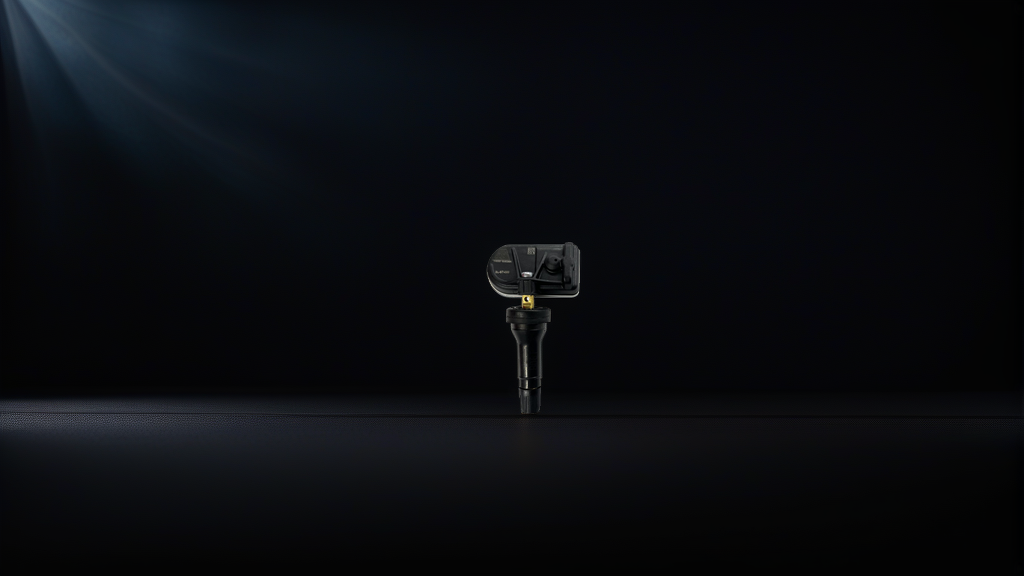
If you’re cross-shopping a replacement, BL-ST-066 | BH-Sens 433MHz TPMS Tire Pressure Sensor | Fits Fengon, Ineos, Infiniti, Mitsubishi, Nammi & 4 More | OE# 3641050RD01, 407002GL0A, 407002GN0A is a 433MHz clamp-in sensor from Baolong Technology (BH-Sens) that covers a long list of OE numbers across Fengon, Ineos, Infiniti, Mitsubishi, Nammi and several other applications. It is not a blanket fit for every QASHQAI — match your OE number and confirm 433MHz operation first.
Recommended Part
For QASHQAI owners whose diagnosis points to a failed or mismatched sensor, always confirm frequency (315 vs 433MHz) and OE interchange before ordering. BL-ST-066 | BH-Sens 433MHz TPMS Tire Pressure Sensor | Fits Fengon, Ineos, Infiniti, Mitsubishi, Nammi & 4 More | OE# 3641050RD01, 407002GL0A, 407002GN0A is worth checking if your OE number appears in its compatibility list — it’s a clamp-in design, so you’ll also want fresh valve hardware and a proper torque spec from your service manual, not from a forum post.
FAQ
How long do QASHQAI TPMS sensors usually last?
Most direct TPMS sensors run 5 to 10 years. Driving habits matter — a car driven daily wakes the sensors constantly and drains them faster than a weekend vehicle. When one sensor dies, the others are usually close behind, so many owners replace all four at once rather than paying for labor twice.
Can I just ignore the TPMS light?
You can, but you lose a genuine safety warning. More practically, the light masks new problems — if a tire starts leaking, you won’t get a second alert. It also fails inspection in many regions.
Will a tire shop’s scan tool always find a dead sensor?
Most shops can read sensor IDs and pressures, but not all tools display battery voltage or signal strength. If the tool shows a missing ID, that confirms a communication fault but not the cause. Ask them to activate the sensor directly at the valve stem — a sensor that won’t respond to a handheld activation tool is dead or unregistered.
Does cold weather kill TPMS sensors?
Cold weather doesn’t kill the battery, but it reduces its output voltage. A sensor with a marginal cell may work all summer and fail below freezing. If your QASHQAI light only appears in winter, check pressures first, then have the sensor battery status read before replacing anything.