
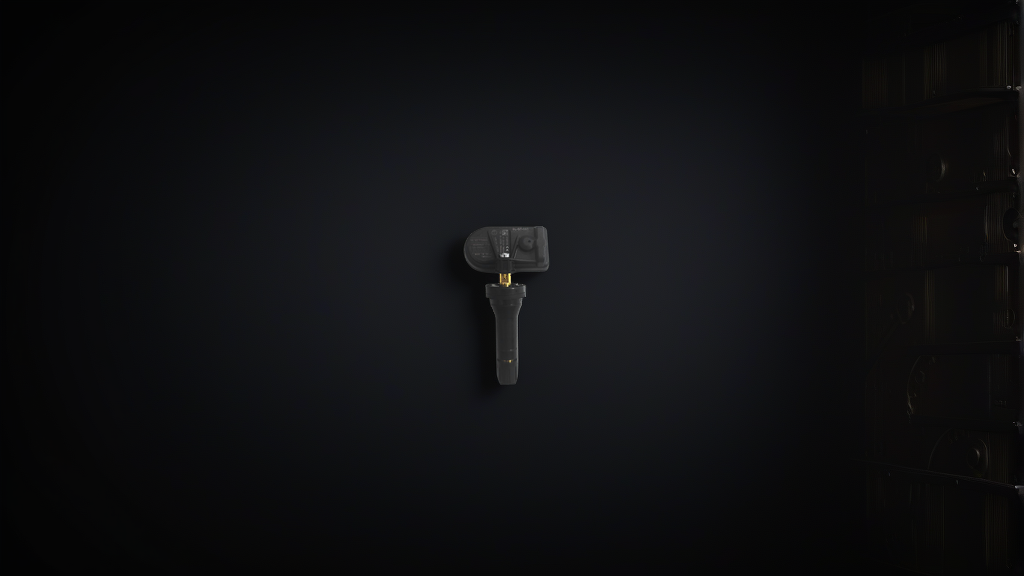
Frequency Band Comes First: 315MHz vs 433MHz
A TPMS sensor is a small radio transmitter, and the car’s receiver module is tuned to a narrow slice of spectrum. Frequency is a hard gate, not a preference. A 433MHz sensor on a 315MHz car produces exactly the same result as no sensor at all: a flashing warning light and no pressure data.
| Band | Primary markets | Typical vehicles |
|---|---|---|
| 315 MHz | North America, some older domestic-Japanese models | US-spec imports |
| 433.92 MHz | Europe, China, most global export platforms | Leapmotor, most European brands |
Leapmotor builds primarily for the Chinese and European markets, which is why the OE part behind 8083010BA01 transmits at 433MHz. If you’re buying for a Leapmotor, don’t accept a “universal” sensor that covers both bands unless you’re prepared to program it — a dual-band sensor is a programmable sensor, and programmable means an extra tool and an extra step at fitting time.
Why the exact sub-band matters too
“433MHz” covers 433.05–434.79MHz. Cars are built inside that window, not at the edges. A sensor designed for the correct band and the correct OE protocol will be decoded; a sensor that’s nominally 433MHz but speaks a different data format will transmit cleanly and still be ignored.
Protocol Compatibility: What “Pre-Programmed” Actually Buys You
The carrier frequency is only the delivery truck. On top of it sits the data frame — modulation type (ASK or FSK), bit rate, sensor ID format, and how pressure and temperature values are scaled and packed. Two sensors can both be 433MHz and still be incompatible because their frames are structured differently.
Pre-programmed means the sensor’s ID and data frame are already built in the OE format for the listed applications. For the BL-ST-085, that removes the programming step entirely — you’re not writing an ID with a TPMS tool before mounting.
What it does not automatically remove is the relearn step. The vehicle’s body control module still has to accept the new IDs:
- Auto-relearn: many vehicles pick up new sensor IDs after a drive cycle at sustained speed — typically 10–20 minutes of driving.
- OBD relearn: some model years require a scan tool to push IDs into the module.
- Manual/activation relearn: a handheld tool triggers each sensor in sequence.
Check the relearn procedure for your specific model year before the tires go on the rims. It’s a two-minute check that saves a second trip to the shop.
Battery Life: Don’t Judge It in Years Alone
The coin cell inside a TPMS sensor is potted into the housing and is not replaceable. Realistic service life is 5–7 years, or roughly 60,000–100,000km of driving, but the variable that actually drains it is transmit hours — sensors wake and broadcast more often while the car is moving and when pressure drifts.
That means a high-mileage commercial vehicle in a hot climate will burn through a sensor faster than a garage-kept weekend car. Cold weather also reduces coin-cell capacity, which is why marginal batteries usually announce themselves as intermittent “no signal” faults on the first cold morning rather than as a clean failure.
Practical rule: if the sensors are 5+ years old and the tires are already off the wheels, replace them. Paying for a second mount-and-balance later costs more than the sensor.
IP Rating: What the Number Covers and What It Doesn’t
IP67 means dust-tight and survives 30 minutes submerged at 1 metre. IP6K9K adds resistance to high-pressure, high-temperature steam cleaning — relevant if your car sees a pressure washer regularly. Reputable aftermarket sensors target IP67 or better.
What the IP rating does not cover is the mechanical sealing stack, and that’s where failures actually happen:
- The rubber grommet and valve core seal at the stem base — the most common leak point.
- Stem nut torque — over-torquing cracks the stem, under-torquing weeps air. Follow the sensor datasheet or your vehicle manual rather than a number from a forum.
- Galvanic corrosion between the metal stem and an alloy wheel, especially in salt-belt areas.
A sensor can be perfectly sealed electronically and still fail because the grommet aged out.
BL-ST-085 Spec Sheet
| Spec | Value |
|---|---|
| Brand | BH-Sens (Baolong Technology) |
| Frequency | 433 MHz |
| OE reference | 8083010BA01 |
| Mounting type | Clamp-in (metal stem, nut and grommet) |
| Programming | Pre-programmed, no ID writing required |
| Compatible brand | Leapmotor |
| Catalogued applications | 7 |
| Relearn | Confirm per model year (drive cycle or OBD) |
Clamp-in is the right choice here for a reason: the metal stem and nut clamp the sensor body against the wheel through a replaceable grommet, which holds up better than snap-in rubber under heat cycling and higher pressure. It also means the grommet and core can be serviced without replacing the whole sensor.
Fitment Notes
Confirm by VIN, not by model name. TPMS part numbers change mid-production cycle, and a “Leapmotor C11” built in one quarter may not use the same sensor as one built three quarters later. With 7 catalogued applications, BL-ST-085 | BH-Sens 433MHz TPMS Tire Pressure Sensor | Fits Leapmotor | OE# 8083010BA01 covers the common Leapmotor fitments — but VIN confirmation is what prevents a comeback.
Recommended Part
For Leapmotor TPMS replacement at 433MHz with OE-format pre-programming straight out of the box: BL-ST-085 | BH-Sens 433MHz TPMS Tire Pressure Sensor | Fits Leapmotor | OE# 8083010BA01.
FAQ
Can I use a 315MHz sensor on my Leapmotor if it physically fits?
No. The valve stem thread and the radio band are unrelated. The car’s receiver simply won’t hear a 315MHz transmission, so you’ll get a permanent warning light and no pressure readings.
Do I need a TPMS tool to install the BL-ST-085?
Not to program it — it ships pre-programmed for the listed applications. You may still need a tool or a drive cycle to relearn the vehicle, depending on model year. Check the relearn procedure for your specific car first.
How long do Leapmotor TPMS sensors typically last?
Expect 5–7 years, or roughly 60,000–100,000km. Driving intensity, climate and how often the car sits with pressure drift all shift that number. Replace proactively when tires are off and the sensors are past the five-year mark.
Why does my TPMS warning come back after replacing a sensor?
Three usual causes: the sensor was never relearned to the module, the grommet