
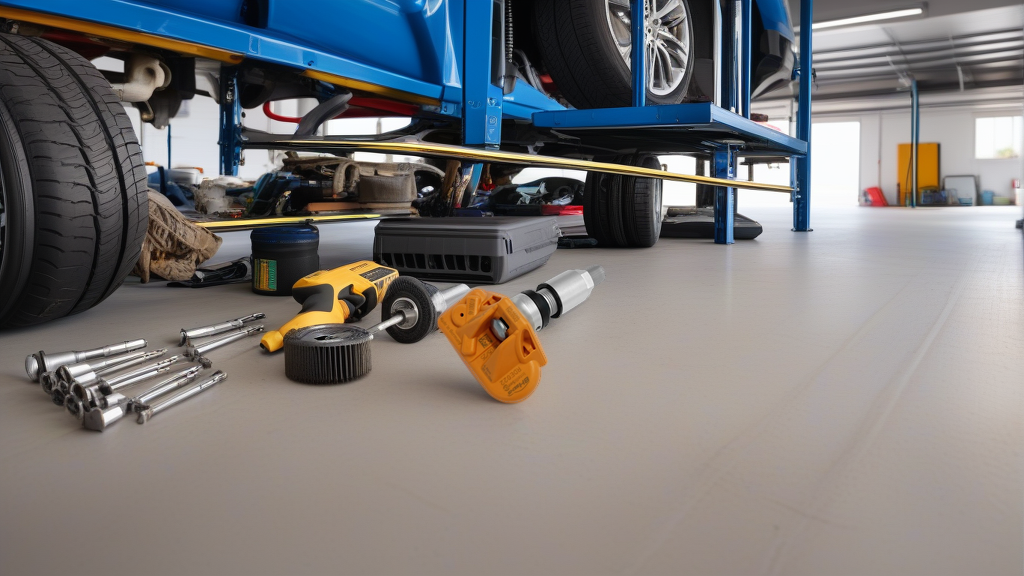
Start With Fitment, Not With the Bead Breaker
A HARRIER is not a hard car to fit TPMS sensors on, but it punishes shortcuts. Before the wheel comes off the balancer, confirm three things: the frequency the vehicle expects, the stem type the wheel takes, and the OE number the old sensor carries.
Frequency is the one that trips up most installs. 315MHz and 433MHz sensors look nearly identical on the bench, and a mismatched unit will either fail to register or drop out intermittently at speed. Read the number off the sensor you just removed, or check the vehicle’s build data — don’t guess from the model year alone.
Stem type matters too. Clamp-in sensors bolt through the valve hole with a nut and grommet. Snap-in sensors pull through with a rubber stem and take no torque at all. Fitting the wrong style means either a leak you can’t seal or a wheel that needs a second dismount.
Valve Stem Service: What to Replace Every Time
The sensor may survive a tire change. The sealing hardware usually shouldn’t.
| Component | Replace when | Why |
|---|---|---|
| Grommet / rubber seal | Every sensor install | Compresses permanently, hardens with heat and ozone |
| Valve core | Every install | Cheap part, common slow-leak source |
| Valve cap | Every install | Plastic only — metal caps corrode onto the stem |
| Stem nut | Any sign of corrosion or thread damage | Reuse weakens the clamp load |
| Sensor body | Battery end-of-life or cracked housing | Non-serviceable on most sealed units |
Treat the valve stem as a wear item, not a reusable bracket. A $3 grommet that fails turns into a comeback, a wheel-off diagnosis and a customer who tells people your shop does sloppy work.
Installation Torque Specs
These are working reference ranges for typical passenger-car TPMS hardware. Always defer to the sensor manufacturer’s printed spec and the vehicle’s service manual — wheel and stem designs vary.
| Fastener | Typical torque | Notes |
|---|---|---|
| Clamp-in stem nut | 3–5 N·m (26–44 in-lb) | Use a calibrated in-lb driver, not a 3/8″ ratchet by feel |
| Valve core | 0.2–0.4 N·m (2–4 in-lb) | Snug only — the core seal does the sealing |
| Sensor-to-bracket screw | ~1.5 N·m (13 in-lb) | Only where the design uses one |
| Wheel lug nuts | roughly 100–110 N·m (75–80 ft-lb) | Star pattern; confirm the exact figure in the owner’s manual |
| Valve cap | Hand-tight | Plastic caps, nothing more |
Over-torque is the single most common cause of premature clamp-in failure. It stretches the stem, deforms the grommet and creates a crack that only shows up as a slow leak weeks later.