
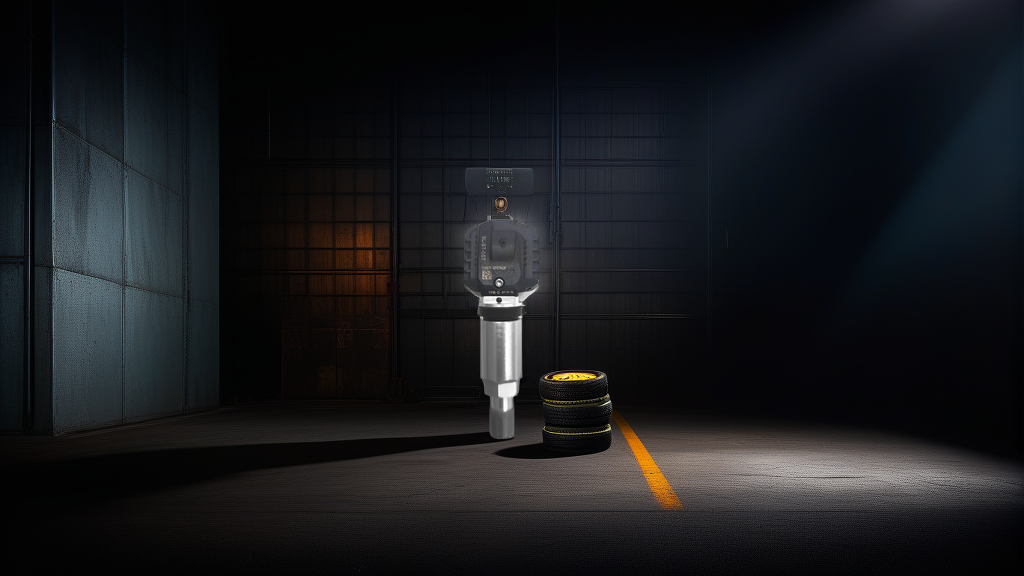
What “Relearn” Actually Means
A TPMS sensor doesn’t just broadcast pressure — it broadcasts a unique ID code along with it, at 433 MHz on UNI-T and most Changan-based platforms. The body control module (BCM) keeps a list of four IDs, one per corner. Fit a new sensor and the BCM hears a code it doesn’t recognise, so it does the only thing it can: turns on the tire pressure warning lamp.
Relearning is simply teaching the BCM the new ID. It is not the same as programming a blank sensor — that step loads the correct protocol and frequency into the sensor itself. A pre-programmed sensor like the BL-ST-057 already has the protocol loaded at the factory, so all you’re doing is registering its ID with the car.
Tools You Need
- TPMS-capable scan tool with a UNI-T / Changan relearn function (Autel, Launch, ATEQ, Bartec and similar)
- TPMS activation tool — often built into the scan tool as a separate trigger wand
- Accurate tire pressure gauge and an air source
- Correct sensors — 433 MHz, pre-programmed, matching your OE number
- New valve nuts, grommets and cores if you’re installing clamp-in stems
Method 1: Auto Relearn (Drive Cycle)
This is the default on most UNI-T vehicles and needs no tooling at all.
- Set all four tires to the placard pressure cold — check the driver’s door jamb, not the tire sidewall.
- Confirm the new sensor is the right frequency and pre-programmed for the platform. A blank or wrong-frequency sensor will never register, no matter how long you drive.
- Start the engine and leave the car in park for a minute so the BCM powers up the receivers.
- Drive above roughly 25 mph (40 km/h) for 10–20 minutes. Include a few gentle turns and one or two stops — the sensors only transmit once they’re rolling.
- Watch the cluster. The lamp should clear on its own. If your trim shows individual pressures, confirm all four read within a few PSI of your gauge.
If nothing happens after 30 minutes of mixed driving, stop wasting fuel and move to OBD relearn.
Method 2: OBD Relearn
The most reliable method, and the one most shops use.
- Park with the ignition on, engine off. Leave all doors closed.
- Plug the scan tool into the OBD-II port under the driver’s side dash.
- Select the TPMS menu, then the UNI-T / Changan platform (menu wording varies by tool brand).
- Choose Relearn or Write Sensor IDs.
- The tool will prompt you corner by corner — usually left front, right front, right rear, left rear. Hold the activation tool flat against the sidewall right at the valve stem and press trigger until the tool confirms (a beep, a flashing LED, or both).
- Let the tool write the IDs to the BCM and clear the stored TPMS codes.
- Cycle the ignition off, wait 30 seconds, restart, and verify live pressures appear and the lamp is out.
Method 3: Stationary Relearn
Same principle as OBD relearn, but you’re only using the activation tool — no scan tool connection. You still need to put the BCM into learn mode first, which on most UNI-T vehicles means a menu option in the cluster or a specific key-cycle sequence.
| Method | Tools needed | Time | Best for |
|---|---|---|---|
| Auto relearn | Pressure gauge, air source | 10–20 min drive | New sensor install, sensor rotation |
| OBD relearn | TPMS scan tool + activator | 5–10 min | Stubborn lamp, multiple new sensors, BCM replacement |
| Stationary relearn | Activation tool | 5 min | Shop bay, no road test possible |
Fitment and Specs
| Spec | Detail |
|---|---|
| Brand | BH-Sens (Baolong Technology) |
| Frequency | 433 MHz |
| Type | Clamp-in, pre-programmed |
| OE numbers | 3601010CD01, 3601010DG01, 3601010MK02, 3601010MK02ED01 |
| Compatible brands | Avatr, Changan, Deepal, Mazda, Nevo |
| SKU | BL-ST-057 |
UNI-T is a Changan model, so the cleanest way to confirm a match is to read the OE number off the old sensor or check by VIN before ordering. When mounting a clamp-in stem, use a fresh nut and grommet and torque to the figure supplied with the sensor or in your service manual — do not guess.
Recommended Part
For 433 MHz Changan-platform applications, the BL-ST-057 | BH-Sens 433MHz TPMS Tire Pressure Sensor | Fits Avatr, Changan, Deepal, Mazda, Nevo & 1 More | OE# 3601010CD01, 3601010DG01, 3601010MK02 covers OE references 3601010CD01, 3601010DG01, 3601010MK02 and 3601010MK02ED01. It arrives pre-programmed, so once it’s mounted you only need one of the three relearn procedures above — no bench programming required.
FAQ
Do I need to relearn a pre-programmed TPMS sensor?
Yes. Pre-programmed means the sensor already knows the correct protocol and frequency — it does not mean the car knows the sensor. The BCM still has to be taught the new ID, either by driving or by writing it through the OBD port.
How long does auto relearn take on a UNI-T?
Usually 10–20 minutes of driving above roughly 25 mph. Cold weather, heavy traffic and short trips without speed variation can stretch it out. If the lamp is still on after about 30 minutes of mixed driving, use an OBD relearn instead.
Can I relearn TPMS without a scan tool?
Often, yes — that’s what auto relearn is for, and it’s the factory default on most UNI-T trims. You’ll only need a scan tool if the automatic process fails, if you’ve replaced the BCM, or if you’re fitting several sensors at once and want to confirm each ID registered.
Will a 315 MHz sensor work on a UNI-T?
No. The vehicle’s receivers are built for 433 MHz on this platform. A wrong-frequency sensor will mount and hold air perfectly well but will never register with the BCM, no matter which relearn procedure you run.