
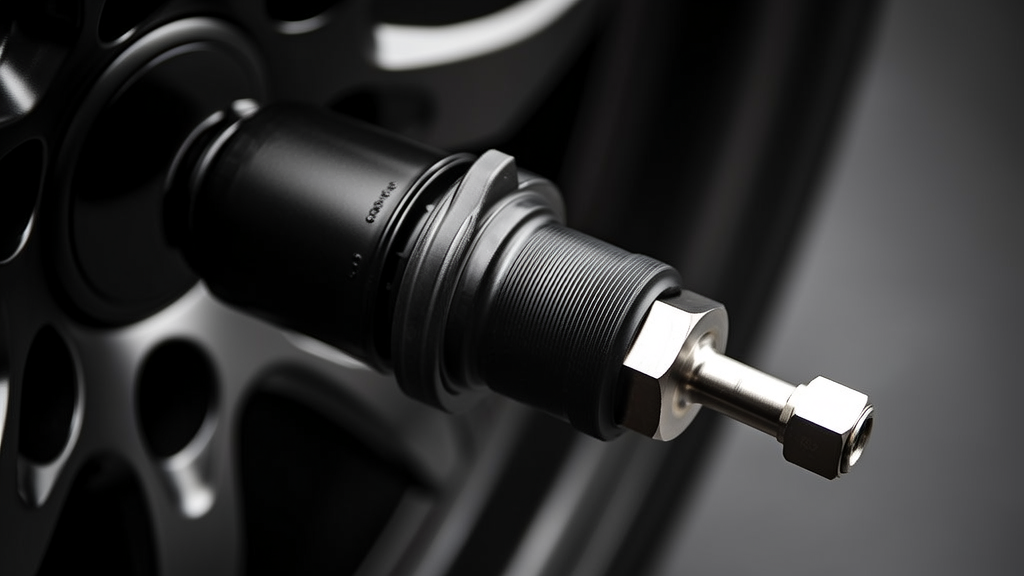
First, Confirm Your FABIA Even Has Valve-Mounted Sensors
This trips up a lot of owners. Many FABIA models — especially the Mk2 and Mk3 generations — run indirect TPMS, which calculates pressure from ABS wheel-speed signals and has no sensors in the wheels at all. Before you order anything, walk around the car and look at the valve stems:
- Metal stem with a hex nut at the base → direct TPMS, sensor inside the wheel.
- Plain rubber pull-through stem → almost certainly indirect; there is no sensor to replace.
- Metal stem but the dash shows no pressures, only a warning light → indirect system with a metal-sleeved valve, common on aftermarket wheels.
If you have direct TPMS, note the frequency your car uses before buying. Frequency alone doesn’t confirm fitment — the sensor also has to speak the right protocol and be programmed for the vehicle. Match the OE number on the old sensor to the replacement’s cross-reference list, or use a sensor that a TPMS tool can program to your car.
Torque and Service Reference
Use these as a working range and always defer to the sensor manufacturer’s sheet and the vehicle handbook where they differ.
| Fastener / Item | Working range | Notes |
|---|---|---|
| Valve stem retaining nut | ~4–6 N·m | Aluminium stems deform past this; use a calibrated small torque wrench, not a ratchet |
| Valve core | Snug, ~0.25–0.5 N·m | Over-tightening tears the core seal and causes slow leaks |
| Valve cap | Hand tight | Plastic caps seize onto aluminium; a metal cap with a rubber seal is better long-term |
| Wheel bolts/nuts | Per vehicle manual | Re-check after the first 50–100 km |
| Tyre inflation | Door-jamb placard | Never the max pressure moulded on the sidewall |
Torque the stem nut before inflating, with the wheel flat on the balancer or supported on the bench — not hanging on the car where you can’t hold the sensor square.
Valve Stem Service: Replace the Whole Kit, Not Just the Sensor
The sensor electronics usually outlive the rubber and aluminium around them. Every sensor replacement should include a complete service kit: stem, grommet, washer, nut, valve core and cap. Reusing a two- or three-year-old grommet is the single most common cause of a comeback leak, because the rubber takes a compression set and never seals the same way twice.
A few habits worth building:
- Wipe the valve hole clean and inspect for corrosion or a wallowed-out seat before fitting the new stem.
- Fit the grommet dry — no lubricant, which lets it slip and pinch.
- Hold the sensor body square to the rim while tightening so the grommet compresses evenly.
- Soap-test the base of the stem after inflating, before the wheel goes back on the car.
The Five Mistakes That Cost the Most
- Over-torquing the nut. The stem snaps at the thread root weeks later, usually at highway speed. If it felt tight, it was already too tight.
- Reusing the old nut and grommet. The nut is often a one-shot deformable design.
- Letting the sensor drop inside the tyre. Tape or hold the sensor while you seat the bead; a sensor rattling around inside destroys the tyre and the sensor.
- Fitting the wrong frequency or protocol. A 433MHz sensor that isn’t programmed for the car reads nothing. Frequency is the start of the match, not the end.
- Skipping the relearn and test drive. Trigger each sensor with a TPMS tool, confirm live pressures and temperatures on the scan tool, then drive a few kilometres to let the module settle.
Matching a Replacement Sensor
If you’re buying aftermarket, work from the OE number stamped or printed on the old sensor. As an example of what a correct match looks like, the 433MHz BH-Sens unit we stock cross-references a long list of GM-family numbers including 13516165, 13522631 and 13540603, which is why it covers a wide spread of vehicles: BL-ST-059 | BH-Sens 433MHz TPMS Tire Pressure Sensor | Fits BAIC, Baic Ev, Buick, Cadillac, Chevrolet & 15 More | OE# 13516165, 13522631, 13540603. The lesson is the same regardless of brand — cross-reference the OE number against the sensor’s list and confirm your car’s frequency, rather than buying on frequency alone.
Recommended Part
BH-Sens BL-ST-059 — 433MHz TPMS Tire Pressure Sensor. A 433MHz direct-fit sensor covering OE numbers 13516165, 13522631, 13540603 and more, for BAIC, Buick, Cadillac, Chevrolet and a further 15-plus applications. Pair it with a new valve service kit at every install: BL-ST-059 | BH-Sens 433MHz TPMS Tire Pressure Sensor | Fits BAIC, Baic Ev, Buick, Cadillac, Chevrolet & 15 More | OE# 13516165, 13522631, 13540603.
FAQ
Do I need a TPMS tool to install a new sensor?
In most cases, yes. Even a pre-programmed sensor usually needs to be triggered or written to the vehicle’s TPMS module, and a scan tool is the only way to confirm live pressure and temperature readings before the car goes back on the road.
Can I reuse the old valve stem nut when swapping a sensor?
No. Fit a complete service kit — stem, grommet, washer, nut, core and cap. The nut and grommet are engineered for a single compression cycle, and reusing them is the most common reason a freshly serviced wheel develops a slow leak.
Why does my TPMS light stay on after fitting a new sensor?
Three usual suspects: the sensor hasn’t been relearned, it’s the wrong frequency or protocol for the car, or the vehicle uses indirect TPMS and has no wheel sensors at all. Recheck the OE cross-reference and the relearn procedure before assuming the part is faulty.
How soon should I re-check wheel torque after a TPMS service?
Re-check the wheel bolts or nuts after the first 50–100 km of driving, and soap-test the valve base at the same time. Settling fasteners and a partially seated grommet both show up in that first week, not on the day of fitting.