
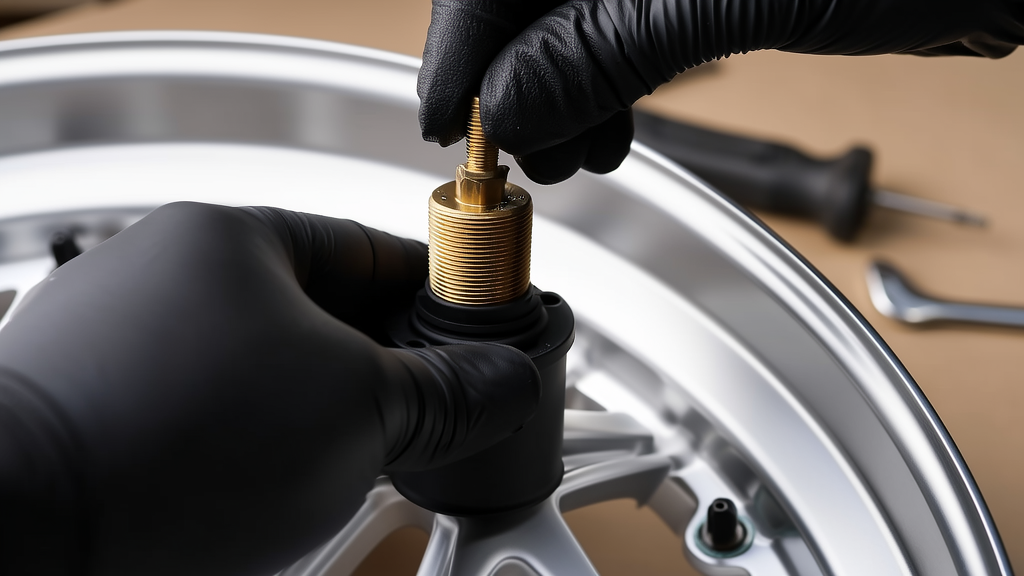
Fitment mistakes are the single biggest source of wasted money in the TPMS aftermarket. A sensor that looks identical, threads into the same valve hole, and transmits on the same frequency can still fail to register on the vehicle — or register and then drop out two miles down the road. This guide covers exactly what the BH-Sens BL-ST-075 does and does not fit, why the Ghibli sits outside its coverage, and the checks a buyer should run before paying.
Does BL-ST-075 Fit a Maserati Ghibli?
Straight answer: no. The BL-ST-075 is a dedicated OE-fitment sensor for Chinese-market vehicles — Chery, Cowin, Jetour, Karry and Soueast — and its pre-programmed protocol is locked to those platforms. The Maserati GHIBLI uses a different sensor architecture, different wake-up protocol, and its own OE part numbering. Installing a BL-ST-075 on a Ghibli will physically bolt in at the valve hole in some cases, but the ECU will not learn it, and you’ll be chasing a permanent TPMS light.
The reason this matters: Ghibli owners searching for a cheap replacement often land on 433 MHz listings because the frequency matches. Frequency alone means nothing. Two sensors on the same 433 MHz band can use completely different modulation, data frames, and ID formats. If the vehicle’s TPMS module doesn’t recognise the frame, the sensor is a paperweight.
So if you drove here looking for a Ghibli sensor, the correct path is a VIN-based lookup against your original OE number, plus confirmation of the production date — Maserati changed TPMS suppliers across the Ghibli’s run, and early and late cars do not always share a sensor. Pull the number off the old sensor body or read the sensor IDs with a TPMS scan tool before ordering anything.
What the BL-ST-075 Actually Covers
The BL-ST-075 is a pre-programmed, clamp-in sensor from BH-Sens (Baolong Technology), one of the larger OE sensor suppliers in China. It ships ready to trigger — no programming tool required, just a relearn.
| Spec | Detail |
|---|---|
| SKU | BL-ST-075 |
| Brand | BH-Sens (Baolong Technology) |
| Frequency | 433 MHz |
| Type | Clamp-in, pre-programmed |
| OE numbers | F023114011, F113114011, F113114011BA |
| Compatible brands | Chery, Cowin, Jetour, Karry, Soueast |
| Ghibli coverage | None |
| Vehicle brand | Coverage | What to check |
|---|---|---|
| Chery | Models using the listed OE numbers | Match OE number on old sensor |
| Cowin | Models using the listed OE numbers | Confirm valve style (clamp-in) |
| Jetour | Models using the listed OE numbers | Confirm 433 MHz, not 315 MHz |
| Karry | Models using the listed OE numbers | Confirm valve style (clamp-in) |
| Soueast | Models using the listed OE numbers | Confirm OE number and build date |
| Maserati Ghibli | Not covered | Use VIN-based OE lookup |
The “models using the listed OE numbers” phrasing is deliberate. Brand-level fitment claims are useful for narrowing a search, but they are never the final word. Within any of these brands, the same nameplate can carry two different TPMS systems depending on trim, market, and build date. The OE number is the only thing that settles it.
How to Verify Fitment Before You Buy
Work through these in order. Each one takes minutes and each one can save you a return.
1. Read the OE number off the old sensor
This is the highest-value check you can do. Remove the wheel, deflate the tyre, and unbolt the sensor from the valve hole. The OE number is moulded or laser-etched on the sensor body or the plastic housing. Compare it character by character against F023114011, F113114011, or F113114011BA. Suffix letters matter — F113114011BA is not the same part as F113114011. If your number isn’t on the list, stop there.
2. Confirm the frequency
433 MHz is the common band for these Chinese platforms, but 315 MHz variants exist in some markets and on some early builds. A TPMS scan tool will read the sensor’s transmitting frequency in seconds. If you don’t own one, most tyre shops will read it for a small fee — far cheaper than a second set of sensors.
3. Check the valve style
The BL-ST-075 is clamp-in: the stem passes through the valve hole and is secured with a nut from outside. Snap-in sensors use a rubber stem pulled through from inside. These are not interchangeable without also changing the valve hole hardware, and mixing styles across one vehicle causes imbalance complaints and slow leaks. Look at the wheel before ordering.
4. Cross-check the build date
The same model can switch sensor suppliers mid-cycle. Give the parts counter or your supplier the VIN and build month, not just the model year. For the Ghibli in particular, build date is essential. If you’re unsure, check your vehicle manual or the label in the driver’s door jamb for the production date.
5. Confirm the sensor arrives pre-programmed
The BL-ST-075 is pre-programmed, which means it needs a relearn but not a bench program. Relearn procedures differ by vehicle — some trigger automatically after a drive cycle, others need an OBD tool or a magnet/trigger sequence. Confirm the procedure for your specific model before you’re standing in a car park at 9 p.m. wondering why the light is still on. When in doubt, check your vehicle manual.
Common Fitment Traps
- Buying on frequency alone. Covered above, and it’s still the number one mistake. Match the OE number first.
- Assuming one sensor fits all four corners. On most of these vehicles it does, but check for a different sensor on a space-saver spare if your car carries a fifth wheel sensor.
- Reusing the old valve nut and seal. Clamp-in hardware is generally single-use. A reused, over-compressed seal is a slow leak waiting to happen. Torque to the figure in your vehicle manual — don’t guess.
- Skipping the relearn. A pre-programmed sensor still has to be introduced to the vehicle. If the light stays on after fitting, the sensor may be fine and the relearn incomplete.
- Mixing brands on one vehicle. Usually workable, but keep the sensor type consistent across all four wheels to avoid odd wake-up behaviour.
For buyers who have confirmed their OE number matches, BL-ST-075 | BH-Sens 433MHz TPMS Tire Pressure Sensor | Fits Chery, Cowin, Jetour, Karry, Soueast | OE# F023114011, F113114011, F113114011BA is the direct replacement — four sensors, clamp-in, ready to relearn.
Recommended Part
BL-ST-075 | BH-Sens 433MHz TPMS Tire Pressure Sensor — clamp-in, pre-programmed, OE numbers F023114011, F113114011, F113114011BA. Fits Chery, Cowin, Jetour, Karry and Soueast models that use these numbers. Not for the Maserati Ghibli. BL-ST-075 | BH-Sens 433MHz TPMS Tire Pressure Sensor | Fits Chery, Cowin, Jetour, Karry, Soueast | OE# F023114011, F113114011, F113114011BA
FAQ
Will the BL-ST-075 work on a Maserati Ghibli?
No. The BL-ST-075 is programmed for Chery-family platforms and does not use the protocol the Ghibli’s TPMS module expects. Even though both may operate on the 433 MHz band, the data frame and sensor ID format differ, so the vehicle will not learn the sensor. Ghibli owners should order against their original OE number confirmed by VIN.
Do I need a programming tool to install the BL-ST-075?
No bench programming is required — it arrives pre-programmed. You will still need to perform the vehicle’s relearn procedure so the TPMS module picks up the new sensor IDs. On many of these models that’s a drive-cycle trigger; on others it needs an OBD tool. Check the procedure for your exact model first.
How do I know if my Chery, Jetour or Soueast uses 433 MHz?
Two ways: read the transmitting frequency with a TPMS scan tool, or match the OE number on the old sensor against the three numbers listed for this part. The OE match is the more reliable of the two, because frequency alone doesn’t confirm protocol compatibility.
Can I replace just one sensor instead of all four?
Yes, if the other three are healthy and reading correctly on a scan tool. Replace a single sensor when it has failed, its battery is flat, or it’s physically damaged. If the existing set is aged and several are marginal, replacing all four at once saves you a second dismount-and-relearn job a few months later.