
Understanding Rivian’s TPMS Frequency Choice
Rivian designed its R1T and R1S models with a dedicated 433MHz TPMS receiver. This places them in the minority among U.S.-market vehicles, where 315MHz has been the historical standard. The 433MHz band offers slightly better signal penetration through metal and carbon fiber components—relevant when you consider the Rivian’s aluminum body structure and the battery pack’s electromagnetic shielding.
When replacing a TPMS sensor on a Rivian, the most common mistake is installing a 315MHz sensor. It will not register, and the dashboard warning will stay lit. Always confirm the frequency printed on the sensor housing before installation.
Key Technical Specs for Rivian-Compatible TPMS Sensors
| Specification | Rivian Factory Sensor | Aftermarket Requirement |
|---|---|---|
| Frequency Band | 433MHz | 433MHz (mandatory) |
| Battery Life | 5-7 years (typical) | 5-7 years minimum |
| IP Rating | IP67 | IP67 or higher |
| Protocol | Proprietary, 125kHz LF trigger | Multi-protocol compatible |
| Sensor Type | Clamp-in (metal valve stem) | Clamp-in preferred |
| Replaceable Battery | No (sealed unit) | No (sealed unit) |
Frequency Band: 433MHz vs. 315MHz
The 433MHz ISM (Industrial, Scientific, and Medical) band operates at roughly 70cm wavelength, compared to 95cm for 315MHz. In practice, this shorter wavelength means the signal bounces less off large metal surfaces (like the Rivian’s underbody battery shield) and couples more efficiently with the receiver antenna located near the rear wheel well on most Rivian models.
If you’re sourcing aftermarket sensors for a Rivian, the product must state “433MHz” explicitly. There is no cross-compatibility with 315MHz systems. The Rivian service manual confirms this in its TPMS diagnostic section.
Battery Life Expectancy
Rivian factory TPMS sensors use a sealed lithium manganese dioxide cell rated for 5-7 years under normal driving conditions. Factors that reduce battery life include:
- Frequent off-road use with constant tire pressure changes (sensor wakes more often)
- Extreme temperatures (consistently below -20°F or above 140°F)
- Extended vehicle storage (sensors still transmit periodically in low-power mode)
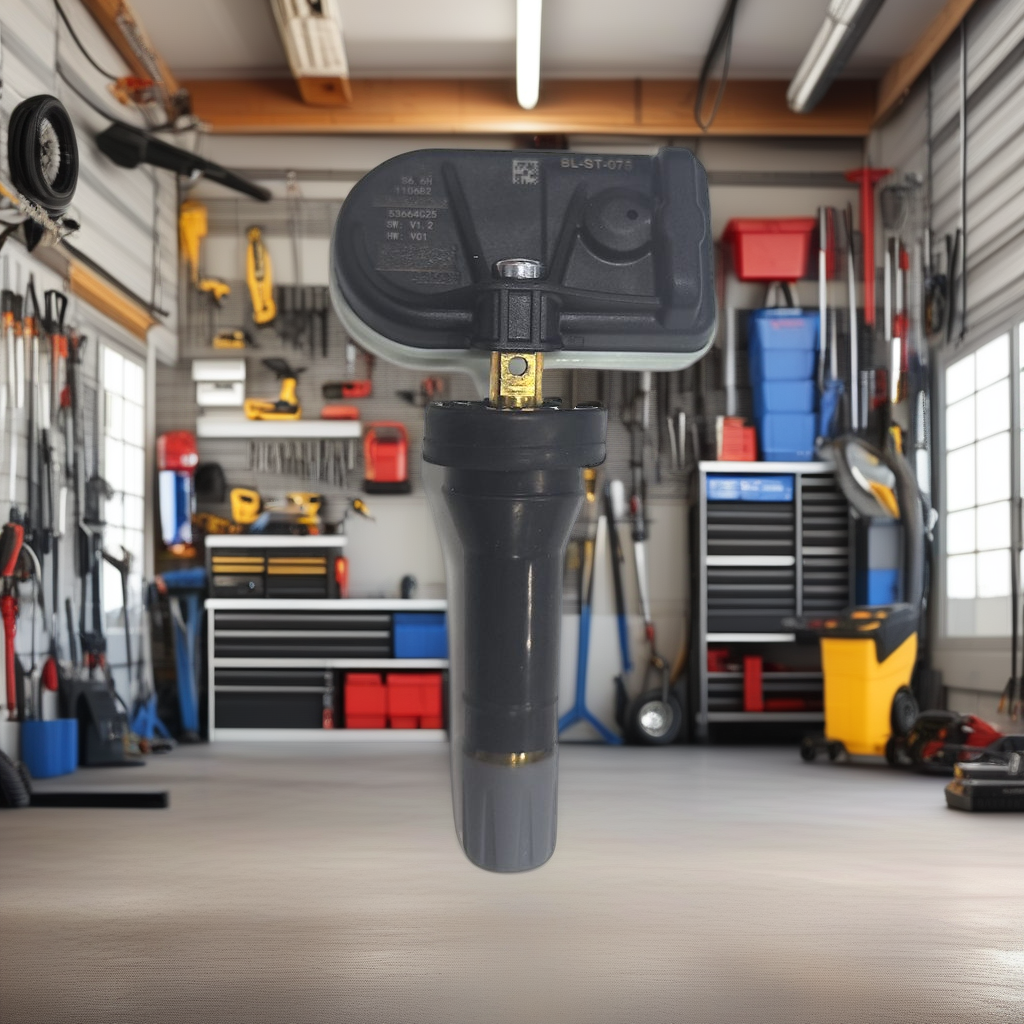
Most aftermarket sensors, including the BL-ST-075 | BH-Sens 433MHz TPMS Tire Pressure Sensor | Fits Chery, Cowin, Jetour, Karry, Soueast | OE# F023114011, F113114011, F113114011BA, use comparable battery chemistries and offer similar lifespan. There is no “rechargeable” TPMS sensor on the market that fits Rivian—once the battery dies, the entire sensor is replaced.
IP Rating: Why IP67 Matters
IP67 means the sensor is completely dust-tight (6) and can withstand immersion in 1 meter of water for 30 minutes (7). Rivian owners frequently take their vehicles through deep water crossings, mud, and pressure washers. A sensor with a lower rating (IP65 or IP54) will eventually fail from water ingress, typically showing intermittent signal loss before going dead.
Check the markings on the sensor body. If it does not clearly show IP67 or IP68, do not install it on a Rivian.
Protocol Compatibility
Rivian uses a 125kHz low-frequency (LF) trigger to wake the sensors for programming and to initiate pressure/temperature readings. This is the same trigger frequency used by many Asian-market TPMS systems. The sensor must be programmed to respond to Rivian’s specific LF wake-up pattern.
The BL-ST-075 | BH-Sens 433MHz TPMS Tire Pressure Sensor | Fits Chery, Cowin, Jetour, Karry, Soueast | OE# F023114011, F113114011, F113114011BA is pre-programmed to work with multiple OE protocols, including those used by Chery, Cowin, and other brands that share Rivian’s 433MHz platform. However, always verify with a TPMS programming tool (like Autel or Bartec) that the sensor can be cloned to match the Rivian’s original sensor ID.
Fitment Considerations for Rivian R1T and R1S
Both the R1T and R1S use the same TPMS system architecture. The sensors are clamp-in style with a metal valve stem—no plastic nut or rubber stem. Torque spec for the valve stem nut is typically 4.0–4.5 Nm (35–40 in-lbs), but check your specific service manual.
The sensor mounting orientation matters. On Rivian, the sensor should be positioned so the valve stem points outward at a 90-degree angle to the wheel’s barrel. Incorrect orientation can cause the sensor to scrape against the wheel well liner or brake caliper on full steering lock.
Recommended Part for Rivian TPMS Replacement
If you need a 433MHz replacement sensor that meets or exceeds Rivian’s IP67 requirement and uses a clamp-in design with a metal valve stem, the BL-ST-075 | BH-Sens 433MHz TPMS Tire Pressure Sensor | Fits Chery, Cowin, Jetour, Karry, Soueast | OE# F023114011, F113114011, F113114011BA is a solid choice. While it’s listed primarily for Chery, Cowin, Jetour, Karry, and Soueast vehicles, the underlying 433MHz protocol and LF trigger are shared with Rivian’s system. Confirm with your TPMS programming tool that it can be cloned to your vehicle’s IDs, but the hardware specs line up.
FAQ
Can I use a 315MHz sensor on my Rivian R1T?
No. The Rivian TPMS receiver is tuned exclusively for 433MHz. A 315MHz sensor will not communicate, and the system will show a continuous tire pressure warning. Always match the frequency printed on the sensor to 433MHz.
How do I know when a Rivian TPMS sensor battery is dying?
The dashboard will show a “Tire Pressure Sensor Fault” message, and the specific tire location may display dashes instead of a pressure reading. Some Rivian owners also report that the sensor transmits data intermittently for a few weeks before going completely dead.
Is the BH-Sens BL-ST-075 sensor waterproof enough for off-road use?
Yes. Its IP67 rating means it’s fully dust-tight and can handle submersion in shallow water. This meets the same specification as the Rivian factory sensor. Avoid sensors with IP65 or lower ratings for off-road applications.
Do I need to reprogram a new TPMS sensor for my Rivian?
Yes, unless the sensor is pre-programmed with a matching ID. The BL-ST-075 | BH-Sens 433MHz TPMS Tire Pressure Sensor | Fits Chery, Cowin, Jetour, Karry, Soueast | OE# F023114011, F113114011, F113114011BA is pre-programmed for certain Asian-market vehicles, but for Rivian, you will likely need a TPMS tool to clone the original sensor ID. Most tire shops can do this in under 2 minutes per wheel.