
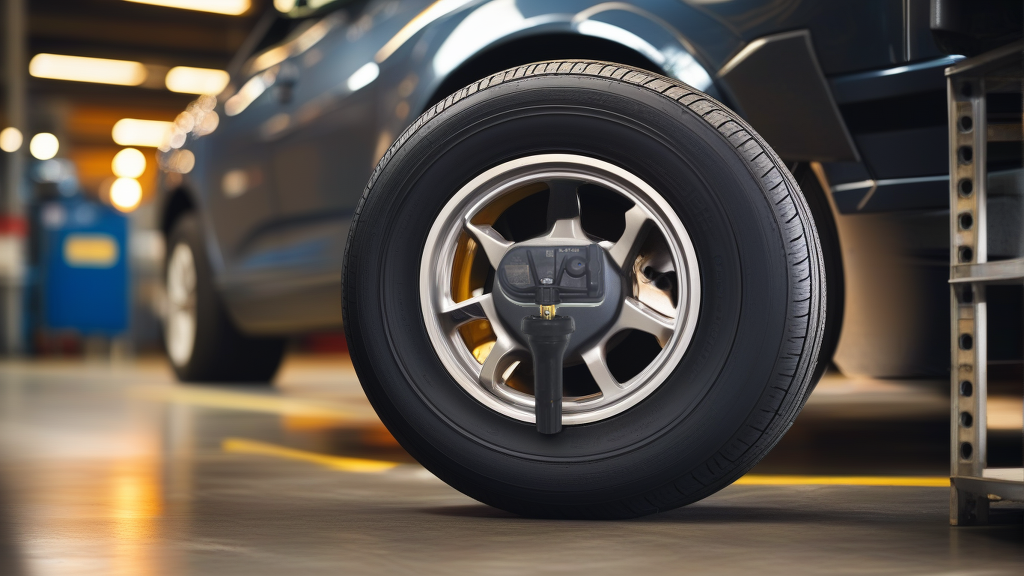
Why 433MHz Matters for Your TERRITORY EV
The TERRITORY EV, like most modern Chinese-made EVs (including Changan, Deepal, and Avatr platforms), operates its TPMS on the 433MHz frequency band. This is the standard for vehicles produced in Asia and Europe, while North American vehicles often use 315MHz.
If you’re sourcing a replacement sensor, using the wrong frequency means the sensor will physically install but will never communicate with the car’s receiver module. The BL-ST-028 is specifically tuned to 433MHz and is pre-programmed to match the TERRITORY EV’s protocol, so no cloning or relearn tool is required for most model years.
Battery Life: What to Expect
TPMS sensors in the TERRITORY EV use a sealed lithium manganese dioxide (Li-MnO2) battery. Under normal driving conditions (30-60 minutes daily, moderate ambient temperatures), you can expect:
| Condition | Estimated Battery Life |
|---|---|
| Daily use, moderate climate | 5–7 years |
| Frequent short trips (under 15 min) | 4–5 years |
| Extreme heat (above 50°C ambient) | 3–4 years |
The BL-ST-028’s battery is rated for 6 years typical service life at 25°C. Once the battery dies, the sensor must be replaced—it is not serviceable. A dead sensor will trigger a persistent low-battery warning on your dashboard and disable the TPMS system for that wheel.
Tip: If your TERRITORY EV is a 2020 or 2021 model, you’re likely due for replacement. Check your vehicle manual for the exact battery replacement interval recommendation.
IP Rating: Dust and Water Protection
Every TPMS sensor installed on the TERRITORY EV must withstand road grime, pressure washing, and occasional submersion. The BL-ST-028 carries an IP67 rating (some batch variants are IP68). Here’s what that means in real terms:
- IP6x – Fully dust-tight. No ingress of fine dust or sand.
- IPx7 – Can be submerged in 1 meter of water for up to 30 minutes without damage.
- IPx8 (if applicable) – Continuous submersion beyond 1 meter, but this is rarely tested in normal use.
For a daily-driven TERRITORY EV, IP67 is sufficient. The sensor housing is resin-sealed, and the valve stem is nickel-plated brass to resist corrosion. Avoid using high-pressure water jets directly at the valve stem base during car washes—this can force water past the seal over time.
Protocol Compatibility
The TERRITORY EV uses a direct TPMS protocol based on the 3601010CD01/DG01/MK02 series. The BL-ST-028 is designed to match the following OE numbers exactly:
- 3601010CD01
- 3601010DG01
- 3601010MK02
- 3601010MK02ED01
This means the sensor transmits pressure and temperature data in the same data frame structure as the original. It is pre-programmed—no need to write ID codes using a TPMS tool, though some late-model TERRITORY EVs may require a relearn after replacement. Check your vehicle’s service manual for the relearn procedure (usually a 5-minute drive above 25 km/h).
Fitment Table: TERRITORY EV and Related Vehicles
The BL-ST-028 is not exclusive to the TERRITORY EV. It fits multiple models sharing the same chassis or TPMS platform:
| Vehicle Brand | Model(s) | OE Cross-Reference |
|---|---|---|
| TERRITORY EV | TERRITORY EV (2020–present) | 3601010CD01, 3601010DG01 |
| Avatr | 11, 12 | 3601010MK02 |
| Changan | CS75, UNI-K, Eado EV | 3601010MK02ED01 |
| Deepal | S7, S05 | 3601010DG01 |
| Mazda | CX-30 EV, EZ-6 | 3601010CD01 |
| Nevo (Neta) | U, V | 3601010MK02 |
Note: Always verify your vehicle’s OE part number before ordering. The sensor mounts as a clamp-in type using a standard 17mm hex nut.
Installation Considerations
- Torque: Tighten the sensor nut to 4–5 Nm (35–44 in-lb). Over-tightening can crack the sensor body or strip the threads. Under-tightening causes air leaks.
- Valve core: Replace the valve core and cap each time you install a new sensor. The BL-ST-028 includes a new valve core.
- Relearn: Some TERRITORY EV models require a TPMS relearn tool (e.g., Autel, Bartec). If you replace all four sensors at once, the car may automatically recognize them after a short drive. If only one sensor is replaced, use a tool to trigger the sensor and assign its ID to the wheel position.
Recommended Part
For a direct drop-in replacement on your TERRITORY EV, use the BL-ST-028 | BH-Sens 433MHz TPMS Tire Pressure Sensor | Fits Avatr, Changan, Deepal, Mazda, Nevo & 1 More | OE# 3601010CD01, 3601010DG01, 3601010MK02 (SKU: BL-ST-028). It is pre-programmed to 433MHz, matches OE 3601010CD01/DG01/MK02, and comes with a 2-year warranty against manufacturing defects.
FAQ
How do I know if my TERRITORY EV uses 433MHz or 315MHz TPMS?
Check the sticker on the original sensor (visible once the tire is removed) or look up the OE part number 3601010CD01/DG01/MK02. All variants of the TERRITORY EV sold globally use 433MHz. If you bought a grey-market import from North America, verify with a TPMS scan tool—but this is extremely rare.
Can I install the BL-ST-028 myself without a TPMS tool?
Yes—the sensor is pre-programmed. However, you will need a tire machine to dismount/mount the tire and a torque wrench to tighten the sensor nut. After installation, drive the car above 25 km/h for 5–10 minutes. If the warning light does not clear, you may need a relearn tool. Many local tire shops can do this for a small fee.
How long does the battery last in extreme cold?
Lithium batteries lose capacity in low temperatures. At -20°C, the sensor’s battery life may drop to 3–4 years. The sensor will still function, but transmission range may decrease slightly. This is normal and not a defect.
Will the BL-ST-028 work on a Changan CS75 or Deepal S7?
Yes. The sensor is cross-compatible with Changan, Deepal, Avatr, Mazda, and Nevo vehicles that use the same 3601010CD01/DG01/MK02 OE numbers. Check your vehicle’s TPMS part number to confirm.