
Frequency Band: Why 433MHz Matters for Your UNI-Z
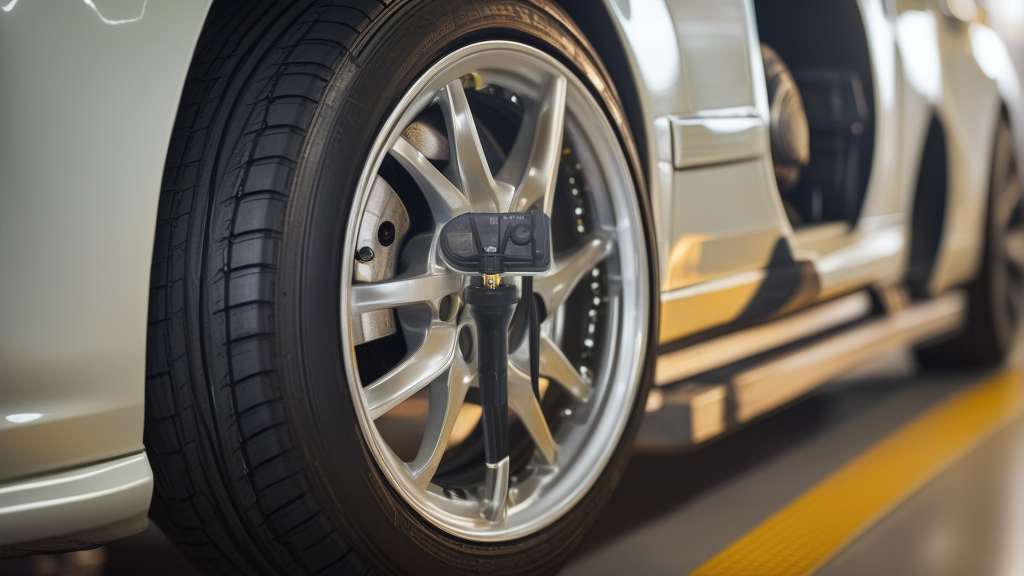
Most modern UNI-Z variants operate TPMS sensors on the 433MHz frequency band. This UHF band offers better signal penetration through metal chassis components and tire rubber compared to the older 315MHz band found in some North American-market vehicles. The BL-ST-028 sensor from BH-Sens (a Baolong Technology product) is specifically tuned to 433MHz, matching the OE receiver module in UNI-Z vehicles.
If you accidentally install a 315MHz sensor, your UNI-Z’s TPMS receiver will not detect the signal—resulting in a constant dashboard warning light. No amount of reprogramming will fix a frequency mismatch.
Battery Life: Real-World Expectations
The BL-ST-028 uses a lithium manganese dioxide (Li-MnO₂) battery rated for 5–7 years under normal driving conditions. Key factors that shorten battery life include:
- Extreme ambient temperatures (consistently above 80°C or below -30°C)
- Frequent high-speed driving over 120 km/h (75 mph)
- Daily long-distance commutes exceeding 10 hours
When the battery voltage drops below 2.4V, the sensor transmits a low-battery alert. You’ll typically get 2–4 weeks of warning before the sensor stops communicating entirely. Replace the sensor immediately—batteries are sealed and non-replaceable.
IP Rating: Protection Against Elements
The BL-ST-028 carries an IP67 rating, meaning it’s fully protected against dust ingress and can withstand immersion in water up to 1 meter for 30 minutes. This covers:
- Rain, snow, and car washes
- Mud and gravel road debris
- Condensation inside the tire cavity
One common failure point is the valve stem seal. Even with IP67 electronics, a corroded or cracked valve stem allows air leakage. The BL-ST-028 uses a nickel-plated brass valve stem to resist corrosion—critical for UNI-Z models driven in winter road salt conditions.
Protocol Compatibility: Pre-Programmed Fitment
This sensor comes pre-programmed and is compatible with several Chinese OEM platforms: Avatr, Changan, Deepal, Mazda, and Nevo. It uses the Schrader-style 325MHz/433MHz protocol (also known as BHSens protocol) that Baolong developed for these brands. No universal cloning device is required—simply install and the TPMS ECU will auto-learn the sensor ID after a short drive at 20+ km/h.
Technical Specifications Table
| Parameter | BL-ST-028 (BH-Sens) | Notes |
|---|---|---|
| Frequency | 433 MHz | Not 315 MHz |
| Battery Type | Li-MnO₂ | Sealed, non-replaceable |
| Rated Battery Life | 5–7 years | Varies with driving conditions |
| IP Rating | IP67 | Dust-tight, waterproof to 1m |
| Valve Stem Material | Nickel-plated brass | Corrosion-resistant |
| OE Cross-Reference | 3601010CD01, 3601010DG01, 3601010MK02 | Check your exact OE number |
| Installation | Clamp-in | Use 4 N·m max torque |
Recommended Part
For UNI-Z owners needing a direct OE replacement, the BL-ST-028 | BH-Sens 433MHz TPMS Tire Pressure Sensor | Fits Avatr, Changan, Deepal, Mazda, Nevo & 1 More | OE# 3601010CD01, 3601010DG01, 3601010MK02 offers verified 433MHz frequency matching, IP67 durability, and pre-programmed convenience. Always confirm your vehicle’s OE part number before ordering—three OE variants exist across model years.
FAQ
How do I know if my UNI-Z uses 433MHz or 315MHz TPMS?
Check the sticker inside your driver’s door jamb or the owner’s manual. Alternatively, read the original sensor—if it has “433MHz” printed on the housing, you need 433MHz. Most UNI-Z models from 2021 onward use 433MHz, but earlier production runs may vary. When in doubt, contact a dealer with your VIN.
Can I reuse the old sensor’s valve stem with a new BL-ST-028?
No. The valve stem is integrated into the sensor housing. Reusing the old stem risks air leaks and sensor damage. Always install a new sensor with its factory-fitted stem. Use a new rubber grommet and metal washer during installation.
What happens if I install a non-433MHz sensor in my UNI-Z?
The TPMS receiver will not recognize the signal. Your dashboard warning light will remain on, and no tire pressure readings will display. You may also trigger a fault code (P/N: U0121 or similar) that requires a scan tool to clear.
Does the BL-ST-028 work with aftermarket TPMS scan tools?
Yes. It uses a standard 433MHz protocol supported by most universal TPMS tools (Autel TS508, Bartec, ATEQ). However, for auto-learning, you typically need to drive the UNI-Z above 20 km/h for 10–15 minutes after installation to trigger ECU recognition.