
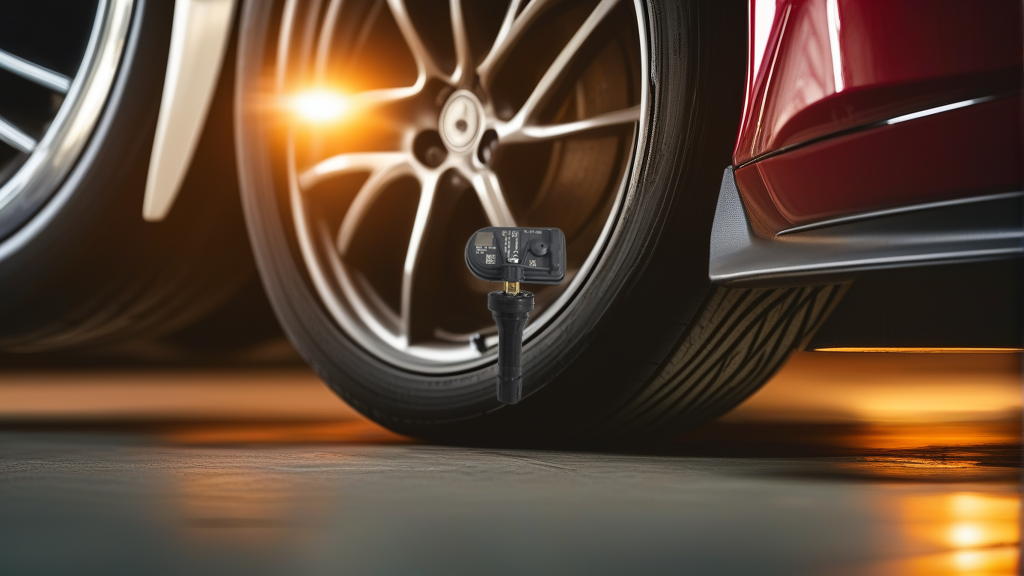
Understanding the BL-ST-050 for 智道 Fitments
The BL-ST-050 | BH-Sens 433MHz TPMS Tire Pressure Sensor | Fits Geelygalaxy, Lynk&Co, Zeekr | OE# 6608082005, 8894215959 is a pre-programmed 433MHz clamp-in TPMS sensor from BH-Sens (a Baolong Technology brand). It directly replaces OE# 6608082005 and 8894215959, covering 13 dedicated vehicle models including Geelygalaxy, Lynk&Co, Zeekr, and the 智道 lineup. Because it’s pre-programmed, no cloning or relearn tool is required for most 智道 models—just install and drive.
Critical Torque Specifications
| Component | Recommended Torque | Why It Matters |
|---|---|---|
| Sensor retaining nut | 4.0–6.0 Nm (35–53 in-lbs) | Over-torque cracks the plastic housing; under-torque allows vibration loosening |
| Valve cap | Hand-tight only | Metal caps can seize; plastic caps crack if over-tightened |
| Valve core | 0.6–0.8 Nm (5–7 in-lbs) | Too loose causes leaks; too tight damages core seal |
Always use a torque wrench—do not guess. The sensor nut on the BL-ST-050 uses a 7mm hex, and many installers accidentally apply lug nut torque (80+ Nm) to it.
Valve Stem Service: Do Not Skip This
When you remove a TPMS sensor from a 智道 wheel, the valve stem assembly (rubber grommet, metal sleeve, and sealing washer) should be replaced. The BL-ST-050 ships with a new valve kit, but if you’re reusing an old sensor:
- Inspect the rubber grommet for cracks or flattening. If it’s more than 3 years old, replace it.
- Lubricate the grommet with a drop of soapy water or silicone grease before inserting through the wheel hole—dry rubber tears easily.
- Replace the valve core every 2nd sensor service. A stuck core can cause a sudden tire deflation.
Three Common Installation Mistakes on 智道 Vehicles
1. Cross-Threading the Sensor Nut
The BL-ST-050’s metal stem is brass; the retaining nut is steel. If you start the nut at an angle, the brass threads strip easily. Finger-tighten first, then torque.
2. Ignoring Wheel Well Clearance
Some 智道 models (especially the U70 and X7) have tight brake caliper clearance. If the sensor is installed at the wrong clock position (e.g., valve stem at 3 o’clock instead of 6 o’clock), it can hit the caliper during rotation. Mark the sensor orientation before mounting the tire.
3. Overlooking the Relearn Procedure
Although the BL-ST-050 is pre-programmed, certain 智道 ECUs require a stationary relearn after installation. If the TPMS light stays on after 10 minutes of driving, perform a manual relearn: inflate all tires to the correct pressure, then press the TPMS reset button (located under the steering column on most 智道 models) for 3 seconds.
Recommended Part
For a guaranteed fit on your 智道, use the BL-ST-050 | BH-Sens 433MHz TPMS Tire Pressure Sensor | Fits Geelygalaxy, Lynk&Co, Zeekr | OE# 6608082005, 8894215959. It’s pre-programmed to 433MHz and includes the necessary valve hardware.
FAQ
Can I install the BL-ST-050 on a 智道 vehicle that originally used 315MHz sensors?
No. The BL-ST-050 is 433MHz only. Check your original sensor frequency by reading the label or using a TPMS scan tool. Installing the wrong frequency will cause no communication with the ECU.
Do I need any special tools to install this sensor?
A torque wrench with a 7mm hex socket, a valve core tool, and a tire machine. If your 智道 has rubber stems on the original sensors, you may need a stem removal tool. No programming tool is required.
How long does the battery last in the BL-ST-050?
The battery is sealed and lasts 5–7 years under normal driving conditions. When it dies, the entire sensor must be replaced—the battery is not serviceable.
What if the TPMS light flashes after installation?
Flashing usually means the sensor signal is not being received. Check that the sensor nut is tight (not loose), that the tire bead isn’t pinching the sensor, and that the vehicle is driven above 20 mph for 5 minutes to trigger the relearn.