
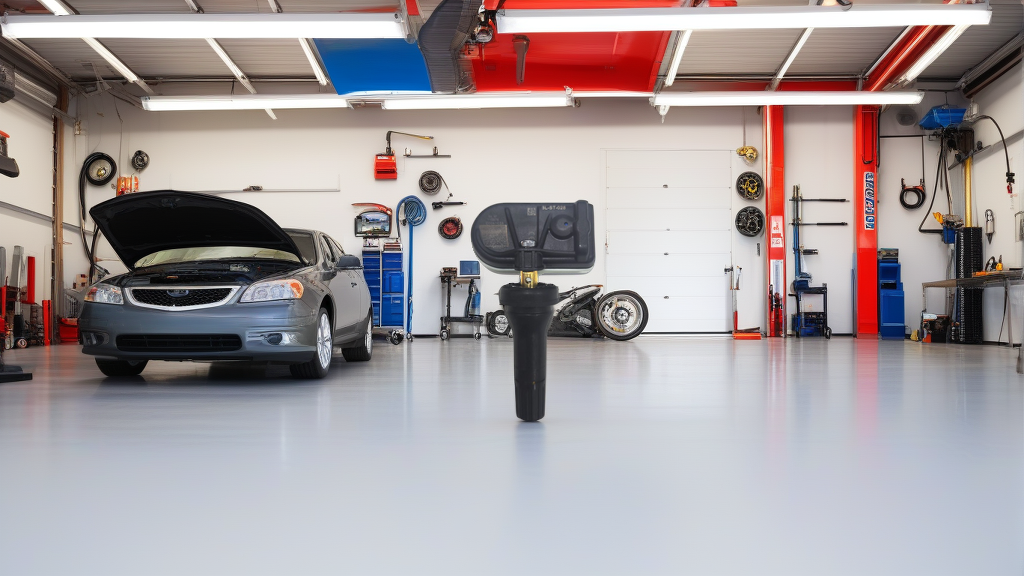
Understanding the RAETON CC TPMS System
The RAETON CC (a compact sedan/hatchback from Changan) comes equipped with a direct TPMS system that measures real‑time tire pressure and temperature using sensors mounted inside each wheel. If you own a RAETON CC or are sourcing parts for one, knowing the exact technical specs of the sensor is critical for a correct replacement. This article breaks down the four key specs you need to compare: frequency, battery life, IP rating, and protocol compatibility.
Frequency Band: 433MHz vs. 315MHz
Most aftermarket TPMS sensors operate on either 315MHz (common in North America) or 433MHz (used in Europe, Asia, and many global vehicles). The RAETON CC, being a Chinese domestic market (CDM) model, uses 433MHz. This is the standard for Changan, BAIC, Geely, and other Chinese brands.
- Why 433MHz? It offers better penetration through metal and rubber at the cost of slightly shorter range compared to 315MHz — but in a passenger car the range difference is irrelevant.
- What happens if you install a 315MHz sensor? The receiver in the RAETON CC simply will not detect the signal. The TPMS light will stay on, and you’ll get no data on the dashboard.
Always confirm the frequency of any replacement sensor. The BH-Sens BL-ST-028 is a 433MHz sensor, so it’s a direct fit for the RAETON CC.
Battery Life: 5–7 Years (Real‑World)
TPMS sensor battery life is stated as a range because it depends on driving habits, ambient temperature, and how often the car sits idle. For the RAETON CC:
- Average lifespan: 5 to 7 years from the date of manufacture, not installation.
- Battery type: Usually a 3V lithium‑manganese dioxide coin cell (CR2032 or similar) soldered to the sensor board.
- Signs of low battery: Inconsistent pressure readings, delayed updates, or the TPMS warning light flickering.
Note: You cannot replace the battery individually on most factory or aftermarket sensors. Once the battery dies, you replace the entire sensor. When buying a replacement, check the manufacturing date on the box — older stock may already have lost a year of life.
IP Rating: How Water and Dust Proof is Your Sensor?
TPMS sensors live inside the tire wheel well, exposed to water, road salt, mud, and vibration. The RAETON CC sensors carry an IPX7 or IP6K9K rating depending on the supplier.
- IPX7 means the sensor can be submerged in 1 meter of water for 30 minutes without damage.
- IP6K9K is a more robust automotive standard: it resists high‑pressure, high‑temperature steam cleaning (common at car washes or when mounting tires).
| Rating | Protection Level | Suitable For |
|---|---|---|
| IPX7 | Submersion up to 1m for 30 min | Normal rain, puddles, car washes (non‑pressure) |
| IP6K9K | High‑pressure hot water jets | Pressure washers, heavy off‑road, commercial service |
Both ratings are sufficient for a passenger car like the RAETON CC. If you drive through deep water frequently or use high‑pressure cleaners, look for the IP6K9K spec. The BH-Sens BL-ST-028 is tested to IPX7 minimum — enough for everyday conditions.
Protocol Compatibility: LF Wake‑Up and Programming
The RAETON CC TPMS system uses a standard 125kHz LF (Low Frequency) wake‑up signal. When the car starts moving, the receiver sends a 125kHz pulse to “wake” each sensor. The sensor then transmits its data on 433MHz.
- Pre‑programmed sensors like the BL-ST-028 are already set with the correct protocol, ID, and frequency for the RAETON CC. No cloning or programming tool is needed — just install, balance, and the car will recognize them automatically (after a short drive).
- Aftermarket programmable sensors (e.g., Autel, Schrader EZ‑sensor) require a tool to read the original sensor ID and write it into the new sensor. While these work, they add an extra step.
For a quick, reliable swap, a pre‑programmed sensor with the correct OE numbers (3601010CD01, 3601010DG01, 3601010MK02) is the easiest path.
Fitment Table: Which Vehicles Use This Sensor?
The BL-ST-028 is a multi‑application sensor. Below is a quick fitment list (always double‑check with your VIN):
| Vehicle Brand | Model(s) | OE Part Numbers |
|---|---|---|
| RAETON (Changan) | CC (all years) | 3601010CD01, 3601010DG01, 3601010MK02 |
| Avatr | 11, 12 | 3601010MK02ED01 |
| Changan | CS35, CS75, Eado, UNI‑T | 3601010CD01, 3601010DG01 |
| Deepal | SL03, S7 | 3601010MK02 |
| Mazda | CX‑30, Mazda3 (China‑spec) | 3601010MK02 |
| Nevo | N5, N7 | 3601010DG01 |
Note that “1 More” in the product description refers to the RAETON CC — it’s the vehicle we’re focusing on here.
Recommended Part
For a direct, no‑programming replacement on your RAETON CC, use the BL-ST-028 | BH-Sens 433MHz TPMS Tire Pressure Sensor | Fits Avatr, Changan, Deepal, Mazda, Nevo & 1 More | OE# 3601010CD01, 3601010DG01, 3601010MK02. It comes pre‑programmed at 433MHz, with the correct protocol, and matches the OE numbers listed above. Just install and drive — the TPMS light will reset after a few miles.
FAQ
Can I use a 315MHz sensor on my RAETON CC?
No. The RAETON CC’s TPMS receiver only accepts 433MHz signals. Installing a 315MHz sensor will cause the system to remain in fault mode. Always verify frequency before purchasing.
How do I know when the TPMS sensor battery is low?
You’ll typically see a blinking TPMS light for 1–2 minutes after starting the car, then it stays on. On some models, the pressure display may show “– –” or a low‑battery icon. The only fix is sensor replacement — the battery is sealed inside.
What IP rating should I look for when buying a replacement sensor?
For a passenger car like the RAETON CC, IPX7 is adequate. If you frequently use high‑pressure washers or drive off‑road, choose a sensor with IP6K9K. The BH-Sens BL‑ST‑028 meets IPX7, which covers normal street use and standard car washes.
Do I need a programming tool to install the BL‑ST‑028?
No. This sensor is pre‑programmed with the correct ID, frequency, and protocol for the listed vehicles. Simply install it in the tire, balance the wheel, and the car will learn the new sensor automatically after a short drive (usually 5–10 minutes above 25 km/h).