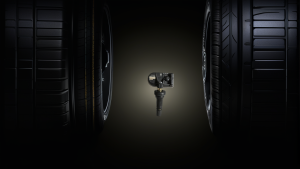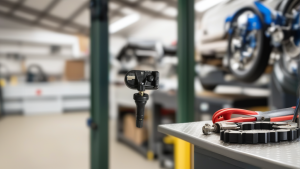
How to Perform UNI-T TPMS Relearn: Auto, OBD, and Stationary Procedures
Quick AnswerAfter replacing a TPMS sensor on your UNI-T (including Avatr, Changan, or Deepal variants), you must perform a relearn to sync the new sensor…
Quick AnswerGMC TPMS sensors require precise torque specs—typically 71–96 in-lbs (8–11 Nm) for most clamp-in sensors—to avoid leakage or sensor damage. Common mistakes include over-tightening…
Quick AnswerThe TPMS warning light on an Oshan vehicle typically means either a dead sensor battery (sensor stops transmitting) or RF signal interference (external noise…
Quick AnswerThe UNI-Z UNI-Z uses a 433MHz TPMS sensor, not 315MHz. The compatible BH-Sens BL-ST-028 sensor (OE# 3601010CD01, 3601010DG01, 3601010MK02) delivers 5-7 years battery life,…
Quick AnswerWinter temperature drops cause tire pressure to decrease by roughly 1 PSI for every 10°F drop, triggering false low-pressure warnings on your Range Rover…
Quick AnswerWhen swapping to winter tires on your ORLANDO, always check that your TPMS sensors are compatible with the new wheels—especially if using aftermarket rims.…
Quick AnswerFor LEVIN vehicles, always confirm the TPMS frequency (433MHz is standard for most models) and the OE number stamped on your original sensor –…
Quick AnswerThe BH-Sens BL-ST-042 TPMS sensor operates at 433MHz frequency, uses a sealed lithium battery rated for 5-7 years typical life, carries an IP67 dust/water…
Quick AnswerWhen swapping to winter tires on your EADO PLUS, handle the TPMS sensors carefully to avoid damage—use the correct clamp-in torque (check your manual)…
Quick AnswerInstalling a BH-Sens 433MHz TPMS sensor on a SEAL DM-I requires a torque spec of 35–40 in-lbs (4–5 Nm) for the clamp-in nut, using…