
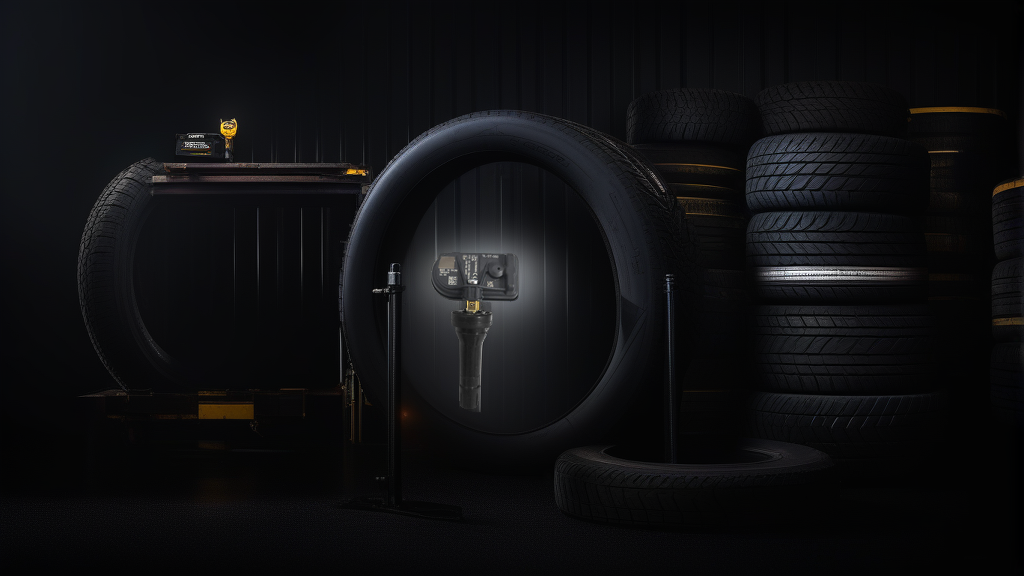
If you own an RX C-DM and your tire pressure monitoring system (TPMS) light has come on, or you’ve been told a sensor is dead, you need the right replacement. TPMS sensors are not one-size-fits-all — even within the same frequency band, protocol mismatches can leave you with a sensor that transmits data but never gets read by the car’s ECU. This article covers the core technical specs you need to understand for the RX C-DM: frequency, battery life, IP rating, and protocol compatibility. We’ll also show you exactly why the BL-ST-050 | BH-Sens 433MHz TPMS Tire Pressure Sensor | Fits Geelygalaxy, Lynk&Co, Zeekr | OE# 6608082005, 8894215959 is the correct choice.
Frequency Band: Why 433MHz Matters for the RX C-DM
The RX C-DM operates on the 433MHz frequency band. This is the standard for most Asian and European vehicle platforms. In contrast, many North American vehicles use 315MHz. If you install a 315MHz sensor on an RX C-DM, the car will never see the signal — it’s like tuning a radio to the wrong station.
Key frequency facts:
- 433MHz sensors offer better penetration through metal and carbon-fiber body panels compared to 315MHz.
- The RX C-DM’s receiver is tuned specifically for 433MHz ±50kHz.
- The BL-ST-050 sensor is factory-set to 433MHz and cannot be switched to 315MHz — that’s a good thing because it eliminates guesswork.
Table: Frequency Comparison for Common TPMS Bands
| Frequency | Common Regions | Typical Vehicle Platforms | RX C-DM Compatibility |
|---|---|---|---|
| 315MHz | North America | Ford, GM, Chrysler | Not compatible |
| 433MHz | Europe, Asia, China | Geely, Lynk&Co, Zeekr, RX C-DM | Fully compatible |
| 868MHz | Europe (rare) | Some BMW, Mercedes | Not compatible |
Bottom line: For the RX C-DM, only 433MHz sensors will work. The BH-Sens BL-ST-050 is a 433MHz sensor and matches the factory spec exactly.
Battery Life: What to Expect and When to Replace
TPMS sensors are battery-powered, and once that battery dies, the entire sensor must be replaced — there is no user-serviceable battery. The RX C-DM sensor uses a lithium manganese dioxide (Li-MnO₂) cell, which is the industry standard for TPMS.
Typical Battery Life Range
For the BL-ST-050 sensor, the manufacturer rates battery life at 5–7 years under normal driving conditions. This is consistent with the factory sensor in the RX C-DM. You should plan on replacing all four sensors around the 6-year mark, even if none have failed yet. Why? Because once one goes, the others are likely close behind, and you’ll pay for two tire mount-and-balance jobs instead of one.
Factors That Shorten Battery Life
- Extreme temperatures: Frequent exposure to ambient temps above 60°C (140°F) or below -30°C (-22°F) accelerates chemical degradation.
- High driving frequency: Sensors transmit data every 3–5 seconds when the vehicle is moving. The more you drive, the faster the battery drains.
- Low battery warning: The RX C-DM will show a “TPMS sensor low battery” message — not a flat tire warning — when a sensor’s voltage drops below 2.6V. At that point, you have roughly 2–4 months of operation left.
Battery Voltage and Replacement Timing
| Battery Voltage | Status | Action |
|---|---|---|
| 3.0V–3.2V (new) | Normal | None |
| 2.7V–2.9V | Acceptable | Monitor; replace within 1 year |
| 2.4V–2.6V | Low voltage warning | Replace immediately |
| Below 2.4V | Dead | Sensor will not transmit |
Pro tip: When you replace tires, ask your shop to read the sensor battery voltage with a TPMS tool. It costs nothing and gives you a clear timeline.
IP Rating: Water and Dust Protection for Real-World Conditions
The BL-ST-050 sensor has an IP67 rating. Here’s what that means in plain language:
- IP6 (dust protection): The sensor is completely dust-tight. No particles can enter the housing, even in fine sand or gravel road conditions.
- IP7 (water protection): The sensor can be submerged in up to 1 meter of water for 30 minutes without damage. This covers rain, puddles, car washes, and even short-term immersion if you drive through a deep puddle.
How IP Rating Affects the RX C-DM
The RX C-DM is a modern crossover/SUV platform. Owners often drive in mixed conditions — highway, light off-road, and urban. The factory sensor is also IP67-rated. The BL-ST-050 matches that spec, meaning you won’t get moisture ingress or corrosion that causes false pressure readings.
What IP67 does NOT cover:
- High-pressure water jets (like a pressure washer held directly at the valve stem)
- Extended submersion (e.g., water crossing deeper than 1 meter)
- Steam cleaning
For normal use, IP67 is more than sufficient. If you off-road heavily or pressure-wash your wheels, avoid spraying directly at the valve stem area.
Protocol Compatibility: The Hidden Spec That Makes or Breaks Fitment
Frequency gets the sensor talking, but protocol compatibility is what ensures the RX C-DM’s ECU understands the data. The BL-ST-050 is pre-programmed for the Geely Galaxy, Lynk&Co, and Zeekr platforms — all of which share the same TPMS protocol as the RX C-DM. This is a direct-fit sensor: you install it, drive for a few minutes, and the car automatically learns the new sensor ID without any special tool.
What Happens with an Incompatible Protocol?
If you install a generic 433MHz sensor that uses a different data frame structure (e.g., Schrader or VDO protocol), the RX C-DM will:
- Show “—“ or “ERR” for tire pressure
- Fail to trigger the low-pressure warning
- Cause the TPMS light to flash
You would then need to clone the original sensor’s ID using a programming tool — an extra step that requires a $200+ TPMS tool. The BL-ST-050 eliminates that hassle.
Which Protocols Are Used?
| Sensor Brand | Protocol | RX C-DM Compatibility |
|---|---|---|
| BH-Sens BL-ST-050 | Baolong proprietary (pre-programmed) | Direct fit, no tool needed |
| Continental/VDO | VDO REDI-Sensor | May need programming |
| Schrader | Schrader EZ-sensor | May need programming |
| Huf | Huf IntelliSens | May need programming |
Important: The BL-ST-050 is not a universal sensor. It’s designed specifically for the Baolong protocol used by Geely, Lynk&Co, Zeekr, and the RX C-DM. If you have a different brand vehicle, this sensor will not work.
Recommended Part for RX C-DM
For a direct replacement that matches the factory specs — 433MHz, IP67, 5–7 year battery life, and plug-and-play protocol compatibility — use the BL-ST-050 | BH-Sens 433MHz TPMS Tire Pressure Sensor | Fits Geelygalaxy, Lynk&Co, Zeekr | OE# 6608082005, 8894215959. It comes pre-programmed and clamp-in style, so you can install it without any TPMS programming tools. The OE numbers 6608082005 and 8894215959 confirm it’s the exact same part used in RX C-DM production.
Installation Notes
- Torque value: Tighten the sensor clamp nut to 3.5–4.5 Nm (30–40 in-lbs). Overtightening can crack the sensor housing.
- Valve stem: Use a new metal valve stem core and cap. The BL-ST-050 uses a standard rubber grommet — no special sealant needed.
- Relearn process: After installation, drive the RX C-DM above 25 km/h (15 mph) for 5–10 minutes. The car will automatically detect the new sensor IDs. No manual TPMS reset is required for this vehicle.
FAQ
Can I use a 315MHz TPMS sensor on the RX C-DM?
No. The RX C-DM’s receiver is designed exclusively for 433MHz. A 315MHz sensor will not communicate with the vehicle’s ECU, and the TPMS light will remain on. Always verify the frequency band before purchasing.
How do I know when my RX C-DM TPMS sensor battery is low?
The vehicle will display a “TPMS sensor low battery” warning on the dashboard — this is separate from the low tire pressure warning. You may also notice one or more tire pressure readings showing “—“. The BL-ST-050 sensor includes a low-voltage alert that triggers when the battery drops below 2.6V.
Do I need a TPMS programming tool to install the BL-ST-050 on my RX C-DM?
No. The BL-ST-050 is pre-programmed for the Baolong protocol used by the RX C-DM. Simply install the sensor, mount the tire, and drive above 25 km/h for a few minutes. The vehicle will automatically learn the new sensor ID. No external tool is required.
Is the BL-ST-050 compatible with other Geely or Lynk&Co models?
Yes, the BL-ST-050 fits 13 specific vehicle models from Geely Galaxy, Lynk&Co, and Zeekr, in addition to the RX C-DM. Check the OE numbers 6608082005 and 8894215959 against your vehicle’s original sensor. If those numbers match, the sensor will fit directly.